• About
  • Follow
  • Life: An Odd Analogy
  • Making Debates Suck a Wee Bit Less
  • To heck with the good ol’ days
  • Writing

Random Blather

~ Feverish ravings of a middle-aged mind

Random Blather

Category Archives: Uncategorized

The “Opioid Epidemic”, a contrarian view

01 Saturday Apr 2017

Posted by dougom in Opinion, Uncategorized

≈ Leave a comment

Tags

chronic pain, medical, opiates, opioids, pain


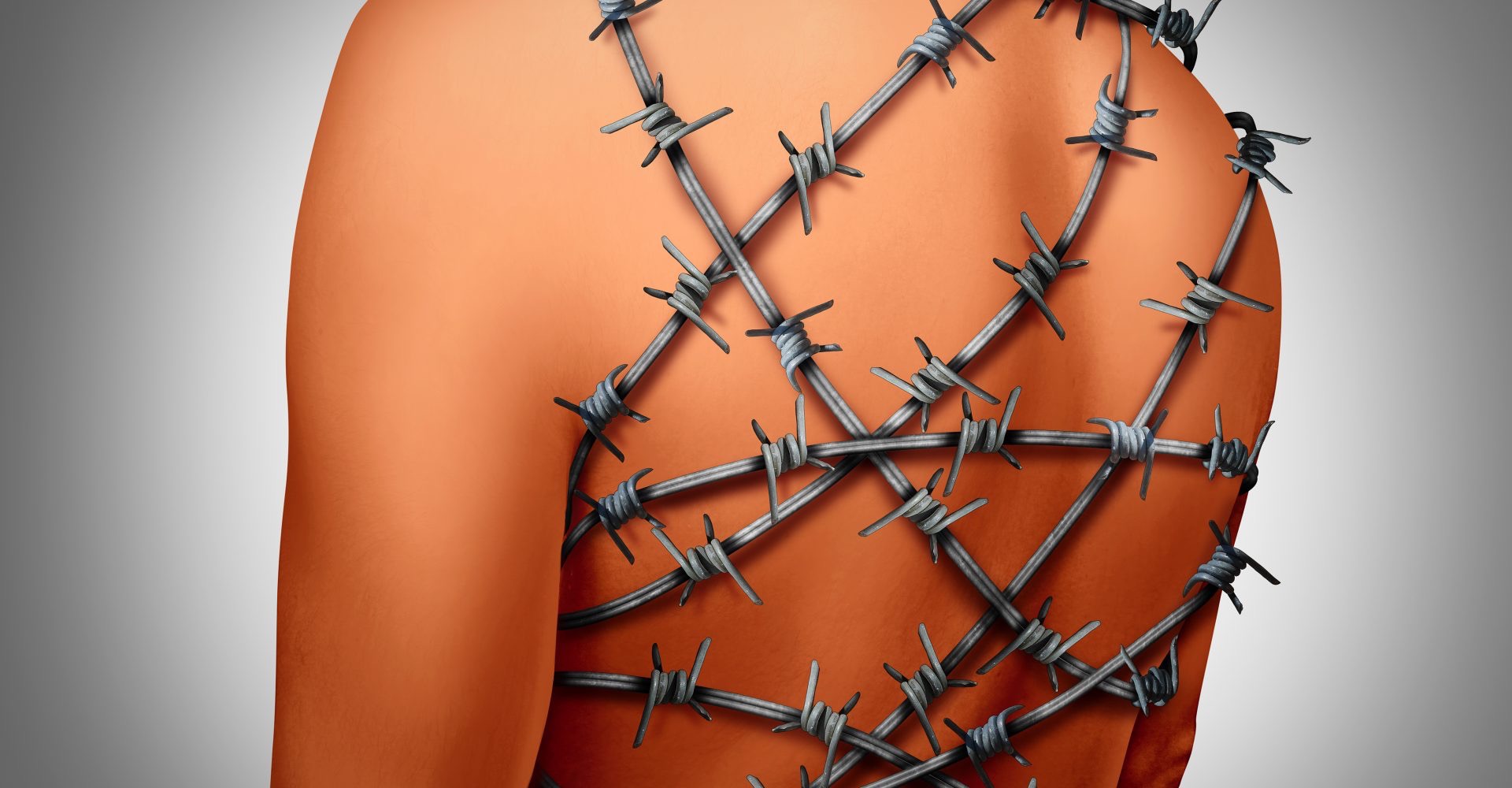
I suffer from chronic pain.

It’s important for you to know this so you have context for my current leery attitude towards the vehement, almost-religious hysteria about our current “opioid epidemic”.  In 2000, I blew out a disk in my neck, which bulged into my spinal cord, causing some pretty excruciating pain.  This was only allieved by removing the offending disk, taking a chunk out of my hip (which hurt every bit as much as it sounds like it would), filing it down, putting it in place of the disk, and clamping it all together with a titanium plate so it can “fuse”.

Like most surgical procedures, this had some unintended consequences, like lack of mobility in my neck, and a moratorium on any “violent” activities that might hurt the neck.  (Which basically amounts to anything more “violent” than “walking”.  Even swimming is out.  No biking. Or racquetball. Or skiing.  Or soccer.  Or running.  Or disk golf.  Or regular golf.  Or bowling.  Or…well, you get the picture.). But the worst of which is I have pain at the base of my skull on the right-hand side all the time. 

To a non-chronic-pain sufferer, it’s almost impossible to get this point across.  I hurt all the time.  There are no times when I don’t hurt.  Some days I’m lucky and it doesn’t hurt much, but it never doesn’t hurt.  If I try to turn my head all the way around, it not only hurts, I get faint.  This is my cross to bear, and it sucks.  I don’t like to talk about it because for one, who wants to hear someone whine about their pain, but for another I mostly control it with meds.  Including opioids.  I take two: Tramadol (which is partially an opioid) and time-release morphine (which is the full, extra-strength, no-kidding king o’ opioids).  I’m not happy about this, and I’m especially displeased by some of the side-effects, but I’d much rather deal with a bit of constipation than constant, mind-numbing pain.

It’s important you understand just how severe this pain can be before I get on to the supposed “epidemic”, so please forgive the following bluntness.

Take a butter-knife, a dull one, and press it to the soft part of your head just under the base of your skull.  Gently.  Maybe with, oh, 5 pounds of force.  Annoying, but not debilitating.  Certainly you’ll notice it almost all the time, but it won’t keep you from doing daily activities.  (Unless you turn your head past 75 degrees or so, at which press down harder on the knife, and twist.)

That’s the case on my meds.  With the opioids.

Remove the meds.  What’s the pain like?  Remove the knife and replace it with a drill press, which punches in through your skin and all the way down into your spinal column with 50, 60, 100 pounds of force.  Over and over and over again.  If lucky, it’s synchronized to your heartbeat, so you can at least anticipate the pain.  If you’re unlucky, it ebbs and flows and thrusts to its own internal, unpredictable rhythm, causing the pain to intensify or decrease with no warning.  The pain is so intense it creates “referred pain” in other parts of your body; in my case the shoulder.  It also often triggers my migraines.  I “only” suffer from “common” migraines, the least painful.  Combine these migraines with the neck pain, and it’s . . . 

Let me put it this way:  The last time my pain peaked (I call them “pain flare-ups”), I was in the shower at 3am, in the dark, crouched on the floor with the water pounding down, weeping and wondering if I shouldn’t just kill myself to end the suffering.  If you know me, I’m a basically positive person.  It’s hard to get me down, and harder to keep me down.  

That’s pain: Weeping and suicidal in the shower on the floor in the dark, because you can’t stand it.  Cursing an unfeeling God for bringing this upon you.  I honestly don’t know how people who suffer worse than me—and there are many!—don’t become atheists.  Or simply kill thesmelves.

Which brings us to “the opioid epidemic”.  There’s been a number of articles in various papers and magazines talking about the “scary increase” in opioid addiction and overdose numbers. (Look at this one, or this one, or this one; and that’s just for starters.)  More people dying or ODing from prescription opiates, and what to do about it.  And the alarmist language is impossible to miss, with the proposed solutions almost always being more draconian restrictions.  (Honestly it reminds me of the Reagan era “war on drugs”.)

Let me say a few things about this.  

First, I don’t know how many of these “overdoses” are from people just like me who decide they’ve dealt with it long-fucking-enough and the time has come to give the karmaic wheel a turn.  In other words, how many of these alleged “overdoses” are actually suicides? Has any effort been made to find out?  Because if it’s a significant percentage (as I suspect), it’s not an “opioid epidemic” so much as a “chronic pain and suicide” epidemic.  And creating more restrictive and draconian laws to restrain opioid prescriptions won’t help.

I also wonder how many of these supposed overdoses, or the people who go to multiple doctors to get extra doses of opioids, are simply suffering severe pain

Now don’t get me wrong: I know there are people who use the medical industry and the holes therein to get drugs to sell to other people for profit.  No question.  Not arguing.  Not do I argue that people don’t get addicted.  

But what percentage of the “getting more than they should” are actually criminals, and which are simply desperately in-pain people looking for help?  What people are actually not addicted to opioids, but addicted to not being in pain all the damn time?

The reason I think these distinctions are absolutely critical is because in the current (and coming escalating) war against “opioid abuse”, people like me are going to be collateral damage.  A quick story to illustrate what I mean.

When my doctor prescribed morphine for me—which I objected to, but he insisted was the next step—I had to sign a multi-page waver agreeing I would never take any more than he prescribed, that I understood he would drop me like a hot rock if he discovered I was getting meds anywhere else, that I had to submit to random urine tests, and that he could have my first-born for all I know.  It was unbelievable, and I don’t think my continued use of the word “draconian” is over-blown.

Then I had the aforementioned flare-up and suicidal contemplations, during which I took the other meds (Tramadol, Exedrin) I was “allowed” to at my discretion, but out of desperation took one—ONE—extra morphine tablet.  When I told my doctor at the next visit, I was punished.  And there’s really no other word for it.  I was lectured.  I was told I needed to call in first.  (At 3am from the floor of the dark shower?)  I was told I would need to come in every two weeks rather than every four for the next six weeks, at any visit of which I was going to have to have urine samples.  I was threatened with dismissal as a patient if I ever did it again.

ONE EXTRA TABLET.

Even at the time, my doctor admitted I was a “model patient,” that I had always done as they asked, gotten blood work when they asked, always been straight with them.  And now a “model patient” was being punished for, in his agony and desperation, taking a single extra tablet.

I think about this every time I read a call-to-arms for making our laws even more draconian than they already are.  And I think about the fact that these more draconian laws will inevitably hurt the people most who are following the rules.  If I, a model patient, have to go in every four weeks for a “med check” visit, am subjected to random urine tests, and treated like a criminal when I take a single extra morphine tablet, how much worse are they going to make it for me and the other, non-model patients?

So please, do me a favor when reading about this “opioid epidemic”:  Bear in mind people may be overdosing not because they’re drug addicts, but because they’re in such massive pain they’ve become utterly desperate.  And remember what one “model patient” has to go through and think how much harder it will be.  

And have sympathy for us chronic pain sufferers.  Because sometimes, I’m telling you: Opioids are all we’ve got.

Laziness and Bigotry

18 Monday Apr 2016

Posted by dougom in Uncategorized

≈ 1 Comment

image
No, RWNJs; it’s actual manners

I’be often wondered why people are so resistant to changing the language with which they address people, groups of people, ideas, and so on.  Why does it cause such anger (mostly on the right) to ask people to please not call Native Americans “Indians”?  Why is there so much rage against addressing folks by their preferred pronoun?  Heck, I read a right-wing lament prior to the 2006 Olympics that using “Turino” rather than “Turin” was some kind of PC insanity.  I didn’t understand it.  It’s okay when someone corrects your pronunciation of their name; why is this other stuff such a big deal?

Bigotry, sure.  A lot of people are simply bigots, and would probably still be calling African Americans “nigger” and Jews “kike” and Irish “Micks” and so forth if they could get away with it.  Sad but true, those people are still with us.

There’s also the piece in there exemplified by all those Tea Party demands to “take our country back!”  Back from who?  Back to what?  WTF are they talking about?  Well, probably back to the day when naming a baseball team “Redskins” was so acceptable that no one gave it a second thought.  When the population of the US was so heavily tilted towards white Christians that they felt they could act and speak with impunity (and usually could, too).  When it was widely accepted that GLBTs were aberrant, sick people engaged in behavior that was patentently amoral and accepted as such (at least openly).  When you could pinch a woman’s ass at work, call her “honey” or “sweetheart” or “babe” or “girl” without so much as a raised eyebrow.

But ya know, I think some of that, and some of the backlash itself, comes from laziness, pure and simple.  People don’t want to learn new terms, new ways of addressing people, new rules of politeness because they’re lazy.  (I’m not excepting myself from this, by the way; I’m hella lazy, too.  I just suck it up and deal, because it’s the right thing to do.)  Learning new terms, integrating them into your daily language, remembering them…it’s all a big pain in the ass and people don’t want to do it.  So instead of sucking it up and dealing, they scream and rant and rave and look like (to be blunt) bigoted douche-nozzles.  It’s not about “we don’t want to give in to the PC police!” so much as “We don’t want to learn new things, waah waah waah!”  (And yes, imagine that in the tones of your least-favorite local 3-year-old, because that’s the emotional level of the demand in my opinion.)

I don’t have a good solution for this—just as “the poor will always be with us”, the lazy will be, too.  And in all of us, for that matter.  If I thought it would help I would suggest you to stare these “the heck with being PC!” folks in the eye and tell them, “You’re only saying that because you’re lazy and don’t want to work!  Would you call someone ‘PC’ if they asked you to please stop mis-pronouncing their name?”  But I don’t think it would, honestly.

But maybe it will help you, when you hear or read about these whiners complaining about the “demands of the PC police”, to think of them whining like a bunch of spoiled 3-year-olds.  It helps me a little bit, anyway.

Republicans Can’t Do Math

10 Sunday Apr 2016

Posted by dougom in News, Opinion, Uncategorized

≈ Leave a comment

Tags

boneheaded Republicans, Budget, G.O.P., illegal immigrants, math, Republicans, Trump

math
So why do we keep voting them into office?

Recently I got into a . . . discussion . . . on Twitter.  (You can’t really have discussions on Twitter.  For one, you’re limited to 140 characters.  And for another, most people don’t want to discuss, they just want to bludgeon you.  Sometime, if I’m okay with being sued, I might relay some of my conversations with Cathy Brennan, an extremely unpleasant radical feminist who is one of the most abrasive, obnoxious, litigious, angry people I’ve ever seen online.  And I’ve been online a really long time.  I mean, since Reagan was President.  To say this woman is “transphobic” is to understate things so massively I can’t even express it.  See, what happened was…Wait, where was I?  Oh, right; Republicans and math.)

Anyway, this person––who was not a bad or unreasonable guy––insisted to me that “both sides” had problems with math, citing the amount that the debt has doubled under Obama, just like it did under Bush. I didn’t bother telling him it was a genuinely idiotic comparison, as Bush had been handed an economy running at a surplus and quickly destroyed it with two obscene tax cuts, two unbudgeted wars, a huge new (also unbudgeted) federal drug program, and some phenomenal mis-management, while Obama was handed an economy in free-fall with a skyrocketing deficit, which he turned around and now has the deficit coming down.  But when you’re “debating” with someone who reiterates that absurd right-wing canard about the government giving away “free stuff”, you’re not speaking to a person well-acquainted with actual facts.

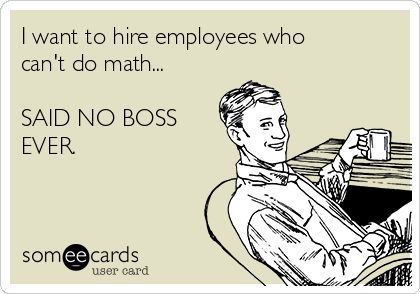
But it reminded me of a very basic fact: Republicans just can’t seem to do math.  And I mean simple math, like addition, subtraction, multiplication, and division.  You know:  K-6 math.

Let’s take immigration.  The Tea Party, the Trumpsters, and of course the Republican Party as a whole want to get rid of every last illegal immigrant in the country.  All of them.  And what I wonder is:  Can’t the G.O.P. do simple math?

(“Obviously not,” I hear you cry.  Yes, you’re right:  they think cutting taxes will increase government revenue; they think giving ACORN a few million dollars will bankrupt us, but fighting trillion dollar wars won’t; etc.  Bear with me anyway.)

If figures are right, there are approximately 11 million illegal immigrants in the United States.

That’s a lot of people.  I mean, a lot a lot.  It’s basically the entirety of the L.A. metro area.  I mean, it’s a lot.

So let’s assume that you can snap your fingers and gather all those people up with no effort at all.  None.  SNAP!  11 million people appear, ready to be deported.  Now what?

math-hard
A Republican politician when confronted w/ this question

Where are you going to put them?  Empty all of L.A. and house them there?  Put them in a corner of Texas or New Mexico where they can wait to be processed?  Better be a damn big corner.  And what would you do with them?  Hand them shovels and seeds and tell them, “Good luck!  You’re number 2,459,345–we should get to you by August of 2019; better start tilling and sowing!” and hope it doesn’t turn into an environmental disaster?

But let’s say you figure it out.  You won’t; but let’s say you do.  (“We’ll make them stay right where we find them while we process them, then when we’re ready we’ll do the finger-snapping thing!  Yeah!  That’s the ticket!”)   So now you have 11 million people handy.  How are you going to get them home?  Bus?  Let’s do a little math:

A typical school bus–you know, the yellow kind without air conditioning or seat belts–seats between 75-90 folks.  Let’s go with 100, just to be conservative.  If you want to transport 11 million people to Mexico, you’re talking about 110,000 school bus trips.   How much diesel fuel is that going to take?  How many bus drivers?  How many hours of travel?

Or put them on a train.  The CalTrain double-decker “baby bullet” trains seat about 150 folks per car.  For 11 million people, that works out to around 74,000 cars.  I’ve seen multi-locomotive trains hauling 75-100 cars on ocassion–not often–so that would work out to 740 100-car train, full-loaded.

(And we haven’t even considered issues such as luggage, children, sanitation for longer trips, the processing speed of the U.S. and Mexican governments, and other related issues.)

Bear in mind that the government couldn’t even get ice to New Orleans after a single hurricane while you contemplate the above–and remember too that New Orleans had only about a third of a million folks in it.  So your problem is to move the entire population of 33 New Orleans’ from wherever they are to Mexico.  I’m not too sanguine about the possibility, personally, even if they’re all right there in Brownsville or Laredo.

This is just the simple math of logistics, too.  I’m not an expert in this stuff—I’m sure it’s way more complicated.  And if the simple math shows it to be this bad, what’s the more complicated situation going to look like?  (Answer:  Ugly as hell.)

Not to mention what would happen when all the Orlandos, Carloses, Jesuses, and all the other folks who work the jobs nobody else wants to do (Picking strawberries?  Cleaning out office buildings?  Laying sewer pipe?) up an leave, all 11 million of them.  Imagine all of New York City—not just the adults, but the whole friggin’ city—plus the whole of Newark, Nassau county, and most of Connecticut just pulling up stakes and leaving.  I mean, seriously:  think about it.  Don’t you think it wouldn’t have some kind of massive effect for everyone else?  What happens to the Northeast power grid?  The trains?  The airports?  Imagine New York City being blacked out, but forever, instead of for a few hours as sometimes happens, usually to chaotic effect.  It’s mind-boggling.

So it’s clear:  Republicans can’t do math.  Remind me again why they are ever put in charge?

How to Talk to Politicians

07 Monday Mar 2016

Posted by dougom in News, Opinion, Uncategorized

≈ Leave a comment

Tags

Huffington Post, lies, politics

family_circus_notme21
Politicians basically do this when asked questions
Copyright the Bil Keane estate, all rights reserved, I’m sure

As a guy who grew up watching Ron Ziegler dance around Nixon’s lies, and has observed (usually with horror) how people like Scott McClellan, Dana Perino, and their ilk dissemble and outright lie to the press, it occurred to me that there is a one way to demand answers from politicians:

Treat them like children.

I have two kids.  Kids are past-masters at lying, deception, and attempts to change the subject.  The only way that I personally have found to consistently get information is to not allow myself to be distracted.  Like this:

“Who left this crap in the living room?”
“I haven’t been in the living room today.”
“That’s not what I asked.  Did you leave this crap in the living room?”
“That’s not my stuff; it’s [other kid’s] stuff.”
“That’s not what I asked, either.  Did you leave this crap in the living room?”
“Why do you want to know?”
“It doesn’t matter.  Did you leave this crap in the living room?”

And so on.  It’s a pain in the ass, yes, but eventually you find the culprit (granting that you are more stubborn than your kids which, in my case, is a good bet).

This is exactly how spokespeople, politicians, and their ilk should be treated.  They don’t want to answer the questions they are asked in a straight-forward way?  Fine; treat them like a 9 year-old.  Keep asking the same question.  Demand an answer to your first question.  And if the spokesperson or politician won’t answer?  Well, after 7 or 8 iterations of this, it will be obvious to all involved that they are dodging and lying, and their credibility will go down regardless.  Either they answer or they look like idiots; either one is fine by me.

Consider the issue of torture.  Just once, I wish a reporter had the balls to press and press and press Cheney:

“Mr. Vice-President, do we torture?”
“We have instructed our interregators to remain within the law at all times.”
“That’s not what I asked, sir.  I asked you, do we torture?”
“As I said, we remain within the law.”
“Sir, water-boarding is considered torture by all civilized people.  Do we torture?”
“I believe I have already answered that question.”
“No, sir, you haven’t; do we torture?”
“I cannot talk about sources and methods.”
“That wasn’t my question, sir.  Do we torture?”

And so on.  If these bozos want to act like 9 year-olds attempting to cover up the fact that they have been lighting fires in the back yard, then they should be treated the same way.  Heck, I would even put them “in their room” (and cut off all external access) until they admit what they’ve done.  It’ll be even funnier than those times politicians (and other jerk-wads, like Martin “let’s gouge people for AIDS medicine” Shkreli) keep repeating the same answer over and over, no matter the question.

I dunno; I guess I’m just feeling vindictive.  I’m pretty tired of the Cavalcade of Clowns we’re stuck with on the Republican side, any one of which would be a disaster if President, and any one of which may actually end up President.  As much as that horrifies and frightens me, it’s true.  As true as the fact that the Republicans—despite having a “brand” so eroded that no voters will actually admit they are Republican—are in control of the House and Senate.  (Go ahead; ask a random right-wing bloviator on Twitter or Tumblr or wherever if they’re a Republican.  It’s always “No.”  They’re “Libertarian”, or “Independent”, or whatever, even if they’ve never voted for anyone other than a Republican in their lives.) Which is plenty scary, too.

I’m not too thrilled with triangulation artist & “realist” Hillary Clinton, either, except that I know she’ll be better than anything the Republicans finally throw out there.

But for now, I’d settle for Meghan Kelly pinning down Trump or Rubio or Cruz and refusing to let up until she has an actual answer.  Say, on wars.

“Senator, given the disastrous results of the Iraq War, why is it your foreign policy seems to only advocate more war?”
“Well, I don’t know as I’d agree with the premise.”
“Almost all Americans agree it was a disaster, so why do you advocate more war?”
“Meghan, the question is whether or not America is strong and a leader.”
“Actually sir, the question is why do you advocate more war?”
and so on.

I’m not holding my breath, though.

Sexism, Comic Book Movies, and Executive Stupidity

13 Wednesday May 2015

Posted by dougom in News, Opinion, Uncategorized

≈ 9 Comments

Tags

avengers, black widow, comics, film, Marvel, MCU, movies, Scarlett Johansson, sexism

Scarlett Johansson
Scarlett Johansson, prepared to kick ass (Photo courtesy of The Daily Mail)

Despite the fact that right-wingers firmly believe that Hollywood is controlled by socialist/communist gay and lesbian pornographers, the truth is that, like most rich folks, rich Hollywood execs tend to be pretty conservative.  Sure, some directors, actors, etc. are liberal, absolutely; but do you think the (American) folks in charge of Sony or Disney or other big multimedia companies are liberals? Ha, it is to laugh!

I mention this as a prelude to my main theme here:  The fact that these conservative, hide-bound, and almost-certainly sexist media execs refuse to green-light big summer movie projects starring women.  My particular peeve is with the huge increase in comic-book super-hero movies, which are getting the biggest bucks and most attention right now and where the problem is especially acute, but feel free to extend it to basically every other movie genre.

This topic has come up in the media (finally!) in the wake of the release of Joss Whedon’s “Avengers: Age of Ultron”, a huge hit (apparently).  For those who don’t know, Whedon is very vocal about being a feminist, and is widely regarded as a writer of strong female characters, and is generally the go-to person for nerds to point at as an example of a man who is bucking the sexist trend in the nerd (comic books, sci-fi, and the movies based thereon) culture.  While this is perhaps true in broad outline, I think Leah Schnelbach does a great job deconstructing this claim (on the Tor.com site), without being at all unfair or doctrinaire as so many folks can get on this topic.

However, Whedon is taking some flack on this particular film because of his treatment of the character of Black Widow, played by Scarlett Johansson.  For just a quick recap of the arguments:  There have been 11 “Marvel Cinematic Universe” (MCU) comic-book films, of which all have starred men, often multiple men.  These films rarely pass the Bechdel test (if ever); the presentation of the women in group/team posters is significantly different from that for men; women characters are often treated as plot devices or standard tropes (the damsel in distress, for example); and on and on.  It’s pretty ridiculous.

oEFCTQ0V2ACl
Gee, what do you think they’re trying to draw your attention to?
(Photo courtesy of Zimbio)

(I will here make a brief nod to the TV end of things, where there are a few more solid characters: Peggy Carter (with remarkably her own show); Karen Page, Claire Temple, and Vanessa Marianna in Daredevil; Skye, May, & Bobby in Agents of SHIELD.  And DC has the wonderful Felicity Smoak in Arrow, a character so awesome they keep having her show up in their other series, The Flash.)

Specifically to the most recent MCU film “Avengers: Age of Ultron”, the one true strong female character is Black Widow, played by Scarlett Johansson.  And as Leah Schnelbach points out in the post referenced above, while Black Widow has now been in four MCU films, hers is the only character who takes time out of a film to lament how she can never be a parent.  Thor doesn’t whine about whether or not to be a daddy, nor does Samuel L. Jackson’s Nick Fury, Tony Stark, or anyone else (though Captain America laments not getting to dance with Peggy Carter during World War II).  She is the only Avenger whose character is defined—and only in this film!—in terms of her sexuality and gender.

Now, if there were as lot of interesting female characters in the MCU, maybe we could give this one a pass.  Or if Black Widow was about to get her own film, as nearly every other Avenger has (hell, Ant Man is getting his own film before he becomes one!).  I mean, geez, Hulk has had, what, two (really bad) films?  Captain America has had two with another one coming.  Thor has had two; Iron Man three.  Black Widow?  None.  With none on the horizon.  And if that isn’t bad enough, there isn’t even a female-starring MCU film planned until 2018 . . . eight more films down the line.  A second film about the Guardians of the Galaxy, a property that hardly anyone gave a damn about, sure (which, to be fair, was a film I enjoyed a lot); another Captain America film, another Avengers film, yet another reboot of the Spider-man franchise, even.  But a film about Black Widow?  Heavens, no; that’s a terrible idea!

marvel_s_spider_man__2017_reboot__by_lunestavideos-d8hh5wp
Do we really need another one? (Photo courtesy of Wibblyspider on DeviantArt)

One could argue, and some do, that female-led super-hero movies don’t make money.  But if you take a gander at the hacked emails by the studio execs, who complain about “Supergirl”, a bomb from 30 years ago, it’s pretty clear we’re dealing with nothing but blatant sexism here.  After all, way more male-centered super-hero movies have bombed than female-centered ones.  That’s sexism, kids.

And not only is it sexist, in the case of Black Widow—a well-established character played by a bankable actress that the public is actually asking for—it’s downright stupid.  Let me just run a few facts by you, here:

  • Black Widow has now been in four MCU movies and has actually established a considerable fan-base; there are fan sites, a twitter hash tag, a Change.org petition, etc. etc.
  • The Motley Fool does a good job pointing out the factual basis for expecting a positive result from a Black Widow film.
  • There have been far more giant flops in big Super Hero films starring men than those starring women.  Seven vs. three, if memory serves.  And it’s important to note that films like “Catwoman” genuinely stunk.
  • Scarlett Johansson is almost ridiculously bankable.

Let me throw you some numbers on that last point.  And this is where it connects to my opening about folks on the right, which is:  The right-wing simply can’t do math.  (I did several posts about this on Salon which I will re-post here at some point but in the meantime, take my word for it.  Two words:  Laffer curve.)

150326-lol-obamacare-costs-5-million-per-enrollee-a-teabagger-does-the-math
They just can’t do math; don’t blame me! (photo courtesy of Democratic Underground)

  • Luc Besson is a director with a lengthy Hollywood career, and whose biggest film up until last year was “The Fifth Element”, starring Bruce Willis, Gary Oldman, Milla Jovovich, and (God save us) Chris Tucker.  On a budget of $93 million it made $263.9 million, or $170.9 million.  His newest biggest film?  “Lucy”, starring Scarlett Johansson; on a budget of $40 million it made $458.9 million, or $418.9 million.
  • Films with Scarlett Johansson have made a total of $2.393 billion dollars domestically, and a brain-melting $5.844 billion world-wide. “Well, okay,” I hear you say; “But she hasn’t starred in all those, some are ensemble films that made tons of money.  How does that compare to male stars?”  I’m glad you asked! Let’s look at the money with regard to those who have been in big budget films themselves.  (Figures from Box Office Mojo)
    • Chris Hemsworth (Thor): $1.622 billion
    • Andrew Garfield (Spider-man):  $587 million
    • Tobey Maguire (also Spider-man): $1.535 billion
    • Chris Pratt (“Star-lord”): $848 million
    • Chris Evans (Captain America): $1.909 billion
    • Paul Rudd: $1.143 billion
    • Ahnuld: $1.794 billion (!)
    • Harrison Ford: $3.925 billion
    • Bruce Willis: $3.186 billion
    • Brad Pitt: $2.610 billion
  • And those comparisons are apples to apples—lifetime totals of all films made by folks who have starred in blockbusters.  (I could do it in dollars adjusted for ticket price inflation but trust me, other than with Ahnuld, it doesn’t make a lot of difference in demonstrating the basic point.)  When you look at those comparisons, also consider this:  Bruce Willis is 60, Schwarzenegger is 67, Harrison Ford is 72, heck even Brad Pitt is 51.  Johansson is 30.  30!  You’ve got to think she’s going to blow those other guys out of the water by the time she gets to 40, let alone 60.
  • Speaking of “well known”; I like Paul Rudd as much as the next guy, but he’s not exactly Bruce Willis or Ahnuld or even Brad Pitt when it comes to big, summer, “tent-pole” action/adventure extravaganzas, is he?  Had anyone heard of Chris Hemsworth before they handed him “Thor”?  Eric Bana before he made “Hulk”?  While Chris Evans was not exactly unknown, he wasn’t a household name either when they made him Captain America.  And what about those total unknowns they handed Superman’s cape to?  On the other hand, Johansson is well know, with a huge built-in fan base.  How is a film starring her as a (now) well-known character more of a risk than “Guardians of the Galaxy” starring Chris Pratt or “Ant-Man” starring Paul Rudd?  I mean, c’mon!

So honestly, given all this, ask yourself two things:  Can the lack of female-starring big-budget movies be anything other than sexism, and can the lack of a big-budget, Johansson-starring Black Widow movie be anything other than profoundly stupid sexism?

I think you all know what my answer is.

the-black-widow
Yeah, you got it (Poster courtesy of LemonPunch on Tumblr)

So there it is, you dim-witted, right-wing, major studio honchos (and you, Kevin Feige, you bonehead):  Women can make you tons of money.  It’s only your backwards attitudes that’re stopping it.  Get a grip and start making those movies!

The Frustrations of a Long-Distance Tech Writer

10 Friday Apr 2015

Posted by dougom in Uncategorized

≈ 1 Comment

Writer
Image courtesy of Neil Newton

I’ve mentioned before that I am one of those lucky few that (in general) actually enjoys his job.  I like working in high tech, being around smart people, playing with cutting-edge (“bleeding-edge”, we like to joke) tech, while at the same time not writing code or designing hardware, two areas in which I studied and got a degree but for which I am depressingly untalented.  Writing about tech stuff, though; there, I seem to have a degree of ability, thank goodness.

That doesn’t mean, though, that the job doesn’t have frustrations.  Now yes, “Check your privilege”; these are first world problems, and for a cis-gendered, straight, white male.  I don’t have to deal with the rampant sexism in my chosen field (though I try to mitigate it where I can).  I don’t have to deal with racism, except in those rare cases where I have worked in a majority non-American environment (it happened a couple of times).  I don’t have to deal with homophobia or transphobia, and as I don’t go around wearing a yellow Magen David and don’t particularly “look Jewish”, the minor amounts of anti-Semitism I’ve encountered haven’t been a big deal.  Duly noted.

But in nearly three decades of professional tech writing, I have to admit that I’ve gotten pretty tired of some things that happen consistently, again and again and again, no matter how much I try to fix them.

In the high tech world, I should tell you that tech writers are pretty low on the totem pole.  Engineering believes that Marketing, Support, and QA are in the same region, but as Marketing knows they’re not, it never hurts their feelings.  I have on the other hand commiserated plenty with Support and QA folks, who are treated as (at best) necessary evils.

You see, the engineering attitude is, if they write awesome code, there’s no need for Support or QA; why test and provide support for something that’s awesome?  And Marketing?  Ha!  My code is so awesome that it will sell itself; what do I need those suit-wearing, MBA jargon-spouting fools for? (Of course, since Marketing feels similarly about Engineering—”Don’t those idiots know that if we don’t sell their product they wouldn’t even have jobs?”—that part kind of evens out in the end.  And besides, it’s the Marketing folks who tend to move up the ladder and become CEOs.)

Technical content?  Despite the fact that we supposedly live in an era where “content is King”, most people believe that it’s easy, that it’s just “cut and past from the specification”, that it’s just “ink on the page”, that “one of my engineers can do it”, that everyone can write the content if they didn’t have to spend their extremely valuable time writing code/being a manager/doing important Marketing work/whatever.  It’s like breathing; everyone knows how to talk, so everyone knows how to write technical content, right?

Well, um, no.

Like everyone else in high tech, technical writers have spent years (or even decades) honing their skills.  While everyone theoretically can write, the number of people who can write clear, concise, correct colloquial American English is pretty small.  People assume that that because they can speak, they can write. It’s simply not true.  The number of people who can do that and comprehend high tech concepts, software, and hardware is even smaller.

Now then, let’s look at me.  I spent 4 years in college—and plenty of time in high school too—learning computer technology.  I started when I was 15, and got a degree in computer science.  I did the work of going into a job as an engineer.  There’s not too many people who do that and then don’t become engineers.  I also had some inherent skill at writing, and since entering the field, I have spent more than 20 years working on my tech writing skillset–not just my writing, but theories of organization, information architecture, web page design and layout, editing tools, publishing tools, source control tools.  And I’m hardly atypical.

Despite this, tech writers constantly have to remind people of their ability.  I’m often tempted to say, “Hey, I don’t lean over your shoulder and tell you where to put curly brackets and semi-colons in your code, do I?”.

Tech writers also have to teach every new product team that, yes, we do understand technical issues and yes, we are professionals on par with them in our own branch of the high tech industry and, finally, yes, they have to take us and (more importantly) what we do seriously if we want to get the durn product out the door.

And finally, it becomes very tiresome to have to behave like some kind of fascistic, yard-stick weilding equivalent of a Catholic school knuckle-smacking nun in order to get you to do that part of your job that intersects with mine.  Yes, I read the specs; yes, I try to use the product myself; yes, I attend the appropriate training classes (when they exist; for new products, they don’t).  Yes, I do all that.  But I also need a couple of things from you: When we ask for some of your time, rather than being grumpy, snarky, suggesting (either implicitly or explicitly) that we haven’t done my homework, do us the courtesy of providing that time.

Because see, if you give us just a little bit of time, not only will we document everything you tell us about, we’ll probably find other stuff that you and QA missed but that the customers won’t–I have an amazing gift for breaking software and finding odd corner cases–and we’ll document that, too.

Truly:  30 minutes of your time now will save you hours of hassle later.  I’ve been doing this a long time; I know. (Also, it provides you with some good CYA.  “I met with Doug on this; isn’t it in the product documentation?”  See?  Off the hook!)  Wouldn’t you rather spend that time chatting with me instead of arguing with trolls on the forums, dealing with irate customers via phone, or having an exec email you demanding you fix some problem?  It’s a good investment!

The other thing we ask is that, when we send you something to review, review it.  Look, I know reading technical content is the last thing you want to do.  I know it’s dull.  I know you think your time is too valuable for it, that someone else should be doing it, that I should have gotten it right the first time, that there’s no time in the schedule for you to review content.  I’ve heard it all, believe me.  (And if there’s no time, please tell me; I will go all the way up to executive VPs to get time built into your schedule for it.  Trust me; I’ve done it.  Ask my friend Margaret.)

But unless the experts—”subject matter experts” we call ’em, or SMEs (because in high tech it’s not important until it’s been assigned an acronym, even when that acronym is made up of other acronyms)—go over my content, it’s going to be wrong.  I’ll catch most stuff; hell, I’ll think up plenty of stuff you folks never would (remember my lecture on how much experience I have earlier on?).  But there are technical minutae that I will miss.  I can’t help it; you’ve been coding that project for six months and I’ve only been playing with it for a few weeks; how could it be otherwise?  If you didn’t know more about it than me, we would be switching jobs no matter how lame my coding skills are.  That’s what review teams are for: To catch the stuff I miss.

(And by the way, don’t worry about my grammar, punctuation, and other writing-specific things.  I know there’s a terrible temptation to mark those things up; it’s easy, it’s obvious, and it gives you a way to get back at the person who’s “wasting your time”.  Resist.  I know you can do it.)

So there you have it.  As writers, we don’t ask much.  Just

  • Treat your content people as fellow professionals whose time is also valuable even though they don’t code or design hardware
  • Give them the time they ask for (and if they’re asking for too much, go to their managers)
  • Give them the feedback they request

Do that and not only will your content person be really happy with you, they’ll do you favors.  They’ll post bugs that they found in the product that everyone else missed; they’ll help you re-word that email to the exec to help you get off the hoook for that major screw-up; they’ll advise you on your resume when you’re ready to head on to new challenges; they’ll give you solid advice on your web site that you never would have thought of.  This is the kind of stuff we do.  Leverage it.

The few; the proud; the technical content creators.  It’s not just a job, it’s an adventure.  No, seriously.

Content in an Online World: A Modest Proposal

06 Tuesday Jan 2015

Posted by dougom in Opinion, Uncategorized

≈ 2 Comments

Tags

Internet, online, web, web page design

1625.prd.s.alt.002
This pic will make sense later, I promise

When I went to New Zealand at the age of 27, some of the things it taught me were about the United States.  For example, at that time Baywatch and Pam Anderson were hugely, wildly popular, and a question my friend Tim and I often heard, especially when people learned we were from California, was:  Is that what it’s really like?  (“Only in Venice,” I said to one.)  Another thing I learned was the sheer variety of food we had available in California.  At a small grocery store near Christchurch–a decent-sized city–they had two sets of lunch meat.  Not three types of meat; three sets, period.  You could have ham, or beef.  By manufacturer X.  That was it; your choices.  You didn’t get to decide between grain-fed beef or free-range turkey or whatever; this packet of ham, or that packet of beef.  Thanks for shopping!

But the other big thing I noticed about America while I was in New Zealand was . . . standarization.  We’re big into standards here.  Not quality standards; design standards.  Not to gross you out, but the place I noticed it most was in plumbing fixtures, specifically urinals.  Here, urinals either look like vertical (when they’re individual) or horizontal (like in older sports stadiums) bathtubs.  All of them, everywhere.  You go into a men’s room in Omaha and it’ll have a urinal that looks just like the one in your office park in Mt. View.  Oh, there’ll be a bit of variety; here there are self-flushing ones, there you have to use a handle and flush manually.  But in the main, standards.  Hell, there’s a company that makes this stuff called, naturally enough, “American Standard“.  We like to standardize.

So you’d think (he said, finally getting to the point) that after 20 or so years, Web pages would be pretty standardized by now.  That at least there’d be some agreements on some basic things, like putting an author’s name and email address on there, or some such.  But if you think that, you’d be out of luck.  And so, in an effort to correct this rather egregious error, I offer to you a very, very short list of simple things everyone can do to their web sites to make life much better for everyone.  So pay attention!  I’ve been writing online content for longer than the web has existed, and I actually know what I’m talking about here!

Every web page, everywhere, should have a date stamp.  You’d think this goes without saying, but apparently it doesn’t because a lot of otherwise fine sites don’t follow this rule.  Why is it important?  Because in an online world, you can’t always tell by looking how old a post is.  You’re reading a post that you got to through google and thinking, “Wait, there’s a chance of a government shutdown?”, and then do a little digging and find that you’re reading a post from 2009 or something.  Why make readers guess?  Put the date stamp right up there at the top.

Another important ease-of-use issue is:  Don’t make readers click through dozens of pages.  Yes, I know it ups your click counts; yes, I know you can squeeze in more advertisers that way; yes, I know you can sucker readers into accidentally clicking on ad links that are made to look like a “Next page ->” link.  And you know what?  That’s a good long-term strategy for driving away readers.  I once clicked on a link that was The Top 100 [something]–I can’t remember what–and they were all on their own separate page.  Does the writer, or more likely the editor or site owner, really think anyone is going to click through that many pages?  It’s absurd.  I got out of there in a hurry.  I wonder how many hits they got on page 100; close to zero, I’m guessing.

If you feel you must have click throughs, at least give your readers the option of reading it as a single page.  Yes, it’s more work for you–which is why I urge you to make your content a single page to begin with!–but it will make your readers happy.  Buzzfeed has plenty of long lists, and they don’t force you to go to multiple pages and they’re doing pretty durn good.

And speaking of multiple pages, for the love of God, don’t force open a whole bunch of new pages or tabs when they’re all associated with your site.  I went to pay my daughter’s tuition and opened up the main college site.  This told me to go to the student site which, when I clicked, opened a new tap in my browser.  Then when I logged in and click the “payment plan” button, it opened up yet another new tab; I now had three separate tabs open when all I wanted was to pay the durn bill.  Bad design, ACC.  And again, if you feel you must open new tabs or pages, let your readers choose at least.

Another feature I think should be avoided is forcing people to “sign up” with your site in order to leave comments.  I’ve gone to [random site] following a link from Twitter or Facebook, left a comment, and then had the site ask for my name and email address at a minimum, or access to my Twitter, Facebook, or whatever account.  First, stop calling the name field “name”; call it “handle” or “alias” or something so that people know they don’t have to use their real names.  But even better would be to stop doing it altogether.  I don’t mind my regular sites having that information, but the Atlanta Constitution-Journal or whatever just because I went there that one time?  Silly.

Related to that is the obnoxious “opt out” practice.  Most sites that use your email are at least polite enough to inform you and give you a “please don’t spam me” checkbox (sometimes checked by default, sometimes not–another tip:  Let it always be unchecked by default!).  But there are clearly plenty that just grab your email address and start sending you spam, which you then have to opt out of by clicking a link to an “opt out” page.  Don’t do that to your readers.  And if you have an “opt out” page or pages, don’t force them to answer why they’re opting out; the answer is simple: They’re tired of spam from you!  There, I’ve told you; stop asking!

In a similar, and much more obnoxious, vein is the pop-up (or whatever the hell they’re calling it now).  Again, it’s an issue of revenue, I’m sure, but two things to avoid: Don’t let it cover the entire page, and have a big, clear, easy-to-find, easy-to-tap “X” in either the upper-right or upper-left corner.  That’s where years of Mac or PC use have taught us to look to close stuff.  Making the pop-up cover the whole page; having it stay there for a pre-allotted time before you can close it; making it a video that plays automatically; giving it an audio track that plays automatically; making it look like you can close it but really it takes you to another page; all these are douche moves.  Don’t do them.

Finally–and I know this will be controversial for some–include the author on each piece.  On technical documents on corporate sites this isn’t a real need; on opinion pieces, it really is.  And if you don’t want to use your real name–and I know plenty who not only don’t, but legally can’t–use your nome de plume or alias or handle or whatever you write behind, and then include a link to where people can voice their opinions other than the comments page.  I think a link to folks’ Twitter accounts is good, but maybe just set up an email account–I’ve got five (I think)–where people can send stuff.  Will most of it be dreck?  Of course.  But one of the benefits of online content is that it makes people feel there are less layers between you and the writer.  When I read a Matt Taibbi piece to which I take issue, I don’t comment after the post or send mail to Rolling Stone, I tell Taibbi on his Twitter feed.  Maybe he doesn’t respond, but it feels as if he might.  And improving people’s feelz when it comes to online content is what we’re talking about here.

Anyway, those are a few of the things I’ve noticed in my time online, and think we should strive to standardize against.  What about you?

We Need More Women in High Tech, Dammit!

18 Thursday Dec 2014

Posted by dougom in News, Opinion, Uncategorized

≈ 14 Comments

Tags

education, high tech, sexism

Michelle-Meyrink
Jordan from “Real Genius”, who I adored
(Image courtesy of the Cult Film Club)

Note: This is longer than my usual blog-post.  It’s on a topic that is both complicated, and one I think is really important, but it may strike you as tl;dr.  I’m okay with that.  For the rest of y’all, read on:

Despite the fact that it is a trite observation that “women and men are different”, and bearing in mind that gender is both more fluid and less binary than we are taught growing up, these differences–which permeate basically every facet of our lives–have been and continue to be an important area of study for psychologists, sociologists, and even relatively unimportant schlubs like me. (One of the best books on this topic that I’ve read is Deborah Tannen’s “You Just Don’t Understand”, which I highly recommend.)

Now, the reasons behind this are up for debate. Some–radical feminists, for example–say that it’s the patriarchy’s method of keeping women subjugated. Other theories abound (“It’s due to religion”; “It’s a holdover from the Middle Ages”; “It’s a holdover from the hunter/gatherer era”; etc.). But I’m not interested in exploring any of that.

I mention this right up front as a preface to what I’ve seen, and what I think about what I’ve seen, with women and the reactions of men in the high tech world. I’ve written about some of that in another post, so I won’t rehash that in depth. Instead I want to focus on “typical” male and female reactions to certain situations, and how that affects the advancement (or lack thereof) in that environment.

A former manager of mine, Margaret Dawson, has written an excellent post (Seriously: read it!) on this topic, and if I’m successful this will be a good companion piece to her thoughts and observations. You might even read her post first, if you have a mind to.

These are generalizations, of course. I recognize that. And I recognize the fluidity of gender and its potential impact on these observations. But I have seen too much of what I note below to think this stuff isn’t widespread, so I hope you can read with an open mind.

“Men Don’t Cry”

This is a stupid trope that has been around as long as I’ve been alive. Heck, it’s in some literature–science fiction literature, no less–that I still enjoy. “Don’t cry in public”; “Make sure you’re alone in the bathroom if you have to cry”; “Crying shows weakness”; even “There’s no crying in baseball”. All macho baloney of course, but it’s deeply stuck in the culture.

swearing-yelling-guy
Oy, enough already with the yelling!

Why mention it? Well, when men are angry, they yell. We’ve all heard stories about high-tech executives who behave like–let’s be honest here–spoiled little children. Yelling, screaming, throwing things, calling people names, cursing up a blue streak that would cause a sailor to blush. (Well, maybe.) Men get mad, and they yell.

When women get mad–and again, this is a generalization, but one I’ve seen many many times and had it confirmed by many women–they cry. It’s their emotional response. It doesn’t matter why–Deborah Tannen probably has a whole book on it–it only matters that it happens.

Add that to the fact that many men have very strong responses to female tears; embarrassment, shame, anger, even (so I’ve read) sexual excitement. (It’s never affected me that way, but I can believe it.)

Now mix it together. A woman gets angry during a meeting, or in a 1-1 interaction; what happens? She’s a weakling, she “can’t take the heat” and should “get out of the kitchen”. She needs more and bigger balls. She needs to toughen up. This is business, not personal, and business isn’t bean-bag toss. It’s tough; you need to be tough, too. Etc.

(As a side note the only time I ever hear “It’s just business, it’s not personal” is when someone has either just screwed you over, has screwed over someone else, or is planning on screwing someone over, and they want to salve their ego. And in my view, it’s epic baloney.)

There are really only two options here: Force yourself to learn another set of emotional responses to external stimulus (it can be done, but it’s hard), or teach men to be respectful of the different ways in which women respond to situations that make them angry. Neither of these is an easy solution, but these are emotional reactions, for most folks below the conscious level; it seems unlikely we’ll see a lot of advancement for women in high tech executive positions until both are addressed. Both, not just one or the other.

Men Expect Advancement as Their Due

One thing in Margaret’s post was that has long struck me was her recounting how many of her fellow women executives wondered how to advocate for themselves, how to get the advancements that they seemed to earn, how to ask for it. What hit me most of all were the women who advanced rapidly or highly, and were considered “heroes” for doing so.

You shouldn’t have to be a “hero” in order to advance. Reasons to advance someone in a hierarchy are various, but most folks expect the value of their work to be recognized, and for them to advanced based on that recognition. But you also have to advocate for yourself, because your manager–no matter how good he is–may not know of your goals, or advocate strongly for you, or think you want advancement. Only you can avoid being trapped in a position because “that’s where you excel”.

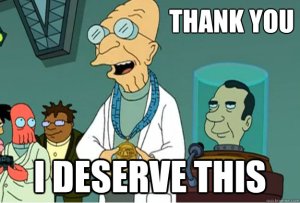
As a rule, men advocate for themselves; it’s expected, it’s not surprising, and it’s not denigrated in the least. Indeed, a number of managers have told me that it was good I did.
14b96b9ba4dcb5059f1a321d23fbaa5f6a15f8c42e873bf8744255310cbac683
Hoo boy

Women on the other hand are in a double-bind. While it’s made advances since I was a kid, society still treats girls and women to “be seen and not heard”, to be demure, quiet, not strong personalities. (My partner and I have gone out of our way to avoid our daughter being inculcated with this idiotic trope.)

If a woman follows this line, she doesn’t advocate for herself, expecting (reasonably) that her efforts will be justly rewarded. And as I already alluded, a lot of time that simply doesn’t happen (unless, ironically, a male co-worker goes to bat for them–which I have done myself on a number of ocassions).

But if a woman does have the temerity to advocate for herself, it’s almost impossible for her to do so in a way that doesn’t mark her as “pushy”, “grasping”, or “a real bitch”. She can be asking for her due in a far less direct manner than her male co-workers and still be branded as “a pushy bitch”, despite how enormously unfair this is.

Are there male executives out there who don’t behave this way? Sure. But as Margaret’s post shows you, they’re in short supply.

Nerd Culture is Inherently Sexist

If you had any doubt about this, one can only hope that “gamergate” changed your mind, as gamers are very similar to nerds and the two overlap quite a bit.  (If you don’t know anything about it, Google it; it’s too long to summarize here.)  Or you can read my brief overview of the problem in a previous blog post.  But a few details of that culture are relevant and I wanted to mention them.  (And I tell you three times and what I tell you three times is true:  I am well aware that these are generalizations.  But I’ve seen them demonstrated so often it would make your head explode.)

tumblr_mduugfVgdL1qe6uj9o1_500
Turnabout is fair play, mo’fos!

Nerds wear jeans and t-shirts.  Yes, it’s superficial and at base a silly observation, but it hints at something deeper, and is another double-bind for women.  If they dress like a nerd in jeans and t-shirts, they’re not being feminine; they’re being butch, they must not like guys, they must be the female equivalent of self-hating Jews, etc.  You won’t believe some of the nasty things I’ve heard (mostly younger) nerds say about women who actually dress the part.  But by the same token, if you dress nicely, you’re a “distraction”, you’re not a real nerd, you’re paying more attention to your clothes than your work, etc. etc.

Guys swear, girls don’t.  As I mentioned in my other blog post, if a guy swears, he’s just being a guy. If a woman does, it’s inappropriate.  I have seen CEOs, Senior VP’s, “distinguished engineers”, and other men at high levels behave in a manner that is, shall we say, unacceptable outside a locker room.  In meetings.  Yelling, swearing, banging on things; it’s all okay.  But if you are a woman, oh my land, do the Mrs. Grundy’s of the world come out.  “How shocking!”  “Not acceptable!”  “Inappropriate!”  “What a bitch!”  Etc.  And of course if you don’t swear, or use alternatives, you sound as ridiculous as Ian McShane would saying, “Well drat it all!” on “Deadwood”.

Guys watch sports.  Look, just because a lot of nerds didn’t play sports doesn’t mean they don’t watch them.  (Though of course many nerds did and do.  I’d still be doing sports if my body hadn’t collapsed on me.  Another story.)  Fantasy football.  Baseball.  Football.  Soccer.  “Hey, did you see the Sharks game?”  “Do you have tickets to the Spurs?”  “Are the ‘horns ever going to the Rose Bowl again?”  Etc.  This filters into the language, where as many feminists have pointed out makes sports metaphors pervasive.  “We have to swing for the fences”; “It’s fourth and one and we need to go for it”; “We need a home run here”; “We’re going to have to punt”; etc.

Sure, there are plenty of women who like sports, and can fit in with this, but not all of them.  To push it to the other extreme, while there are some metrosexual guys out there who might feel comfortable speaking about upcoming software projects in terms of makeup, if a female project manager started saying things like, “We used the wrong shade of lipstick on that; we went with a pink and we should have gone with a deep red”, I have to think there’d be a lot of uncomfortable squirming around the table and guys talking to each other afterwards saying, “What the FUCK was she talking about?”

And that’s exactly the point, kids.

Now What?

I’ve always hated articles, books, blog posts, or what have you that point out some problem in society and then say various versions of, “How this all plays out in the future . . . remains to be seen.  I’m Biff Clicherstein, CBS News.”  No.  Suggestions, thoughts, ideas; if you’re going to kvetch about something, the least you should do is propose a solution or two, no matter how ridiculous it may sound.  As people in high tech say, put something up there so you can shoot arrows at it.  That’s the only way to make ideas arrow-proof.

So what do I think?  I think a few things, most that have been proposed before, some of which will be, to put it mildly, hard to implement.

tumblr_inline_mpnmczbcD71qz4rgp
Kaylee from “Firefly”, who looks best w/ engine grease on her

  • Start ’em young.  In the 70s, a lot of people made fun of attempts to produce gender-neutral toys.  Yeah, okay, sometimes the 70s went a bit far, but why not?  And why not market toys to the entire spectrum of kids?  My boy loved his sister’s Dorothy costume ruby slippers; why not?  We gave my daughter dolls and Mack trucks.  Girls can’t love the LEGO Millennium Falcon?  Why the heck not?  Don’t limit your kids.  Now, just because my daughter turned into a girly-girl who loves pink doesn’t mean we didn’t work hard to give her options.  And that’s the point; she made her own choices.  Don’t make them for your kids; let them make them.
  • Similarly, be aware that gender is not binary, that there are more options than The Manly Boy and the Girly Girl.  There are girly-boys, and boyish girls, and little boys who will grow up and decide that they were girls all along, and all kinds of variants all over the spectrum.  Be aware of it, and don’t force your kid into a mold.  The mold of the Barbie, pink-wearing, “math is hard”, I can’t fix engines type is a trap.  Sure, they can choose that, but the key is giving them the choice.  Trust me on this:  Not every “Firefly” fan is stuck on the “classic” beauty Inara; Kaylee and River and Zoe have plenty of fans, too.  Don’t force your girl to be Inara if she wants to be Kaylee.  (Yes, I am a nerd, too.  Sue me.)
  • More video games with female heroes.  And with a greater variety of body types, please.  Humans come in all sizes.  Yeah, soldiers are going to be more buff, but all women don’t have D-cup boobs and trust me on this one, those that do don’t usually go around in skin-tight spandex.  Use some imagination here.
  • More movies with female heroes.  How many people kicked up a fuss when they talked about Black Widow not being in the second Avengers movie, huh?  Don’t tell me there’s no market for it.  Two of the best science fiction shows on TV are “Orphan Black” and “Lost Girl”, both with female protagonists (and both with bi and lesbian characters, I might add; start clutching those pearls, Mrs. Grundy!).

women-lauren-bo-ksenia-solo-lost-girl-anna-silk-zoie-palmer-kenzi-HD-Wallpaper
The stars of “Lost Girl”–not the “female stars”, the stars

  • Enough with the fucking sports metaphors.  I’m a guy and I’m tired of them.  Can’t we come up with something a little more imaginative?  We have access to almost all the knowledge of human history through our effin’ phones and we have to stick with sports metaphors?  C’mon!
  • Positive encouragement of girls in STEM classes all through K-12.  This has to be a priority.  Kids learn early what their roles are, and we keep letting girls get shunted into the “girly” tracks right from kindergarten, we are dooming ourselves.  How many potential female engineering geniuses are dying on the vine because of sexism?  My mother’s side of the family is hella smart.  Really smart.  And with what result?  My grandmother attempted suicide; her mother suicided, and so did her mother.  I don’t know the reasons, but it couldn’t have been easy to be a smart, strong-willed woman in an era where that was strongly quashed.  We need all our brainpower; let’s not quash it.
  • Affirmative action for women in college STEM programs; and yes, that’s right you right-wing jerks:  I’m talking about quotas.  When the playing field gets leveled, maybe we’ll change it back.  Right now, with what, 13% of high tech engineering jobs filled by women, you want to whine about quotas?  That’s just plain stupid.  We need to crank our butts into gear, get women in STEM, and keep them there.
  • In these last two, we need to treat sexism with the same level of intervention as bullying is now treated (and boy I wish we had had that anti-bullying stuff when I was in school!).  Have sexist jerks be brought before the Vice Principal and read the riot act, given detentions and suspensions.  Stop that kind of nonsense in its tracks.

Just like how in the end it wasn’t necessary for gays and lesbians to “act straight” in order to start getting equal rights, I see no reason why women should be forced to “act like nerds” in order to make it in high tech.  High tech doesn’t need women acting like nerds; it needs women acting however they act, and everyone getting over it.  If a woman swears, she swears; get over it.  If she dresses in a low-cut top, get over it.  If she uses some kind of metaphor that isn’t sports-related, get over it.  If she cries instead of yelling and throwing things when she gets angry, GET OVER IT.  You cried when Spock died in “Wrath of Khan”; she cries when you acting like a jerk-weed in a meeting.  Deal with it.

And in the meantime, let’s get cracking, shall we?  And if you have any ideas, let’s hear ’em!

Beauty, Physical Shapes, and Our Twisted Societal “Requirements”

28 Sunday Sep 2014

Posted by dougom in Uncategorized

≈ Leave a comment

skindeep
Image courtesy of Box Six

Lots and lots and lots of people have written posts, articles, scholarly dissertations, and entire books about the standards of beauty that are pushed on our society by media from movies to newspapers to billboards to you name it.  It’s a bit presumptuous of me–to say the least–to think that I can add to that.  But recently an college/internet friend was lamenting the insanity of body image and just by losing a few pounds (not on purpose), suddenly she was getting lots of comments about how “skinny” she looked.

I’m glad that people are complimenting her, but the subtext here is really unfortunate. “Skinny” as the correct goal, as the only proper body type for a woman to have, as if those stick-like runway models you see posing in Calvin Klein or whatever are the epitome of feminine perfection.

It’s just as twisted in Hollywood, of course.  I’ve done a bit of research and found that the vast majority of Hollywood actresses are both tall (few under 5’8″), slender, and small-busted (B or A cup sized).  When a woman gets up to a C cup, suddenly she’s “curvy”; you get over that and they start calling you “full-figured” or “voluptuous”, which in Hollywood-speak–but not in the real world!–means “overweight”.  In a culture that calls Jessica Alba (5’7″, 125 pounds, B-cup) “curvy”, you know something is out of whack.  And women that are Belle Epoque-style like Christina Hendricks or Kat Dennings stand out so much that you can’t hardly read a profile of them without their size being mentioned.  It’s insane.

(The thing that struck me is that in a country where the average height of a woman is 5’4″-5’5″, anyone under 5’7″ is considered “short”.  I keep thinking Rachel McAdams is short, but she’s 5’5″, for pete’s sake!  And when you watch “Firefly”, Christina Hendricks looks like she’s quite short, but in reality she’s 5’8″–she’s just surrounded by a bunch of men who are all over 6′.  Which is a whole different conversation.)

I once opined to a friend of mine that I really appreciated seeing actresses that were built like women, with busts and hips and whatnot.  She almost hit me.  “Plenty of women are naturally thin!” she said.  “There’s no one build!”  And she was absolutely right and I had been stupid, and that’s basically the point of this whole rant:  We come in all sizes, and it doesn’t matter a damn bit what your size is or even how you look.  I have dated women varying from 6′ tall and very slender to under 5′ and very curvy, and who cares, you know?

When you love someone, or even just like hanging out with them, you will stop focusing on the inevitable imperfections–my chipped tooth; my thinning, graying hair; my over-abudnace of stomach fat, my lack of much of a chest or a six-pack (which I’ve never had); etc.–and start seeing mainly, or even only, those things that you like.  Maybe like an ex-gf, you are fascinated by the lion-like yellowish tinge at the center of my irises, or maybe you find my chip-toothed smile endearing, or maybe my perpetually rumpled look makes you feel comfortable.  Whatever.  It doesn’t matter, ultimately, because if you like the person, you’ll like things about their physical appearance.  You just will.  Or you’ll simply cease to notice it.

Now I would be an idiot if I said that looks and build and whatnot didn’t matter at all.  Of course they do; perforce, they’re the first thing you notice when you meet someone.  And of course you have preferences; everyone does.  But if you limit yourself by those, you’re ruling out a pretty wide swath of people that you might quite like, or even want to partner up with.  Just because I tend to prefer curvy brunettes and redheads doesn’t mean I haven’t dated slender blondes (or slender women in general); just because I like being significantly taller than a partner doesn’t mean I only dated short women and indeed, I married someone who in our wedding pics looks taller than me.  Etc.  It’s the person, you doofs.  They say beauty is only skin deep, and I have to say I agree with Rosie O’Donnell in “Beautiful Girls”:

Implants, collagen, plastic, capped teeth, the fat sucked out, the hair extended, the nose fixed, the bush shaved… These are not real women, all right? They’re beauty freaks. And they make all us normal women with our wrinkles, our puckered boobs, hi bob, and our cellulite feel somehow inadequate. Well I don’t buy it, all right? But you fucking mooks, if you think that if there’s a chance in hell that you’ll end up with one of these women, you don’t give us real women anything approaching a commitment. It’s pathetic. . . If you had an once of self-esteem, of self-worth, of self-confidence, you would realize that as trite as it may sound, beauty is truly skin-deep. And you know what, if you ever did hook one of those girls, I guarantee you’d be sick of her.

And it’s true, kids; it really is.  If the person you’re with is not someone you like talking to, believe me:  The morning after in bed is going to be damn awkward.

I don’t know how to change the warped perceptions of “Beauty” (with a capital “B”) coming out of media, but we can all do it one person at a time, right?  Stop judging those women by their slenderness or big boobs; stop judging that guy by his nice ass and awesome six-pack.  Listen to Rosie; those things fade.  Let’s all get a grip.

A Little (Well, Quite a Bit of) Windows Hate Venting

01 Monday Sep 2014

Posted by dougom in Opinion, Uncategorized

≈ 5 Comments

Tags

Apple, GUI design, Mac, Microsoft, SGI, Silicon Graphics, Windows

image
Photo courtesy of ZDNet

So let’s get the caveats out of the way right up front, shall we?  First off, I am not a Mac acolyte (or MacAholic, or Mac Booster, or AppleHead, or whatever you call folks who think the sun rises and sets on Apple products).  Yes, we have a bunch of Apple products at our house, but that’s primarily because once I got an iPhone and Sami got her work Macbook, it just made life simpler to have everyone on the same OS.

At heart, I’m a UNIX nerd, and have been since the Reagan administration.  I’m perfectly comfortable with GUIs that run on top of UNIX (or UNIX-ish) systems, like the Linux GUI, or the Mac desktop, or (and especially) the late, lamented Silicon Graphics desktop.  But at heart, I’m a UNIX nerd who has VI keyboard shortcuts coded into my lizard brain.  It’s just how I am

But second, I don’t like Microsoft, the company.  I don’t like how they used their OS market dominance to force products on people and kill (often technologically superior) competitors; I don’t like how they steal ideas from anyone and everyone, change them slightly, and try to pass them off as their own.  And I most especially don’t like their huge, bloated desktop programs, which they seem to change every couple of years for no reason other than to update the color scheme or move menu items around.  (Or to add my least favorite GUI innovation ever:  “Ribbons“.  An opinion in which I’m hardly alone.)

To get to the point here:  For the last several years, I’ve been working on a Mac (for business reasons–I tend to work on what they give me, and haven’t owned my “own” system in a long time, unless you want to count my iPhone and iPad mini).  There are any number of things about the Mac interface that annoy me–and seriously, don’t get me started on that horrific piece of design known as iTunes–but in general I find the Mac user experience pretty solid.  In fact, it reminds me very much of my beloved SGI Indy box.  But recently I changed jobs and am back on a PC, and my Windows hate has surged once again to the fore.

Rather than get into all the ways that Windows drives me nutty–how hard it is to take screen caps compared to on a Mac, or the difference in complexity in deleting a program (on a Mac, you just drag the thing to the durn trash can!)–I can sum it up pretty quickly:  Defaults.

You know all those settings you can change in Windows?  The default font size of your emails; whether calendar alarms chime and with what sound; whether the top and sides of the screens perform that new “docking” maneuver; etc.  All those options have settings put in by Microsoft out of the box.  Those are the defaults.  And for me, the difference between the (SGI) Irix GUI and Mac desktop, and the Microsoft desktop, is that Microsoft sets all those defaults wrong.

No, I don’t want all those noises, chimes, and alarms to sound for all those applications.  No, I don’t want click noises when I move Windows around.  (I find Windows so noisy I keep the desktop muted all the time.)  No, I don’t want Internet Explorer to be my default browser.  No, I don’t want “ribbons” fully opened in all my apps by default.  No, I don’t want all my past emails “grouped by date”, I just want a flat list.  (And you can’t even set that to be the default; you have to change it for every single mailbox by hand!)  No, I don’t want the email list to be a queue; I want it to be a stack, with the most recent item at the bottom of the list, not the top. (And when I reset it, please open it that way the next time I fire up Outlook.)  Etc.

And then there’s that little “Windows” button that everyone has on their keyboards.  OK, fine, but it’s right near the shift and control keys, which means half the time I try to use keyboard shortcuts, I get the Start menu instead.  It got so bad at a previous job, I actually pried the damn key off my keyboard.

image
The keyboard in question

Of course, there are other little annoyances as well that drive me nuts.  That you have to click in a window before you can scroll in it; a Magic Mouse on a Mac will scroll any window, no matter where you clicked last.  Or how hard it is to kill an application in Windows vs. Mac–in Windows, you have to open the task manager, where on a Mac you can just right-click that sucker.  But in the main, it’s those damn defaults.

Yeah, sure; some of those settings are wrong on the Mac, too.  But the majority of them, they’re fine.  On Windows?  I spend the first day or two resetting a whole bunch of defaults so that I don’t get annoyed every time I try to perform the simplest actions.

Some of you more savvy tech folks out there are saying, “What’s the big deal, Doug?  So they set up the defaults in a way you hate; you can always change them!”  Yup, that’s true.  I could argue that the fact that I have to spend the first couple of days on a new system changing all the defaults strongly implies they’ve screwed up on their choices pretty badly, but I won’t.  The real problem is:  Figuring out how to change these defaults is practically impossible.

There are a couple of reasons for this.  First, there is a veritable ocean of default settings, and when you’re looking for one drop of water in an ocean–or even in a bathtub–it’s going to take you a long time to find it.  And it turns out that Microsoft’s inability to correctly guess what their users are going to need on a default basis extends to where they put their various system settings.  For example, you know that thing the desktop does when you drag a window to the top of the screen and it plunks it into full-screen mode?  That’s a feature set by default, called a “hot spot”.  It allows for auto-sizing and docking, and some people really like it.

Me, it drives crazy, so I wanted to turn it off.  It’s similar to the fact that when you launch new programs they always pop up on top of whatever windows are on your desktop.  Hey, if I launch a program that takes forever to come up, and then go into another window to do something else, I don’t want that damn program to grab control of my screen!  I tiled a different window to the top on purpose!  Similarly, if I want my window to go to full screen mode, I’ll do it myself, thanks.  Most of the time, I just want it to go to the durn top of the screen!

So okay, I want to turn it off.  Where is that?  Why, in the most obvious place imaginable!  You go to the Ease of Access Center from the Start menu (which is no longer labeled “Start”, I might add), select “Make the mouse easier to use”, and click a radio button labeled “Prevent windows from being automatically arranged when moved to the edge of the screen“.  Yeah, that’s right; under a mouse settings location.  Intuitive, no?

No.

As a rule of thumb, let me just say this to you UI designers out there:  If your users have to go to Google to find out how to modify settings in your app, a) your app design is a failure, and b) your online help system sucks.  (And seriously:  You don’t want me to start on the lameness that is the MS help system.  When a user doesn’t know if she’s going to get pop-up windows, a separate help window, or get sent to the browser and the MS web site, you’ve got a screwed-up system.)  Just sayin’.

And for me that pretty much extends to the entire OS; it is a rare day when something I’m looking for is where I first look.  Or the second location.  Or even the third.  The vast majority of the time I have to pull up the help window.  How is this intuitive interface design?  Does Microsoft even have a user experience team?

Bet it saves them a ton of money, thought.

I’m not an engineer.  I trained as one, sure, but I’m not one.  But I’ve had a ton of experience in fiddling with new user interfaces, and on this, Windows really tanks.  And I know I’m not alone in thinking this.

[puff puff]  Okay; I’ve gotten that out of my system.  For now, anyway.

← Older posts
Newer posts →

Subscribe

  • Entries (RSS)
  • Comments (RSS)

Archives

  • July 2024
  • February 2024
  • January 2024
  • August 2023
  • April 2023
  • February 2023
  • January 2023
  • October 2022
  • April 2022
  • February 2022
  • January 2022
  • December 2021
  • November 2021
  • September 2021
  • April 2021
  • January 2021
  • July 2020
  • May 2020
  • April 2020
  • March 2020
  • October 2019
  • November 2018
  • October 2018
  • May 2018
  • April 2017
  • September 2016
  • April 2016
  • March 2016
  • December 2015
  • November 2015
  • July 2015
  • May 2015
  • April 2015
  • March 2015
  • February 2015
  • January 2015
  • December 2014
  • November 2014
  • October 2014
  • September 2014
  • August 2014
  • June 2014
  • May 2014
  • April 2014
  • March 2014
  • February 2014
  • December 2013
  • November 2013
  • October 2013
  • September 2013
  • August 2013
  • July 2013
  • June 2013
  • May 2013
  • June 2008
  • April 2008
  • March 2008
  • February 2008
  • January 2008
  • December 2007
  • November 2007
  • October 2007
  • September 2007
  • August 2007
  • July 2007
  • June 2007

Categories

  • Fiction
  • Grammys
  • Joni Mitchell
  • Music
  • News
  • Opinion
  • personal
  • Uncategorized

Meta

  • Create account
  • Log in

Blog at WordPress.com.

  • Subscribe Subscribed
    • Random Blather
    • Join 85 other subscribers
    • Already have a WordPress.com account? Log in now.
    • Random Blather
    • Subscribe Subscribed
    • Sign up
    • Log in
    • Report this content
    • View site in Reader
    • Manage subscriptions
    • Collapse this bar
 

Loading Comments...