• About
  • Follow
  • Life: An Odd Analogy
  • Making Debates Suck a Wee Bit Less
  • To heck with the good ol’ days
  • Writing

Random Blather

~ Feverish ravings of an aging GenX mind

Random Blather

Category Archives: Uncategorized

The Frustrations of a Long-Distance Tech Writer

10 Friday Apr 2015

Posted by dougom in Uncategorized

≈ 1 Comment

Writer
Image courtesy of Neil Newton

I’ve mentioned before that I am one of those lucky few that (in general) actually enjoys his job.  I like working in high tech, being around smart people, playing with cutting-edge (“bleeding-edge”, we like to joke) tech, while at the same time not writing code or designing hardware, two areas in which I studied and got a degree but for which I am depressingly untalented.  Writing about tech stuff, though; there, I seem to have a degree of ability, thank goodness.

That doesn’t mean, though, that the job doesn’t have frustrations.  Now yes, “Check your privilege”; these are first world problems, and for a cis-gendered, straight, white male.  I don’t have to deal with the rampant sexism in my chosen field (though I try to mitigate it where I can).  I don’t have to deal with racism, except in those rare cases where I have worked in a majority non-American environment (it happened a couple of times).  I don’t have to deal with homophobia or transphobia, and as I don’t go around wearing a yellow Magen David and don’t particularly “look Jewish”, the minor amounts of anti-Semitism I’ve encountered haven’t been a big deal.  Duly noted.

But in nearly three decades of professional tech writing, I have to admit that I’ve gotten pretty tired of some things that happen consistently, again and again and again, no matter how much I try to fix them.

In the high tech world, I should tell you that tech writers are pretty low on the totem pole.  Engineering believes that Marketing, Support, and QA are in the same region, but as Marketing knows they’re not, it never hurts their feelings.  I have on the other hand commiserated plenty with Support and QA folks, who are treated as (at best) necessary evils.

You see, the engineering attitude is, if they write awesome code, there’s no need for Support or QA; why test and provide support for something that’s awesome?  And Marketing?  Ha!  My code is so awesome that it will sell itself; what do I need those suit-wearing, MBA jargon-spouting fools for? (Of course, since Marketing feels similarly about Engineering—”Don’t those idiots know that if we don’t sell their product they wouldn’t even have jobs?”—that part kind of evens out in the end.  And besides, it’s the Marketing folks who tend to move up the ladder and become CEOs.)

Technical content?  Despite the fact that we supposedly live in an era where “content is King”, most people believe that it’s easy, that it’s just “cut and past from the specification”, that it’s just “ink on the page”, that “one of my engineers can do it”, that everyone can write the content if they didn’t have to spend their extremely valuable time writing code/being a manager/doing important Marketing work/whatever.  It’s like breathing; everyone knows how to talk, so everyone knows how to write technical content, right?

Well, um, no.

Like everyone else in high tech, technical writers have spent years (or even decades) honing their skills.  While everyone theoretically can write, the number of people who can write clear, concise, correct colloquial American English is pretty small.  People assume that that because they can speak, they can write. It’s simply not true.  The number of people who can do that and comprehend high tech concepts, software, and hardware is even smaller.

Now then, let’s look at me.  I spent 4 years in college—and plenty of time in high school too—learning computer technology.  I started when I was 15, and got a degree in computer science.  I did the work of going into a job as an engineer.  There’s not too many people who do that and then don’t become engineers.  I also had some inherent skill at writing, and since entering the field, I have spent more than 20 years working on my tech writing skillset–not just my writing, but theories of organization, information architecture, web page design and layout, editing tools, publishing tools, source control tools.  And I’m hardly atypical.

Despite this, tech writers constantly have to remind people of their ability.  I’m often tempted to say, “Hey, I don’t lean over your shoulder and tell you where to put curly brackets and semi-colons in your code, do I?”.

Tech writers also have to teach every new product team that, yes, we do understand technical issues and yes, we are professionals on par with them in our own branch of the high tech industry and, finally, yes, they have to take us and (more importantly) what we do seriously if we want to get the durn product out the door.

And finally, it becomes very tiresome to have to behave like some kind of fascistic, yard-stick weilding equivalent of a Catholic school knuckle-smacking nun in order to get you to do that part of your job that intersects with mine.  Yes, I read the specs; yes, I try to use the product myself; yes, I attend the appropriate training classes (when they exist; for new products, they don’t).  Yes, I do all that.  But I also need a couple of things from you: When we ask for some of your time, rather than being grumpy, snarky, suggesting (either implicitly or explicitly) that we haven’t done my homework, do us the courtesy of providing that time.

Because see, if you give us just a little bit of time, not only will we document everything you tell us about, we’ll probably find other stuff that you and QA missed but that the customers won’t–I have an amazing gift for breaking software and finding odd corner cases–and we’ll document that, too.

Truly:  30 minutes of your time now will save you hours of hassle later.  I’ve been doing this a long time; I know. (Also, it provides you with some good CYA.  “I met with Doug on this; isn’t it in the product documentation?”  See?  Off the hook!)  Wouldn’t you rather spend that time chatting with me instead of arguing with trolls on the forums, dealing with irate customers via phone, or having an exec email you demanding you fix some problem?  It’s a good investment!

The other thing we ask is that, when we send you something to review, review it.  Look, I know reading technical content is the last thing you want to do.  I know it’s dull.  I know you think your time is too valuable for it, that someone else should be doing it, that I should have gotten it right the first time, that there’s no time in the schedule for you to review content.  I’ve heard it all, believe me.  (And if there’s no time, please tell me; I will go all the way up to executive VPs to get time built into your schedule for it.  Trust me; I’ve done it.  Ask my friend Margaret.)

But unless the experts—”subject matter experts” we call ’em, or SMEs (because in high tech it’s not important until it’s been assigned an acronym, even when that acronym is made up of other acronyms)—go over my content, it’s going to be wrong.  I’ll catch most stuff; hell, I’ll think up plenty of stuff you folks never would (remember my lecture on how much experience I have earlier on?).  But there are technical minutae that I will miss.  I can’t help it; you’ve been coding that project for six months and I’ve only been playing with it for a few weeks; how could it be otherwise?  If you didn’t know more about it than me, we would be switching jobs no matter how lame my coding skills are.  That’s what review teams are for: To catch the stuff I miss.

(And by the way, don’t worry about my grammar, punctuation, and other writing-specific things.  I know there’s a terrible temptation to mark those things up; it’s easy, it’s obvious, and it gives you a way to get back at the person who’s “wasting your time”.  Resist.  I know you can do it.)

So there you have it.  As writers, we don’t ask much.  Just

  • Treat your content people as fellow professionals whose time is also valuable even though they don’t code or design hardware
  • Give them the time they ask for (and if they’re asking for too much, go to their managers)
  • Give them the feedback they request

Do that and not only will your content person be really happy with you, they’ll do you favors.  They’ll post bugs that they found in the product that everyone else missed; they’ll help you re-word that email to the exec to help you get off the hoook for that major screw-up; they’ll advise you on your resume when you’re ready to head on to new challenges; they’ll give you solid advice on your web site that you never would have thought of.  This is the kind of stuff we do.  Leverage it.

The few; the proud; the technical content creators.  It’s not just a job, it’s an adventure.  No, seriously.
Content in an Online World: A Modest Proposal

06 Tuesday Jan 2015

Posted by dougom in Opinion, Uncategorized

≈ 2 Comments

Tags

Internet, online, web, web page design

1625.prd.s.alt.002
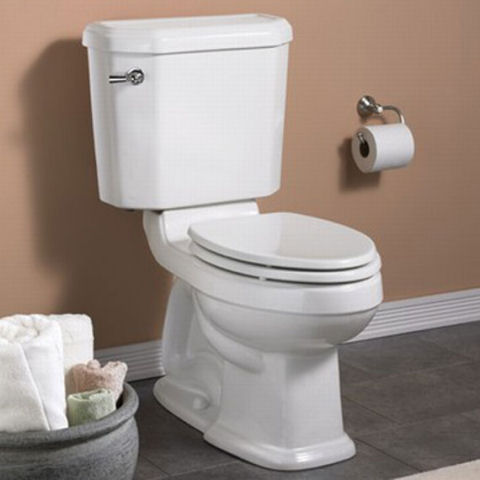
This pic will make sense later, I promise

When I went to New Zealand at the age of 27, some of the things it taught me were about the United States.  For example, at that time Baywatch and Pam Anderson were hugely, wildly popular, and a question my friend Tim and I often heard, especially when people learned we were from California, was:  Is that what it’s really like?  (“Only in Venice,” I said to one.)  Another thing I learned was the sheer variety of food we had available in California.  At a small grocery store near Christchurch–a decent-sized city–they had two sets of lunch meat.  Not three types of meat; three sets, period.  You could have ham, or beef.  By manufacturer X.  That was it; your choices.  You didn’t get to decide between grain-fed beef or free-range turkey or whatever; this packet of ham, or that packet of beef.  Thanks for shopping!

But the other big thing I noticed about America while I was in New Zealand was . . . standarization.  We’re big into standards here.  Not quality standards; design standards.  Not to gross you out, but the place I noticed it most was in plumbing fixtures, specifically urinals.  Here, urinals either look like vertical (when they’re individual) or horizontal (like in older sports stadiums) bathtubs.  All of them, everywhere.  You go into a men’s room in Omaha and it’ll have a urinal that looks just like the one in your office park in Mt. View.  Oh, there’ll be a bit of variety; here there are self-flushing ones, there you have to use a handle and flush manually.  But in the main, standards.  Hell, there’s a company that makes this stuff called, naturally enough, “American Standard“.  We like to standardize.

So you’d think (he said, finally getting to the point) that after 20 or so years, Web pages would be pretty standardized by now.  That at least there’d be some agreements on some basic things, like putting an author’s name and email address on there, or some such.  But if you think that, you’d be out of luck.  And so, in an effort to correct this rather egregious error, I offer to you a very, very short list of simple things everyone can do to their web sites to make life much better for everyone.  So pay attention!  I’ve been writing online content for longer than the web has existed, and I actually know what I’m talking about here!

Every web page, everywhere, should have a date stamp.  You’d think this goes without saying, but apparently it doesn’t because a lot of otherwise fine sites don’t follow this rule.  Why is it important?  Because in an online world, you can’t always tell by looking how old a post is.  You’re reading a post that you got to through google and thinking, “Wait, there’s a chance of a government shutdown?”, and then do a little digging and find that you’re reading a post from 2009 or something.  Why make readers guess?  Put the date stamp right up there at the top.

Another important ease-of-use issue is:  Don’t make readers click through dozens of pages.  Yes, I know it ups your click counts; yes, I know you can squeeze in more advertisers that way; yes, I know you can sucker readers into accidentally clicking on ad links that are made to look like a “Next page ->” link.  And you know what?  That’s a good long-term strategy for driving away readers.  I once clicked on a link that was The Top 100 [something]–I can’t remember what–and they were all on their own separate page.  Does the writer, or more likely the editor or site owner, really think anyone is going to click through that many pages?  It’s absurd.  I got out of there in a hurry.  I wonder how many hits they got on page 100; close to zero, I’m guessing.

If you feel you must have click throughs, at least give your readers the option of reading it as a single page.  Yes, it’s more work for you–which is why I urge you to make your content a single page to begin with!–but it will make your readers happy.  Buzzfeed has plenty of long lists, and they don’t force you to go to multiple pages and they’re doing pretty durn good.

And speaking of multiple pages, for the love of God, don’t force open a whole bunch of new pages or tabs when they’re all associated with your site.  I went to pay my daughter’s tuition and opened up the main college site.  This told me to go to the student site which, when I clicked, opened a new tap in my browser.  Then when I logged in and click the “payment plan” button, it opened up yet another new tab; I now had three separate tabs open when all I wanted was to pay the durn bill.  Bad design, ACC.  And again, if you feel you must open new tabs or pages, let your readers choose at least.

Another feature I think should be avoided is forcing people to “sign up” with your site in order to leave comments.  I’ve gone to [random site] following a link from Twitter or Facebook, left a comment, and then had the site ask for my name and email address at a minimum, or access to my Twitter, Facebook, or whatever account.  First, stop calling the name field “name”; call it “handle” or “alias” or something so that people know they don’t have to use their real names.  But even better would be to stop doing it altogether.  I don’t mind my regular sites having that information, but the Atlanta Constitution-Journal or whatever just because I went there that one time?  Silly.

Related to that is the obnoxious “opt out” practice.  Most sites that use your email are at least polite enough to inform you and give you a “please don’t spam me” checkbox (sometimes checked by default, sometimes not–another tip:  Let it always be unchecked by default!).  But there are clearly plenty that just grab your email address and start sending you spam, which you then have to opt out of by clicking a link to an “opt out” page.  Don’t do that to your readers.  And if you have an “opt out” page or pages, don’t force them to answer why they’re opting out; the answer is simple: They’re tired of spam from you!  There, I’ve told you; stop asking!

In a similar, and much more obnoxious, vein is the pop-up (or whatever the hell they’re calling it now).  Again, it’s an issue of revenue, I’m sure, but two things to avoid: Don’t let it cover the entire page, and have a big, clear, easy-to-find, easy-to-tap “X” in either the upper-right or upper-left corner.  That’s where years of Mac or PC use have taught us to look to close stuff.  Making the pop-up cover the whole page; having it stay there for a pre-allotted time before you can close it; making it a video that plays automatically; giving it an audio track that plays automatically; making it look like you can close it but really it takes you to another page; all these are douche moves.  Don’t do them.

Finally–and I know this will be controversial for some–include the author on each piece.  On technical documents on corporate sites this isn’t a real need; on opinion pieces, it really is.  And if you don’t want to use your real name–and I know plenty who not only don’t, but legally can’t–use your nome de plume or alias or handle or whatever you write behind, and then include a link to where people can voice their opinions other than the comments page.  I think a link to folks’ Twitter accounts is good, but maybe just set up an email account–I’ve got five (I think)–where people can send stuff.  Will most of it be dreck?  Of course.  But one of the benefits of online content is that it makes people feel there are less layers between you and the writer.  When I read a Matt Taibbi piece to which I take issue, I don’t comment after the post or send mail to Rolling Stone, I tell Taibbi on his Twitter feed.  Maybe he doesn’t respond, but it feels as if he might.  And improving people’s feelz when it comes to online content is what we’re talking about here.

Anyway, those are a few of the things I’ve noticed in my time online, and think we should strive to standardize against.  What about you?

We Need More Women in High Tech, Dammit!

18 Thursday Dec 2014

Posted by dougom in News, Opinion, Uncategorized

≈ 14 Comments

Tags

education, high tech, sexism

Michelle-Meyrink
Jordan from “Real Genius”, who I adored
(Image courtesy of the Cult Film Club)

Note: This is longer than my usual blog-post.  It’s on a topic that is both complicated, and one I think is really important, but it may strike you as tl;dr.  I’m okay with that.  For the rest of y’all, read on:

Despite the fact that it is a trite observation that “women and men are different”, and bearing in mind that gender is both more fluid and less binary than we are taught growing up, these differences–which permeate basically every facet of our lives–have been and continue to be an important area of study for psychologists, sociologists, and even relatively unimportant schlubs like me. (One of the best books on this topic that I’ve read is Deborah Tannen’s “You Just Don’t Understand”, which I highly recommend.)

Now, the reasons behind this are up for debate. Some–radical feminists, for example–say that it’s the patriarchy’s method of keeping women subjugated. Other theories abound (“It’s due to religion”; “It’s a holdover from the Middle Ages”; “It’s a holdover from the hunter/gatherer era”; etc.). But I’m not interested in exploring any of that.

I mention this right up front as a preface to what I’ve seen, and what I think about what I’ve seen, with women and the reactions of men in the high tech world. I’ve written about some of that in another post, so I won’t rehash that in depth. Instead I want to focus on “typical” male and female reactions to certain situations, and how that affects the advancement (or lack thereof) in that environment.

A former manager of mine, Margaret Dawson, has written an excellent post (Seriously: read it!) on this topic, and if I’m successful this will be a good companion piece to her thoughts and observations. You might even read her post first, if you have a mind to.

These are generalizations, of course. I recognize that. And I recognize the fluidity of gender and its potential impact on these observations. But I have seen too much of what I note below to think this stuff isn’t widespread, so I hope you can read with an open mind.

“Men Don’t Cry”

This is a stupid trope that has been around as long as I’ve been alive. Heck, it’s in some literature–science fiction literature, no less–that I still enjoy. “Don’t cry in public”; “Make sure you’re alone in the bathroom if you have to cry”; “Crying shows weakness”; even “There’s no crying in baseball”. All macho baloney of course, but it’s deeply stuck in the culture.

swearing-yelling-guy
Oy, enough already with the yelling!

Why mention it? Well, when men are angry, they yell. We’ve all heard stories about high-tech executives who behave like–let’s be honest here–spoiled little children. Yelling, screaming, throwing things, calling people names, cursing up a blue streak that would cause a sailor to blush. (Well, maybe.) Men get mad, and they yell.

When women get mad–and again, this is a generalization, but one I’ve seen many many times and had it confirmed by many women–they cry. It’s their emotional response. It doesn’t matter why–Deborah Tannen probably has a whole book on it–it only matters that it happens.

Add that to the fact that many men have very strong responses to female tears; embarrassment, shame, anger, even (so I’ve read) sexual excitement. (It’s never affected me that way, but I can believe it.)

Now mix it together. A woman gets angry during a meeting, or in a 1-1 interaction; what happens? She’s a weakling, she “can’t take the heat” and should “get out of the kitchen”. She needs more and bigger balls. She needs to toughen up. This is business, not personal, and business isn’t bean-bag toss. It’s tough; you need to be tough, too. Etc.

(As a side note the only time I ever hear “It’s just business, it’s not personal” is when someone has either just screwed you over, has screwed over someone else, or is planning on screwing someone over, and they want to salve their ego. And in my view, it’s epic baloney.)

There are really only two options here: Force yourself to learn another set of emotional responses to external stimulus (it can be done, but it’s hard), or teach men to be respectful of the different ways in which women respond to situations that make them angry. Neither of these is an easy solution, but these are emotional reactions, for most folks below the conscious level; it seems unlikely we’ll see a lot of advancement for women in high tech executive positions until both are addressed. Both, not just one or the other.

Men Expect Advancement as Their Due

One thing in Margaret’s post was that has long struck me was her recounting how many of her fellow women executives wondered how to advocate for themselves, how to get the advancements that they seemed to earn, how to ask for it. What hit me most of all were the women who advanced rapidly or highly, and were considered “heroes” for doing so.

You shouldn’t have to be a “hero” in order to advance. Reasons to advance someone in a hierarchy are various, but most folks expect the value of their work to be recognized, and for them to advanced based on that recognition. But you also have to advocate for yourself, because your manager–no matter how good he is–may not know of your goals, or advocate strongly for you, or think you want advancement. Only you can avoid being trapped in a position because “that’s where you excel”.

As a rule, men advocate for themselves; it’s expected, it’s not surprising, and it’s not denigrated in the least. Indeed, a number of managers have told me that it was good I did.

14b96b9ba4dcb5059f1a321d23fbaa5f6a15f8c42e873bf8744255310cbac683
Hoo boy

Women on the other hand are in a double-bind. While it’s made advances since I was a kid, society still treats girls and women to “be seen and not heard”, to be demure, quiet, not strong personalities. (My partner and I have gone out of our way to avoid our daughter being inculcated with this idiotic trope.)

If a woman follows this line, she doesn’t advocate for herself, expecting (reasonably) that her efforts will be justly rewarded. And as I already alluded, a lot of time that simply doesn’t happen (unless, ironically, a male co-worker goes to bat for them–which I have done myself on a number of ocassions).

But if a woman does have the temerity to advocate for herself, it’s almost impossible for her to do so in a way that doesn’t mark her as “pushy”, “grasping”, or “a real bitch”. She can be asking for her due in a far less direct manner than her male co-workers and still be branded as “a pushy bitch”, despite how enormously unfair this is.

Are there male executives out there who don’t behave this way? Sure. But as Margaret’s post shows you, they’re in short supply.

Nerd Culture is Inherently Sexist

If you had any doubt about this, one can only hope that “gamergate” changed your mind, as gamers are very similar to nerds and the two overlap quite a bit.  (If you don’t know anything about it, Google it; it’s too long to summarize here.)  Or you can read my brief overview of the problem in a previous blog post.  But a few details of that culture are relevant and I wanted to mention them.  (And I tell you three times and what I tell you three times is true:  I am well aware that these are generalizations.  But I’ve seen them demonstrated so often it would make your head explode.)

tumblr_mduugfVgdL1qe6uj9o1_500
Turnabout is fair play, mo’fos!

Nerds wear jeans and t-shirts.  Yes, it’s superficial and at base a silly observation, but it hints at something deeper, and is another double-bind for women.  If they dress like a nerd in jeans and t-shirts, they’re not being feminine; they’re being butch, they must not like guys, they must be the female equivalent of self-hating Jews, etc.  You won’t believe some of the nasty things I’ve heard (mostly younger) nerds say about women who actually dress the part.  But by the same token, if you dress nicely, you’re a “distraction”, you’re not a real nerd, you’re paying more attention to your clothes than your work, etc. etc.

Guys swear, girls don’t.  As I mentioned in my other blog post, if a guy swears, he’s just being a guy. If a woman does, it’s inappropriate.  I have seen CEOs, Senior VP’s, “distinguished engineers”, and other men at high levels behave in a manner that is, shall we say, unacceptable outside a locker room.  In meetings.  Yelling, swearing, banging on things; it’s all okay.  But if you are a woman, oh my land, do the Mrs. Grundy’s of the world come out.  “How shocking!”  “Not acceptable!”  “Inappropriate!”  “What a bitch!”  Etc.  And of course if you don’t swear, or use alternatives, you sound as ridiculous as Ian McShane would saying, “Well drat it all!” on “Deadwood”.

Guys watch sports.  Look, just because a lot of nerds didn’t play sports doesn’t mean they don’t watch them.  (Though of course many nerds did and do.  I’d still be doing sports if my body hadn’t collapsed on me.  Another story.)  Fantasy football.  Baseball.  Football.  Soccer.  “Hey, did you see the Sharks game?”  “Do you have tickets to the Spurs?”  “Are the ‘horns ever going to the Rose Bowl again?”  Etc.  This filters into the language, where as many feminists have pointed out makes sports metaphors pervasive.  “We have to swing for the fences”; “It’s fourth and one and we need to go for it”; “We need a home run here”; “We’re going to have to punt”; etc.

Sure, there are plenty of women who like sports, and can fit in with this, but not all of them.  To push it to the other extreme, while there are some metrosexual guys out there who might feel comfortable speaking about upcoming software projects in terms of makeup, if a female project manager started saying things like, “We used the wrong shade of lipstick on that; we went with a pink and we should have gone with a deep red”, I have to think there’d be a lot of uncomfortable squirming around the table and guys talking to each other afterwards saying, “What the FUCK was she talking about?”

And that’s exactly the point, kids.

Now What?

I’ve always hated articles, books, blog posts, or what have you that point out some problem in society and then say various versions of, “How this all plays out in the future . . . remains to be seen.  I’m Biff Clicherstein, CBS News.”  No.  Suggestions, thoughts, ideas; if you’re going to kvetch about something, the least you should do is propose a solution or two, no matter how ridiculous it may sound.  As people in high tech say, put something up there so you can shoot arrows at it.  That’s the only way to make ideas arrow-proof.

So what do I think?  I think a few things, most that have been proposed before, some of which will be, to put it mildly, hard to implement.

tumblr_inline_mpnmczbcD71qz4rgp
Kaylee from “Firefly”, who looks best w/ engine grease on her

  • Start ’em young.  In the 70s, a lot of people made fun of attempts to produce gender-neutral toys.  Yeah, okay, sometimes the 70s went a bit far, but why not?  And why not market toys to the entire spectrum of kids?  My boy loved his sister’s Dorothy costume ruby slippers; why not?  We gave my daughter dolls and Mack trucks.  Girls can’t love the LEGO Millennium Falcon?  Why the heck not?  Don’t limit your kids.  Now, just because my daughter turned into a girly-girl who loves pink doesn’t mean we didn’t work hard to give her options.  And that’s the point; she made her own choices.  Don’t make them for your kids; let them make them.
  • Similarly, be aware that gender is not binary, that there are more options than The Manly Boy and the Girly Girl.  There are girly-boys, and boyish girls, and little boys who will grow up and decide that they were girls all along, and all kinds of variants all over the spectrum.  Be aware of it, and don’t force your kid into a mold.  The mold of the Barbie, pink-wearing, “math is hard”, I can’t fix engines type is a trap.  Sure, they can choose that, but the key is giving them the choice.  Trust me on this:  Not every “Firefly” fan is stuck on the “classic” beauty Inara; Kaylee and River and Zoe have plenty of fans, too.  Don’t force your girl to be Inara if she wants to be Kaylee.  (Yes, I am a nerd, too.  Sue me.)
  • More video games with female heroes.  And with a greater variety of body types, please.  Humans come in all sizes.  Yeah, soldiers are going to be more buff, but all women don’t have D-cup boobs and trust me on this one, those that do don’t usually go around in skin-tight spandex.  Use some imagination here.
  • More movies with female heroes.  How many people kicked up a fuss when they talked about Black Widow not being in the second Avengers movie, huh?  Don’t tell me there’s no market for it.  Two of the best science fiction shows on TV are “Orphan Black” and “Lost Girl”, both with female protagonists (and both with bi and lesbian characters, I might add; start clutching those pearls, Mrs. Grundy!).

women-lauren-bo-ksenia-solo-lost-girl-anna-silk-zoie-palmer-kenzi-HD-Wallpaper
The stars of “Lost Girl”–not the “female stars”, the stars

  • Enough with the fucking sports metaphors.  I’m a guy and I’m tired of them.  Can’t we come up with something a little more imaginative?  We have access to almost all the knowledge of human history through our effin’ phones and we have to stick with sports metaphors?  C’mon!
  • Positive encouragement of girls in STEM classes all through K-12.  This has to be a priority.  Kids learn early what their roles are, and we keep letting girls get shunted into the “girly” tracks right from kindergarten, we are dooming ourselves.  How many potential female engineering geniuses are dying on the vine because of sexism?  My mother’s side of the family is hella smart.  Really smart.  And with what result?  My grandmother attempted suicide; her mother suicided, and so did her mother.  I don’t know the reasons, but it couldn’t have been easy to be a smart, strong-willed woman in an era where that was strongly quashed.  We need all our brainpower; let’s not quash it.
  • Affirmative action for women in college STEM programs; and yes, that’s right you right-wing jerks:  I’m talking about quotas.  When the playing field gets leveled, maybe we’ll change it back.  Right now, with what, 13% of high tech engineering jobs filled by women, you want to whine about quotas?  That’s just plain stupid.  We need to crank our butts into gear, get women in STEM, and keep them there.
  • In these last two, we need to treat sexism with the same level of intervention as bullying is now treated (and boy I wish we had had that anti-bullying stuff when I was in school!).  Have sexist jerks be brought before the Vice Principal and read the riot act, given detentions and suspensions.  Stop that kind of nonsense in its tracks.

Just like how in the end it wasn’t necessary for gays and lesbians to “act straight” in order to start getting equal rights, I see no reason why women should be forced to “act like nerds” in order to make it in high tech.  High tech doesn’t need women acting like nerds; it needs women acting however they act, and everyone getting over it.  If a woman swears, she swears; get over it.  If she dresses in a low-cut top, get over it.  If she uses some kind of metaphor that isn’t sports-related, get over it.  If she cries instead of yelling and throwing things when she gets angry, GET OVER IT.  You cried when Spock died in “Wrath of Khan”; she cries when you acting like a jerk-weed in a meeting.  Deal with it.

And in the meantime, let’s get cracking, shall we?  And if you have any ideas, let’s hear ’em!

Beauty, Physical Shapes, and Our Twisted Societal “Requirements”

28 Sunday Sep 2014

Posted by dougom in Uncategorized

≈ Leave a comment

skindeep
Image courtesy of Box Six

Lots and lots and lots of people have written posts, articles, scholarly dissertations, and entire books about the standards of beauty that are pushed on our society by media from movies to newspapers to billboards to you name it.  It’s a bit presumptuous of me–to say the least–to think that I can add to that.  But recently an college/internet friend was lamenting the insanity of body image and just by losing a few pounds (not on purpose), suddenly she was getting lots of comments about how “skinny” she looked.

I’m glad that people are complimenting her, but the subtext here is really unfortunate. “Skinny” as the correct goal, as the only proper body type for a woman to have, as if those stick-like runway models you see posing in Calvin Klein or whatever are the epitome of feminine perfection.

It’s just as twisted in Hollywood, of course.  I’ve done a bit of research and found that the vast majority of Hollywood actresses are both tall (few under 5’8″), slender, and small-busted (B or A cup sized).  When a woman gets up to a C cup, suddenly she’s “curvy”; you get over that and they start calling you “full-figured” or “voluptuous”, which in Hollywood-speak–but not in the real world!–means “overweight”.  In a culture that calls Jessica Alba (5’7″, 125 pounds, B-cup) “curvy”, you know something is out of whack.  And women that are Belle Epoque-style like Christina Hendricks or Kat Dennings stand out so much that you can’t hardly read a profile of them without their size being mentioned.  It’s insane.

(The thing that struck me is that in a country where the average height of a woman is 5’4″-5’5″, anyone under 5’7″ is considered “short”.  I keep thinking Rachel McAdams is short, but she’s 5’5″, for pete’s sake!  And when you watch “Firefly”, Christina Hendricks looks like she’s quite short, but in reality she’s 5’8″–she’s just surrounded by a bunch of men who are all over 6′.  Which is a whole different conversation.)

I once opined to a friend of mine that I really appreciated seeing actresses that were built like women, with busts and hips and whatnot.  She almost hit me.  “Plenty of women are naturally thin!” she said.  “There’s no one build!”  And she was absolutely right and I had been stupid, and that’s basically the point of this whole rant:  We come in all sizes, and it doesn’t matter a damn bit what your size is or even how you look.  I have dated women varying from 6′ tall and very slender to under 5′ and very curvy, and who cares, you know?

When you love someone, or even just like hanging out with them, you will stop focusing on the inevitable imperfections–my chipped tooth; my thinning, graying hair; my over-abudnace of stomach fat, my lack of much of a chest or a six-pack (which I’ve never had); etc.–and start seeing mainly, or even only, those things that you like.  Maybe like an ex-gf, you are fascinated by the lion-like yellowish tinge at the center of my irises, or maybe you find my chip-toothed smile endearing, or maybe my perpetually rumpled look makes you feel comfortable.  Whatever.  It doesn’t matter, ultimately, because if you like the person, you’ll like things about their physical appearance.  You just will.  Or you’ll simply cease to notice it.

Now I would be an idiot if I said that looks and build and whatnot didn’t matter at all.  Of course they do; perforce, they’re the first thing you notice when you meet someone.  And of course you have preferences; everyone does.  But if you limit yourself by those, you’re ruling out a pretty wide swath of people that you might quite like, or even want to partner up with.  Just because I tend to prefer curvy brunettes and redheads doesn’t mean I haven’t dated slender blondes (or slender women in general); just because I like being significantly taller than a partner doesn’t mean I only dated short women and indeed, I married someone who in our wedding pics looks taller than me.  Etc.  It’s the person, you doofs.  They say beauty is only skin deep, and I have to say I agree with Rosie O’Donnell in “Beautiful Girls”:

Implants, collagen, plastic, capped teeth, the fat sucked out, the hair extended, the nose fixed, the bush shaved… These are not real women, all right? They’re beauty freaks. And they make all us normal women with our wrinkles, our puckered boobs, hi bob, and our cellulite feel somehow inadequate. Well I don’t buy it, all right? But you fucking mooks, if you think that if there’s a chance in hell that you’ll end up with one of these women, you don’t give us real women anything approaching a commitment. It’s pathetic. . . If you had an once of self-esteem, of self-worth, of self-confidence, you would realize that as trite as it may sound, beauty is truly skin-deep. And you know what, if you ever did hook one of those girls, I guarantee you’d be sick of her.

And it’s true, kids; it really is.  If the person you’re with is not someone you like talking to, believe me:  The morning after in bed is going to be damn awkward.

I don’t know how to change the warped perceptions of “Beauty” (with a capital “B”) coming out of media, but we can all do it one person at a time, right?  Stop judging those women by their slenderness or big boobs; stop judging that guy by his nice ass and awesome six-pack.  Listen to Rosie; those things fade.  Let’s all get a grip.

A Little (Well, Quite a Bit of) Windows Hate Venting

01 Monday Sep 2014

Posted by dougom in Opinion, Uncategorized

≈ 5 Comments

Tags

Apple, GUI design, Mac, Microsoft, SGI, Silicon Graphics, Windows

image
Photo courtesy of ZDNet

So let’s get the caveats out of the way right up front, shall we?  First off, I am not a Mac acolyte (or MacAholic, or Mac Booster, or AppleHead, or whatever you call folks who think the sun rises and sets on Apple products).  Yes, we have a bunch of Apple products at our house, but that’s primarily because once I got an iPhone and Sami got her work Macbook, it just made life simpler to have everyone on the same OS.

At heart, I’m a UNIX nerd, and have been since the Reagan administration.  I’m perfectly comfortable with GUIs that run on top of UNIX (or UNIX-ish) systems, like the Linux GUI, or the Mac desktop, or (and especially) the late, lamented Silicon Graphics desktop.  But at heart, I’m a UNIX nerd who has VI keyboard shortcuts coded into my lizard brain.  It’s just how I am

But second, I don’t like Microsoft, the company.  I don’t like how they used their OS market dominance to force products on people and kill (often technologically superior) competitors; I don’t like how they steal ideas from anyone and everyone, change them slightly, and try to pass them off as their own.  And I most especially don’t like their huge, bloated desktop programs, which they seem to change every couple of years for no reason other than to update the color scheme or move menu items around.  (Or to add my least favorite GUI innovation ever:  “Ribbons“.  An opinion in which I’m hardly alone.)

To get to the point here:  For the last several years, I’ve been working on a Mac (for business reasons–I tend to work on what they give me, and haven’t owned my “own” system in a long time, unless you want to count my iPhone and iPad mini).  There are any number of things about the Mac interface that annoy me–and seriously, don’t get me started on that horrific piece of design known as iTunes–but in general I find the Mac user experience pretty solid.  In fact, it reminds me very much of my beloved SGI Indy box.  But recently I changed jobs and am back on a PC, and my Windows hate has surged once again to the fore.

Rather than get into all the ways that Windows drives me nutty–how hard it is to take screen caps compared to on a Mac, or the difference in complexity in deleting a program (on a Mac, you just drag the thing to the durn trash can!)–I can sum it up pretty quickly:  Defaults.

You know all those settings you can change in Windows?  The default font size of your emails; whether calendar alarms chime and with what sound; whether the top and sides of the screens perform that new “docking” maneuver; etc.  All those options have settings put in by Microsoft out of the box.  Those are the defaults.  And for me, the difference between the (SGI) Irix GUI and Mac desktop, and the Microsoft desktop, is that Microsoft sets all those defaults wrong.

No, I don’t want all those noises, chimes, and alarms to sound for all those applications.  No, I don’t want click noises when I move Windows around.  (I find Windows so noisy I keep the desktop muted all the time.)  No, I don’t want Internet Explorer to be my default browser.  No, I don’t want “ribbons” fully opened in all my apps by default.  No, I don’t want all my past emails “grouped by date”, I just want a flat list.  (And you can’t even set that to be the default; you have to change it for every single mailbox by hand!)  No, I don’t want the email list to be a queue; I want it to be a stack, with the most recent item at the bottom of the list, not the top. (And when I reset it, please open it that way the next time I fire up Outlook.)  Etc.

And then there’s that little “Windows” button that everyone has on their keyboards.  OK, fine, but it’s right near the shift and control keys, which means half the time I try to use keyboard shortcuts, I get the Start menu instead.  It got so bad at a previous job, I actually pried the damn key off my keyboard.

image
The keyboard in question

Of course, there are other little annoyances as well that drive me nuts.  That you have to click in a window before you can scroll in it; a Magic Mouse on a Mac will scroll any window, no matter where you clicked last.  Or how hard it is to kill an application in Windows vs. Mac–in Windows, you have to open the task manager, where on a Mac you can just right-click that sucker.  But in the main, it’s those damn defaults.

Yeah, sure; some of those settings are wrong on the Mac, too.  But the majority of them, they’re fine.  On Windows?  I spend the first day or two resetting a whole bunch of defaults so that I don’t get annoyed every time I try to perform the simplest actions.

Some of you more savvy tech folks out there are saying, “What’s the big deal, Doug?  So they set up the defaults in a way you hate; you can always change them!”  Yup, that’s true.  I could argue that the fact that I have to spend the first couple of days on a new system changing all the defaults strongly implies they’ve screwed up on their choices pretty badly, but I won’t.  The real problem is:  Figuring out how to change these defaults is practically impossible.

There are a couple of reasons for this.  First, there is a veritable ocean of default settings, and when you’re looking for one drop of water in an ocean–or even in a bathtub–it’s going to take you a long time to find it.  And it turns out that Microsoft’s inability to correctly guess what their users are going to need on a default basis extends to where they put their various system settings.  For example, you know that thing the desktop does when you drag a window to the top of the screen and it plunks it into full-screen mode?  That’s a feature set by default, called a “hot spot”.  It allows for auto-sizing and docking, and some people really like it.

Me, it drives crazy, so I wanted to turn it off.  It’s similar to the fact that when you launch new programs they always pop up on top of whatever windows are on your desktop.  Hey, if I launch a program that takes forever to come up, and then go into another window to do something else, I don’t want that damn program to grab control of my screen!  I tiled a different window to the top on purpose!  Similarly, if I want my window to go to full screen mode, I’ll do it myself, thanks.  Most of the time, I just want it to go to the durn top of the screen!

So okay, I want to turn it off.  Where is that?  Why, in the most obvious place imaginable!  You go to the Ease of Access Center from the Start menu (which is no longer labeled “Start”, I might add), select “Make the mouse easier to use”, and click a radio button labeled “Prevent windows from being automatically arranged when moved to the edge of the screen“.  Yeah, that’s right; under a mouse settings location.  Intuitive, no?

No.

As a rule of thumb, let me just say this to you UI designers out there:  If your users have to go to Google to find out how to modify settings in your app, a) your app design is a failure, and b) your online help system sucks.  (And seriously:  You don’t want me to start on the lameness that is the MS help system.  When a user doesn’t know if she’s going to get pop-up windows, a separate help window, or get sent to the browser and the MS web site, you’ve got a screwed-up system.)  Just sayin’.

And for me that pretty much extends to the entire OS; it is a rare day when something I’m looking for is where I first look.  Or the second location.  Or even the third.  The vast majority of the time I have to pull up the help window.  How is this intuitive interface design?  Does Microsoft even have a user experience team?

Bet it saves them a ton of money, thought.

I’m not an engineer.  I trained as one, sure, but I’m not one.  But I’ve had a ton of experience in fiddling with new user interfaces, and on this, Windows really tanks.  And I know I’m not alone in thinking this.

[puff puff]  Okay; I’ve gotten that out of my system.  For now, anyway.

Some Thoughts on Suicide

12 Tuesday Aug 2014

Posted by dougom in Fiction, Opinion, Uncategorized

≈ Leave a comment

Tags

health, mental health, Robin Williams, suicide

imgres
Image courtesy of the Guardian Liberty Voice

As I write this, seemingly the world but certainly much of the country is mourning the death of the incredibly talented and comedically brilliant Robin Williams, possibly from suicide, according to the Tiburon sheriff.

With everyone and his brother–including me on Facebook–eulogizing Williams, I’m not going waste time on that.  Instead, I wanted to talk about the manner of his death, and a tiny little bit about the nature of his disease.

Now, I am not and never have been particularly suicidal.  I’m too arrogant and self-interested, and obnoxiously believe the world is generally a better place with me in it than without me.  But there was a time when I did, quite seriously, consider killing myself, and I’ll never forget it.

I suffer from chronic neck pain, a condition I’ve written about once or twice in various blogs here and there.  In my mid-30s, I was out skeet-shooting with my father-in-law and exacerbated a design flaw in my neck–my spinal column is very narrow up in the cervical area–causing a disk to bulge into my spinal cord, crushing some nerves and causing me immense pain.  And when I say “immense”, this is not typical Doug hyperbole; this is the kind of pain so intense that 12 Vicodin a day not only did not make me sleepy, but only controlled the agony sufficiently enough for me to minimally function.  I would wake at 3am in pain in advance of my 4am dose; I drove my car one-handed, the other propped painfully on the arm rest.  Etc.  It was unbelievable.  “Worse than labor pains, I’m told!” my orthopedic surgeon cheerfully told me.

I had surgery, relieving me of the worst of the pain, but since then, for the last 15 or so years, I’ve had associated pain around that area, at the base of my skull.  I get regular shots in the back of my head to control the pain; I go to the chiropractor regularly; I see a pain management doctor every 4 weeks; I take an almost-absurd cocktail of drugs.  By and large, the pain is controlled and “managed”, though I’m never quite free of it, even on the best days.

By and large.

But I do have occasional “flare-ups”, where the pain approaches and sometimes reaches the same levels of agony that I sustained back before the surgery.  And one day, sitting on the floor of the shower, head in hands, water pouring down on me, desperately waiting and praying that the additional morphine, Excedrin, Advil, and tequila I had ingested would do something, anything, to alleviate my agony, I reached the Dark Place.

If you’ve thought about suicide, seriously thought about it, thought about actually doing it, you know what I’m talking about.  The Dark Place is where you–literally–feel you can’t go on, you can’t take any more, the only way to end your suffering is to end your life.

“Cowardly”; “a waste”; “selfish”; I’ve heard all these and more with regard to suicide, and felt that way myself.  But in that Dark Place?  You’re in massive, unbelievable emotional (or in my case, physical) pain.  You can’t imagine it ever getting better, or going away.  You think of the days, months, and years of pain stretching ahead of you–decades of suffering, suffering, suffering–and you think, “What’s the fucking point?”

Think of me, there in that shower.  Naked (best not contemplate that image too closely!), cross-legged on the tiles, head hanging down, the water pounding down on the back of my neck,, the pain like someone who weighs 300 pounds pressing a dull knife into the back of my neck just below my skull over and Over and OVER and OVER again, endlessly, never to stop.  15 years of pain and suffering behind me.  My grandmother lived to be 90–40 more years of suffering and pain, pain, pain, endless pain stretching ahead of me.  Pain and bills and pain and guilt and pain and worry and pain and workworkwork and pain and . . .

And you think, ya know, I have plenty of morphine there in the bottle.  More than enough.  I’ll fall asleep and that’ll be it–no 40 years of constant, non-stop, unendurable pain.  Haven’t I given enough?  Haven’t I tried enough?  How long do I have to keep on before I get a friggin’ break?

Now obviously, I left the Dark Place.  No, that’s not entirely accurate; I thought of Sami and my two kids and the other folks who–God only knows why–love me and care about me, and I held onto that thought tight and hauled myself out of that Dark Place by desperate strength, holding on to the thin reed of hope that the pain would abate, would get better, and I wouldn’t be facing 40 more years of it, ever and ever amen.  And when I was done, I turned off the shower, dried off, and went and lay in bed for several hours, feeling like, well . . .

Do you remember the scene in Return of the King, when Frodo loses the ring, it’s destroyed, and he’s dangling over a river of lava, not convinced whether he should bother helping Sam haul him back up?  But he does, he climbs out of his own Dark Place–40 years of longing for the ring, and suffering the hurt of losing it, the pain of the spider’s sting, the pain from the knife wound in his shoulder, the PTSD of carrying that damn thing for so long–and lets Sam lead him out.  And then he passes out, waking up in a soft bed in Ithilien, Gandalf leaning over him.  Remember the look on Elijah Wood’s face?  He’s “saved”, yeah; he’s still alive, but he’s wounded, and exhausted, and clearly not entirely sure he really wants to go on.

Yeah, that.  That’s where I was that day, laying on that bed, trying to leave that Dark Place behind.

It sucks at you, the Dark Place, like an effin’ black hole.  It pulls at you with the gravity of a promise of an end, an end, dammit, to the suffering.  And after years, decades of suffering, why the hell would you not want an end?  Why wouldn’t you deserve an end?  Haven’t you done enough, suffered enough, tried enough to get “better”, to end the pain, to leave that Dark Place behind?  How much longer do you have to try before you’ve earned your rest?  Earned an end to all that?  And if that end is only The End, so what?  How much more do you expect a guy to take?

Now look:  I’m fine.  I can still see that Dark Place, still feel its gravity, but it’s no more effective on me than the gravity of Neptune is on planet Earth; it may perturb my orbit a tiny, essentially immeasurable amount, but that’s it, really.  I’ve seen that, for my own pain, my physical pain, there are other options, things can improve, and so my thin reed of hope is now more like a strong metal ladder, bolted to the concrete and wood framework of my life.  I’m in a safe place, and I’m not worried.  And if I get close to the Dark Place again, there’s this good, solid ladder.

But what about psychological pain?  Pain that is unquantifiable, literally “all in your head”?  And what if you’ve been suffering for 40 or more years?  And have made multiple trips to that Dark Place?  And are staring another 30 years of pain and suffering in the face, having tried multiple times to leave it behind, build your own ladder and bolt it to your foundation?  And what if your foundation is termite-riddled bare wood on dirt instead of a good ol’ solid concrete slab?  What then?

Yeah, metaphor-heavy.  I’m sorry.  But you see the point, don’t you?  You see how a person’s genius, their ability to make other people happy, to make other people laugh, doesn’t do jack when you’re trapped in that Dark Place, and not only can’t find a way out, but can’t even imagine a way out.  And even when you can, when you can bring up the image of escape, all you can think is, “And jesus yeah, I may get out of here, but what then?  30 more years of this?  No!”

Robin Williams is gone, maybe from suicide.  But you won’t hear from me about “what a waste”, or that it was “selfish”, or that he should have “battled harder”.  Unless you’ve been in that Dark Place yourself and climbed out–and like Williams, climbed out multiple time–you really should keep your opinions to yourself.  You don’t know.  Even I don’t know.  But from where I sit, feeling even the tiny tug of my own Neptune-distant Dark Place, I know enough not to judge.

We are without Robin Williams now, and the world is poorer for it.  But I understand why he decided to leave.  And maybe now you understand, just a tiny bit better.

Information Isn’t Power

28 Monday Apr 2014

Posted by dougom in Opinion, Uncategorized

≈ 12 Comments

Tags

Google, Internet, tech, web, WikiPedia

BmUSt7rCUAA6ueO.jpg-large
Illustration by David Somerville based on the original by Hugh McLeod

I read a pretty broad swath of stuff, from my son’s car magazines to high tech blogs to marketing web sites.  My job is weird, and (apparently) my thirst for input is pretty promiscuous.  Thus it was that I was reading a post by the aforementioned Mr. Somerville on the Brain on Digital site.  And there, right up front, the very first sentence grabbed my attention:

They used to say knowledge is power, but now there’s Google — information is everywhere, and cheap.

Now, don’t get the wrong idea here; Somerville’s post is about how in the ocean of data that washes over us every day, the most important commodity is attention.  How can you catch someone’s eye when you know that they’re flooded by information?  How can you get someone (to stick to our water analogy) to pay attention to a particular drop of water when they’re swimming in the middle of a data equivalent of the Mississippi river?  It’s well worth reading.

But it was that first sentence that got me thinking, because I’m sure that there is a big difference between information, and knowledge.  That old chestnut states “Knowledge is power”; not data, or information, but knowledge.  I’m not being pedantic here; in a world where we almost literally have an incredible amount of data (some of it highly dubious) at our fingertips, it’s how we collate, integrate, and apply that information that gives you knowledge.  And, as Somerville shows, hopefully eventually wisdom.

When I was a kid, what I wanted more than anything was eidetic memory, i.e. “photographic memory”.  I had an unusually good memory, but it was frustratingly imperfect and I wanted it perfect.  I wanted to remember everything.  I knew that a lot of folks with eidetic memory had some fairly severe neurological or psychological issues, but I was Doug; I wouldn’t have that problem, right?  The perfect arrogance of a child.

In the years since, I’ve learned that there’s a reason eidetic memory is both rare, and often associated with disorders; how the heck do you catalog and store all that data?  How can your brain keep up?  Memory is associative; that is, when you create a new memory, it associates with other memories in your brain and forms new connections.  It’s not a straight linear progression of adding raw data; your brain is always taking that data and doing shit with it.  “That reminds me of . . .”  The more memories, the more associations.  So most people’s brains flush some stuff, just to make room.  People with eidetic memories are awash in memories, flooded by data.  No wonder they struggle!  Do you really want to remember, say, what it smelled like that day you had the flu in 1987?  Or how your skin felt when you burned yourself on the stove that time in December, 1992?  What if you couldn’t forget that?

The Internet is our cultural eidetic memory; it stores everything.  We apply associations by hand with links, but the Internet doesn’t self-associate.  Adding new data and linking it to other data doesn’t create real associations like we do with our brains; they’re just static links.  They’re something some random person at some point thought was related to the topic at hand.  Useful, but not the same thing.

So now we all have access to eidetic memory, but does all that data make us all equally “powerful” in the “knowledge is power” sense?  Clearly not.  You have to tag, order, sort, and organize that information in some way.  Then you have to create connection between pieces of data that maybe other folks don’t see.  “Huh; you know, that makes me think of what this book by Dr. Blaupunkt said on a related topic . . .”  And with those connections, you come up with ideas and thoughts that maybe didn’t exist before.  And that is power.

People in fiction often use the “knowledge is power” formulation to demonstrate that when a state or other entity withholds information, withholds data, the people are ignorant and the folks holding that information have the power.  And that’s true, of course, but why?  Because without that data, people can’t collate the information, form those associations, and come up with their own ideas and thoughts.  If you don’t know the multiplication tables, you can’t do fractions.  But if you do know those multiplication tables, you can move on to division, and fractions, and algebra, and geometry, and on into Calculus and the next thing you know you’ve got Newton’s Laws of Motion and nuclear power and iPhones and whatnot.  But it’s not just the raw data; it’s the insight to see connections between those data points that other people haven’t seen yet.  And it builds on itself; new ideas create new data, which allows people to have new insights and create new data, and so on ad infinitum.

And it’s not just having access to the data and making connections, either; finding the information is more difficult than people imply when they say “Just Google it”.  Google is all well and good, but if you’re using the wrong search terms, you’re not going to find what you’re looking for no matter how many times you click the Search button.  You have to imply a certain amount of insight and use some guesswork (“I wonder what most people would call that?”) to get what you’re looking for.  Google can’t do that thinking for you.

While not a great movie (and I personally don’t like Bradley Cooper), “Limitless” explored this in a very interesting way.  Our Hero, Eddie, is a smart but unmotivated fiction writer.  He takes a drug, and suddenly he’s brilliant.  But not because he’s suddenly taking in a huge new ocean of data; no, it’s because he can make connections between data that was already there in his noggin, and create new ideas and new conclusions from it.  Such is also the brilliance of Sherlock Holmes, Mr. Spock, Herocule Poirot, and many other “genius” fictional characters.  It’s not the data, folks, it’s the connections and conclusions and deductions.

So fear not:  Even though the Internet and the Web and Google and WikiPedia level the data playing field, that ability to create those connections, and from them original ideas, is still the thing that counts.  Data isn’t power; knowledge is power, and knowledge comes from those insights and connections.

That’s what I think, anyway.  But maybe I need some more data.

The Anti-Dad

16 Sunday Jun 2013

Posted by dougom in Uncategorized

≈ 5 Comments

ward-cleaver
Note: Not the kind of dad Doug is

It’s Father’s Day, and that made me start thinking about Dads, and how I am similar and different from my two main Dad examples: My blood father, F.J. (“Joe”) Moran, and my father-in-law–who has all but adopted me, and who I love dearly–Carl Webb. And honestly, compared to them, I’m almost the Anti-Dad.

I grew up in a time when the whole Ward Cleaver, “Leave It To Beaver”, 50s suburban Dad-who-works-at-the-office and Mom-stays-home-wth-kids thing was still in firm control of national life. And indeed, my family was a lot like that until I hit about 13 or so. And in that context, Dad works at the office, he does chores around the home on the weekend, he plays golf with some buddies, he watches football, he carves the turkey at Thanksgiving. He fixes stuff when it breaks, like the car or the kitchen sink or that balky door to the upstairs bathroom. He mows the lawn. He paints the house. Etc. He is Dad, the 50s American Platonic Ideal of Dad.

I’m not like that guy at all.

I can’t fix dick; I’m a computer nerd, and despite my Pops’ best efforts, fixing anything more complicated than, say, a doorknob is really beyond me. Kitchen sink? Call the plumber. Car is busted? Off to the dealer!

But even more so, I’m not that guy. I don’t play golf. I mean, I learned, I know how, but ever since my Pops died in 2000, I haven’t played a single hole. I don’t get it, honestly. There’s so many other sports I’d rather do (if my body could take it), like soccer or ultimate or disc golf (which is like regular golf only in that involves walking around outdoors). I don’t get the fascination with the equipment, the shoes, the shirts, the clubs, the gizmos. I can’t imagine a more boring game to watch on TV; hell, curling is more exciting. I don’t get golf. In that component of Dad-dom, I’m a flop.

Then again, I don’t go into the office. I quit my job–not a leave absence, an actual resignation–so I could stay home and take care of Joseph for the first year after we adopted him. (Sami made more money than me at the time. In fact, in yet another nod to anti-Dad-dom, Sami has usually made more money than me.) I work from home. When the kids need to go to the dentist or the doctor or the therapist or their drama club or whatever, I usually am the one doing the lugging. I do the laundry. I grocery shop. When the house needs painting, I call a house painter.

And I refuse to mow the lawn. What is it with guys and riding mowers, anyway?

During our parenting, plenty of people have looked askance at how Sami and I have arranged things, divided up the work, the decisions we’ve made that are partly the reason I’m the anti-Dad. And yet somehow all the teachers at school tell us what a good job we’re doing, what great kids we have, what a delight they are. And even now at 18, Maggie doesn’t hate us and Joe is no more than usually surly for a 15 year old.

I may be the anti-Dad by “Leave It To Beaver” standards, but I wouldn’t have it any other way. Just a thought from one Dad on Father’s Day.

Now if you’ll excuse me, I think I’ll call my one remaining Pop and tell him I love him; he deserves it.

Where’s Doug?

22 Sunday Jun 2008

Posted by dougom in Uncategorized

≈ 4 Comments

I haven’t posted for quite a while, as you two or three people who read this blog might have noticed. This is not because I have stopped posting, or even stopped having opinions (that’ll be the day); rather it is because I am currently blogging at an experimental site that is a sub-site of Salon: Open Salon. I’m doing this because I’m an arrogant dweeb, and think that posts there will get a wider distribution than here.

I would direct the three (or however many) of you to head on over there. The site is currently in Beta and is thus (ironically) not “open,” but you can sign up easily if you want, and it shortly will be open.

In the meantime, I’ll be posting there rather than here. Just so’s you know.

Perception vs. Reality

09 Wednesday Apr 2008

Posted by dougom in Uncategorized

≈ Leave a comment

Alex Koppleman of Salon has a video up about the recent flap over Hillary Clinton’s “woman’s baby died because of evil heathcare industry” anecdote. Koppleman makes a good point that it is surprising that people on the Left would trust the word of a hospital CEO more than they would trust Clinton, a member of the same left. And he is very even-handed in this; I have no truck with Koppleman’s basic premise.

My point is, if so many folks on the left now doubt Clinton’s veracity as their default position, how on Earth is she going to convince swing voters in the general election? How can she continue to try to make the electability argument when her word is doubted by her own supporters?

I’ve said again and again that I think Clinton is unelectable in the general. If this doesn’t prove it, what the heck will?

← Older posts
Newer posts →

Subscribe

  • Entries (RSS)
  • Comments (RSS)

Archives

  • September 2026
  • July 2026
  • May 2026
  • April 2026
  • July 2024
  • February 2024
  • January 2024
  • August 2023
  • April 2023
  • February 2023
  • January 2023
  • October 2022
  • April 2022
  • February 2022
  • January 2022
  • December 2021
  • November 2021
  • September 2021
  • April 2021
  • January 2021
  • July 2020
  • May 2020
  • April 2020
  • March 2020
  • October 2019
  • November 2018
  • October 2018
  • May 2018
  • April 2017
  • September 2016
  • April 2016
  • March 2016
  • December 2015
  • November 2015
  • July 2015
  • May 2015
  • April 2015
  • March 2015
  • February 2015
  • January 2015
  • December 2014
  • November 2014
  • October 2014
  • September 2014
  • August 2014
  • June 2014
  • May 2014
  • April 2014
  • March 2014
  • February 2014
  • December 2013
  • November 2013
  • October 2013
  • September 2013
  • August 2013
  • July 2013
  • June 2013
  • May 2013
  • June 2008
  • April 2008
  • March 2008
  • February 2008
  • January 2008
  • December 2007
  • November 2007
  • October 2007
  • September 2007
  • August 2007
  • July 2007
  • June 2007

Categories

  • Civil War
  • Fiction
  • football
  • Grammys
  • Joni Mitchell
  • Music
  • News
  • Opinion
  • personal
  • Soccer
  • Uncategorized

Meta

  • Create account
  • Log in

Blog at WordPress.com.

  • Subscribe Subscribed
    Random Blather
    Join 85 other subscribers

    Have a WordPress.com account? Log in now.

  • Random Blather
    View site in Reader
    Manage subscriptionsSign upLog in
    Report this content
    Collapse this bar
Loading Comments...