• About
  • Follow
  • Life: An Odd Analogy
  • Making Debates Suck a Wee Bit Less
  • To heck with the good ol’ days
  • Writing

Random Blather

~ Feverish ravings of a middle-aged mind

Random Blather

Category Archives: News

Lament of the Cable-Cutters

15 Saturday Feb 2014

Posted by dougom in News, Opinion

≈ Leave a comment

Tags

current events, media, olympics, sports, TV

ski_jumper_1523754c
Image courtesy of The Telegraph

The Olympics are on.

I love the Winter Olympics, honestly. Sami and I enjoy watching the figure skating together and regaling each other with our (in my case) half-informed opinions on various skaters, techniques, and move difficulties. I have loved the downhill ever since Franz Klammer’s utterly-insane, gold medal, death-defying final run in Innsbruck in 1976, something that literally took my breath away. I love watching the ski jumping, the men (and now finally women!) flying hundreds of feed down the hill, drifting, drifting, seemingly hanging up there forever. The bobsledders, lugers, and nutty skeleton riders, barreling down the hill inches above the ice at speeds that make me nervous when I’m surrounded by more than a ton of metal and plastic. I really love it.

And I would love to watch it. Except that the network that has a monopoly on all the content–NBC in this case–is completely and utterly against people in my minority group.

No, not Jews. Not nerds either, although there is definitely some overlap there. That group is cable-cutters.

Cable-cutters are folks who gave up on cable or satellite subscriptions, and the networks (especially folks like HBO) absolutely hate us. Or at least that’s the way it appears to us, given their behavior. You see, while most shows are available via Amazon Prime or iTunes or other avenues, “special” content–anything HBO puts out, or Big Events like the Stanley Cup or World Series or, yes, the Olympics–are only available if you sign up on an app, and the only way to sign up on that app is . . . to have a cable or satellite account.

Yup, that’s right gang: If you want to watch “Game of Thrones” or the Olympics on your iPad, you are required to have a cable TV account.

Cable and satellite companies hate and fear families like ours. The way cable companies make money is to force you to buy big packages of content, subsidizing all those channels you never watch by making you pay a premium for the stuff you really want. “A la carte” cable packages are anathema to these people; if you could only pick and choose the 5-10 channels you want, they would lose leverage, money, prime deals with various networks, and I don’t know what else. They don’t want that; they want to continue their monopoly on your content by forcing you to watch what they want to sell you, their way. And people like us are a threat to that model.

And yet just like media companies when the VCR first came out, then DVDs, and then digital content, they’re missing the boat. There are millions of us out there now, consuming our video content from out Macbooks or iPads or Android smartphones, and they are writing us–and millions of potential dollars–off their books entirely. Leaving money on the table. And for a lot of people, forcing them to choose between bad options–buying a cable package you don’t want, waiting months or years to get content that is available for everyone else, or pirating it. And as you might guess, by pulling this nonsense, while blatting on about piracy and how much it’s costing them, the media companies are causing many people to choose that over waiting or signing up for cable accounts. It turns out, unsurprisingly, that when folks are pushed into a corner and forced, they don’t like it and lash out. Not very shocking. (The Oatmeal sums up this dilemma quite well.)

I want to watch the Olympics. I am fine with paying for the content; I don’t even mind watching it the way folks watching broadcast TV have to–with endless commercials, blathering analysis by former athletes, and a flood of “up close and personal” clips. But no, that’s not an option. I can either get a cable account (for two weeks of content), go to the local bar or whatever, or pirate it. And for any of those choices, my dollars are left on the table and NBC doesn’t get them.

We are nearly 20 years into the web era, media companies, and a good half-dozen deep into the streaming era. Companies like Netflix are producing shows for people to binge-watch. And you are still trying to force folks to sign up for cable or satellite contracts? Pull yourselves into the future and figure it out, or you’re going to be left behind.


How Google and Searching Twists Web Sites

12 Tuesday Nov 2013

Posted by dougom in News, Opinion

≈ Leave a comment

Tags

fake news, Jon Stewart, Salon, The Daily Show, web

google-penguin-2
The Google Penguin tyrant (image courtesy of MediaWhiz)

Not all that long ago, I was a contributor to the (in my view excellent) tech news, opinion, and review web site Gear Diary.  Gear Diary posts news items (selected from a flood of inbound email of companies wanting more press), reviews of software and tech gear, and opinion pieces related to the tech world.  For several years, I was one of the primary writers of the news posts–I would take the copy that the various companies sent us, quote a bit of their press release info about the product, provide my own spin on it, tell folks where they could read more about it, and that was it.

A while back, we discovered that the site was being relegated to “scraper” status.  If you’re not familiar with the terminology, a “scraper” site is a site that basically just reprints news posts that they’ve “scraped” from other sites whole-hog in an attempt to generate high “click-through” numbers, allowing them to get advertisers and so make money.  It’s a repulsive practice, in my opinion; it’s not all that different from sending out junk mail or spam.  And it appalled us that we were being so labeled; we worked very hard on the site, and to be put down there with the Nigerian spammers was grating, to say the least.

It turns out that Google has certain requirements in their “Google Penguin” algorithm that you have to meet in order to both not be labeled a “scraper”, and to get hits.  And so we spent a lot of time changing our templates and reworking posts to meet these requirements.  You couldn’t quote press release info that might appear elsewhere; you had to make sure the post was 250 words or more; the title bar and the first sentence of the post had to contain the right keywords; etc. etc.  It was, to put it mildly, obnoxious.  This is the world Google and their search algorithms have forced us into.

I was thinking about this just recently while reading a piece on one of my favorite news and opinion sites, Salon.  I’ve been reading Salon almost since they started, back in the mid-90s–the dawn of the Web era.  They’re a left-leaning news and entertainment site that has hosted many, many interesting writers, from Anne Lamott to Joan Walsh to Heather Havrilsky to Glenn Greenwald and many more.  But like all Web magazines these days, they have to please their advertisers, and that means they have to get click throughs.  And it seems, more and more, that the way Salon does this is by including a picture and subtitle to a post that they know their audience will click on.

Keep in mind this audience:  Liberals and progressives.  How do you get folks like that to click on something?  What kinds of pictures might interest them?  They use Grover Norquist and Sarah Palin a lot, as you might imagine.  Which is fine I suppose, unless those worthies aren’t even mentioned in the articles at which their pictures appear atop.  And that seems to be happening on Salon more and more lately.

Today I clicked on the link to a story entitled, “Sound, fury, cliche! Lazy pundits “double down” on “game changing” “narratives”“, with a subtitle of “Jon Stewart was right: From Fox News to NPR, pundits hurt the political debate by speaking in the same lazy cliches.”

And Stewart, The Daily Show, and other “fake news” commentators like Stephen Colbert weren’t even mentioned in the post.

I realize that the idea of the photos and subtitles that accompany posts have one goal in mind:  To maximize views.  I also realize that the folks who create the headlines, subtitles, and choose the photos that go with the posts are not the same as the authors of said posts.  I understand that.

Even so, the disconnect between those two in recent months at Salon has gotten absurd.  Any time there is an anti-government, anti-tax post, Grover Norquist appears in the photo, despite the fact that the vast majority of the time, Mr. Norquist makes no appearance in the post itself.  There are many, many similar examples.  And here we have an interesting post–far, far, far too long-winded and repetitive, in my view, but that is a point folks can argue–that has a picture of Jon Stewart at the top and mentions him in the subtitle, but not Stewart, The Daily Show, or his style of “reporting” are mention or even alluded to.

And that’s simply not okay.  I clicked on a post to see what impact Stewart, The Daily Show, or the (still very small) industry of “fake news reporting”–which includes Stewart, Stephen Colbert, the folks at the SNL Weekend Update team, The Onion, Funny or Die, and a few other places–has on news reporting and our public discourse, not a lengthy treatise on why and how the bloviators of the Beltway and mainstream media fake being “objective”, and give voice to their opinions while simultaneously distancing themselves from those same opinions.  An interesting topic, I agree, but not what I was clicking on to read about.

This has gone beyond the realm of click-bait and into that of false advertising.  It’s become ridiculous.  Salon is deliberately misleading its readers in an effort to get them to click on posts.  And it runs back to Google, their search algorithms, advertising, and the dynamics of the web.

I don’t have a quick or easy solution, alas; I just know that we seem to be going down a bad path, dictated by the all-powerful Penguin, and we need to rethink it.  And Google needs to get back to their “Do no evil” mantra.

Tech Writing and “Real” Writing and Their Uneasy Dance

29 Tuesday Oct 2013

Posted by dougom in News, Opinion

≈ 1 Comment

Tags

Huffington Post, HuffPo, tech writing, writing

Writing-writing-31277215-579-612
Image courtesy of The Chronicle of Higher Education

When I was a kid and grown-ups, as they almost invariably do, asked me what I wanted to be when I grew up I was (as my mother will tell you is my habit) rather blunt:  “I don’t know,” I would say.  I didn’t want to be an astronaut, though I wanted very much to go to the moon.  I didn’t want to be a doctor, or a lawyer, or a nurse.  I wanted to do something that had math in it, and science preferably, but what that was I really had no idea.  And I was quite up-front about it.  Which tended discombobulate a lot of adults.

As a result I would guess that it comes as no surprise that, even though I have been doing it for nearly a quarter of a century, I still find it difficult to come to grips with the fact that, yes, I am a writer.  Excuse me:  A Writer.  But the funny thing is that I am in a very weird, niche branch of writing called “tech writing” (about which I’ve blathered on about before), which most people have never heard of.  “I write computer manuals”, I explain, although that doesn’t even cover the half of it.  Especially now that I am a manager.

But yes, I am a writer.  I earn my daily bread by putting coherent English sentences down on metaphorical paper and making them available to the world.  But I am not a fiction writer, a literary writer, or a journalist (or even that bastard step-child of the fiction writing business:  A screenwriter), and thus people struggle with it when I tell them what I do.  And as you may guess, I struggle with it, too.

This came up for me again recently when I read another in a long line of Web posts on how the Web is making the business of being a writer so very difficult.  And I totally believe what Tim Kreider says in his article, just as I believe the very similar stories of many of my writer e-friends, particularly those who have tried to work with Huffington Post.  Being a writer now means the squeeze is on even more than ever to not get paid in exchange for “exposure”.  And as the saying goes, you can’t pay the rent of the electric bill with “exposure”.

But that’s the funny thing:  It’s different for tech writers.  On the down side, you are a wage slave to the tech industry, which is scary and uncertain in its very own ways.  But on the up side, high tech pays well.  Very well.  Writers don’t get paid anywhere near the scale of engineers, marketing folks, QA, or even IT, but tech writers still get paid well by the standards of white-collar pay.  Is it depressing to make less than a 27 year-old coder?  Absolutely.  But I still do a lot better than Mr. Kreider; my 25+ years in the industry is a huge asset in acquired knowledge, and companies like it.

Sure, a lot of companies have tried to offshore or out-source their tech writing.  Shipping it to India has been tried by any number of companies, and the results are generally pretty consistent:  Bad content that companies often have to hire native-English speakers to fix.  The ability to write graceful English sentences is difficult enough for those of us who grew up speaking it from the cradle; trying to do it as a second language is surpassingly difficult.  When you add in the additional complexity of requiring the ability to not only write well, concisely, and descriptively, but to also  have some understanding of and facility with high tech, the number of available candidates becomes pretty small.  And most of them don’t live in countries outside the English-speaking world.

(Nothing detracting from my Indian colleagues, but English is almost always their second language, and it is the rare writer for whom that doesn’t show.  How many translations of books from their original language have you read and been disappointed with?  Writing in one’s own language is hard; writing in your non-native language is really, really hard.)

And so I read pieces like Kreider’s and I squirm a bit, I must admit.  Because I am making a pretty good living at writing, even though it’s almost certainly not a type of writing that Kreider would necessarily think of as writing; it’s certainly not the type of writing he does and tries to get paid for.  And I have the luxury of writing fiction “in my spare time”, so if it doesn’t work out, or if folks don’t like it, that’s okay; it doesn’t effect the local ham&eggs issue.  When I worked for perqs and “exposure” for the tech review and news site Gear Diary, that was fine, because I really did do it for fun, and anything I got for it–free gear, tickets to SXSWi, free software to test–was a bonus for me.

But I want to be clear:  Even though I am not a “real” writer by many folks’ definition, I am firmly and absolutely committed to writers getting paid for their work, and completely support Kreider and other writers who demand it.   While tech writers, journalists, and fiction writers dance in very different circles, I think we all really do need to be dancing together on this one.

New Story: The Codex

28 Monday Oct 2013

Posted by dougom in Fiction, News

≈ Leave a comment

Tags

science fiction, short story, writing

Codex-seraphinianus-2vol
That is not the cover to my story, but it’s a durn interesting book!

I can never quite decide if taking time out from the two novels on which I’m working is a good thing–“Everyone needs a break now and then”–or a method of procrastination–“Why the hell aren’t you working on one of your books; how many stories can you keep in your tiny brain at the same time?”

Regardless, I find that I have been taking time out from my two novels–yes, two–to occasionally crank out a short story.  The latest entry came to me, literally, in a dream.  I dreamed the whole story, start to finish, including the title.  I woke up upon its completion, mostly because it creeped me out some, rolled over, jotted down some notes in my iPhone, went back to sleep, and then commenced work on it the next day.  It took 3 “writing units” to complete and took about a week, but on the whole it’s basically the same story as the one I dreamed.

It’ll be up to you folks to tell me if it’s any good.  In any event, it’s called The Codex and is available on WattPad.  Share and enjoy.   And if you do read it, please tell me what you think because I’m genuinely curious to find out if it’s good, or just a piece of crap.  I mean, when you dream something, it’s always hard to tell, don’t you think?

A Word About Tech Writing

15 Tuesday Oct 2013

Posted by dougom in News, Opinion

≈ Leave a comment

Tags

journalism, media

professional-technical-writing
Image courtesy of Missouri Southern State University

When people who don’t know me ask what I do, I usually hesitate.  “I’m a writer” is misleading; it causes people to think that I’m a journalist, maybe, or perhaps a novelist, a short-story writer, something like that.  And while I aspire to that, I’m not there yet, and it’s not what I do to earn my daily bread.  “I’m a computer nerd” is safer, but that has its own issues; people usually assume that I’m an engineer, maybe a QA person, in IT perhaps (I’ve never had anyone assume I’m in sales or marketing; I have no idea why–maybe because I don’t wear a tie?).

Unfortunately the honest and easy answer–“I’m a tech writer”–is almost invariably followed by a confused expression on the part of my interlocutor and, if they think I won’t mind, the obvious question, “Oh; and what’s that?”  Which brings me back to the first two answers, only now I combine them:  “I write computer manuals for high tech companies; right now I work for HP.”  (“Oh, how interesting!” people often insincerely say; I appreciate the effort, but I know it sounds boring.)

Despite being a surprisingly-large industry, with college degrees being offered in it, it pretty much flies below the radar.  While my career is not sneered at as much as it was when I first fell into it–and most tech writers do indeed fall into it rather than seeking it out–there are still plenty of people who blame me for, e.g., badly-translated-from-the-Japanese VCR instruction manuals, or poorly-translated-from-Finnish cell phone booklets, or things of that nature.  As I am the first to admit, there is a lot of bad tech writing out there.  I think it is because it requires two separate skill sets that both require years to master, and are almost mutually exclusive in most people:  Being a nerd, and being a good writer.  Most engineers in my experience can’t write a decent English sentence to save their lives, and most writers don’t want to go anywhere closer to nerdly topics than researching them on WikiPedia.  (Though this has changed some in the last 5-10 years.)  With a C.S. degree but some nominal gift at writing, I’m one of the few overlaps.  Hence the huge supply of crappily-written technical documents.  (“I’m only one person,” I often tell folks; “I’m fixing them as fast as I can.”)

But it’s a decent-sized industry.  There are thousands of us out there, all over the country, doing out level best to help you understand how to work your tech.  Where do you think the online help for MS Word comes from?  Those pop-up bubble-help pieces of text you see when you hover over that button that you don’t know what its for.  The text that comes spilling out when you type “Help [whatever]”.  Someone like me.  (And my wife Sami, too.  That’s how we met, in point of fact.)

I mention this because if you’ve been paying attention to the “mainstream media” at all–particularly the print media–in the last 15 years or so (i.e. shortly after the Web really got rolling), journalist and journalism has been engaged in a fairly epic level of navel-gazing, trying to figure out (poorly, for the most part) how to adapt to this Brave New Online World.  And almost invariably, they completely ignore the tech writing industry.  Which on the one hand I can understand–they’re journalists, not tech writers.  But on the other hand, the tech writing biz started wrestling with this issue a good decade before the Web got going.  We have experience with this.  We were only targeting customers who were buying our computers rather than the world at large–SGI computers, Sun Microsystems computers, Windows boxes, what have you–but it was all going online.  I was helping an engineering team design something that looked a lot like the WikiPedia interface, only specific to that company’s computers (it was a small startup you’ve never heard of) . . . in 1992.

I’m not telling you all this to impress you with my knowledge or how far in front of the curve I was, but because when I read posts by people like Noah Davis who talk about the early days of online writing and oh those young innovators while totally ignoring the entire area of tech writing, it makes me want to bang my head against something hard.  To folks like Davis, the idea of an online writer in his or her 40s is mind-boggling, and the thought of one over 50?

What happens when you get to be 45 and don’t have the drive to stay up late and continuously react to flash-in-the-pan online controversies? What does middle age look like on the internet?

The point here is that there is a huge store of earned knowledge out there, and it lives in the heads of tech writers.  And if journalists and other online writers were smart, rather than talk about how the media world is changing and shrinking and how oh no one understand what they’re going through, they might want to consider tapping some of that knowledge, and maybe leveraging it to help themselves for use in their own journalistic areas.

Because let me clue you in, Mr. Davis:  There’s lots of tech writers out there with extensive experience with online writing, and plenty of us are over 45.  We know what “middle age looks like on the internet” because we’ve been there.  For a while now.  So maybe you should consider asking some of us how we managed it.  It would be a lot more productive than writing another navel-gazing article about how tough the online journalism world is, I guarantee you.

Steven King, “Doctor Sleep”, and Writing Styles

13 Sunday Oct 2013

Posted by dougom in Fiction, News, Opinion

≈ Leave a comment

Tags

doctor sleep, stephen king, Zachary's

doctorsleepcover_us

As I’ve mentioned endlessly, I’m trying to write fiction.  Well, actually, that’s not true; I am writing fiction, practically every day; what I’m trying to do is get it noticed, read, and (one hopes) published.

What I’ve noticed is that as I’m listening to podcasts, or driving around, or reading books, I have a bunch of ideas about what to write about or what to include in my stuff or how to make it better, which I take down and try to integrate into my work.  So say if I’m listening to an SF writer on the “Geek’s Guide to the Galaxy” podcast and he renders some advice that I think is valuable, I make a note (mental or physical).

I’ve also been re-reading writing advice from various writers I like–the introductory comments Dan Simmons has to many of his short stories in his short story collections; Neal Stephenson’s pieces in “Some Remarks”; Steven King’s thoughts in “On Writing”.

I realize I’ve buried the lede here, but this is all a roundabout introduction to the fact that I just finished King’s book “Doctor Sleep”, and I thought it was simply tremendous.

King himself, in 1982’s collection “Different Seasons”, has said that his writing is “the literary equivalent of a Big Mac and a large fries from McDonald’s.”  Only King knows what he is trying to say by that, but I’ve always felt he meant that he meant his stuff to be horked down, that it was tasty (and hopefully filling) if not particularly nutritious, enjoyable, targeted for your mythical Middle American, and wasn’t to be put in the same category with Graham Greene or Gunter Grass or Alice Munro.

OK, fair enough.  But you as I read through a passage in “Doctor Sleep”, where the main character is helping another character to make the crossing from life into death–as cliched a topic as you can possibly imagine, really; how many thousands of writers have taken a hack at that one?–I found myself crying.  Now, I’m an emotional slob; Sami will tell you that.  I still cry in Star Trek II when Spock dies, even knowing he’s got many more years, TV appearances, and several movies still to go.  But it’s not often.  And here I was, sobbing at a piece of fiction, and staying up until after 3am to finish it.  (I’ll admit my emotional resources were at low ebb, but still.)

This is not McDonald’s McLiterature, and I’m sure King knows that, or at least hopes that it’s true.  No.  King is hit or miss, no doubt about it; you don’t crank out “The Stand” or “The Shining” on every try.  But this is a winner.  And as I struggle to incorporate the lessons I learned about style, pace, timing, and the like while reading this book (see how I brought it back to my lengthy intro there?), a better analogy occurred to me.

In Santa Cruz, there is a breakfast and brunch place called Zachary’s.  The food at Zachary’s is middle-american breakfast food with a California funky twist.  Bacon, but applewood-smoked bacon; eggs; pancakes, but whole-grain (if you want them); oatmeal molasses toast instead of white bread; that kind of thing.  But in the main, solid American breakfast food.  Eggs, coffee, juice, bacon, home fries, pancakes; stuff like that.  The coffee is horrible.  I mean, really horrible; the kind of horrible that you absolutely, positively want when you’re desperately hung-over and need coffee more than anything to wake you up in the morning.  It has always been remarkable to me how consistently awful Zachary’s coffee has been across the years; burnt, bitter, and probably capable of removing engine grease from locomotive diesels.  But somehow, with the excellent (and slightly California off-beat) breakfast food, it’s perfect, absolutely perfect.  I never have less than two cups.

And that’s what Stephen King’s writing is like.  Stephen King’s writing is like that awesome diner breakfast you had that one time in that podunk town that you absolutely didn’t expect, where somehow the awful coffee or the slightly crisped bacon or the too-sugary “maple” syrup (that wasn’t maple) made it even better, more filling, more perfect.  You know what I mean?  Where you walked out of there sated, totally full, feeling fine, feeling like, hey, the world ain’t so bad, I got some solid fuel in the tank finally and I’m ready to face life.  That’s the kind of breakfast I’m talking about.  That’s the kind of writer Stephen King, at his best, can be.  That’s the kind of writer I hope I am, or can be.

And that’s why you should read “Doctor Sleep” if you like solid, filling, American-style breakfast food horror/sf fiction.  You’ll feel full and satisfied.  And that’s saying a lot, don’t you think?

Some Writing Notes

04 Friday Oct 2013

Posted by dougom in Fiction, News

≈ Leave a comment

Tags

novels, science fiction, steampunk, urban fantasy, writing, YA fiction

640x320_3831_Paris_at_the_20th_Century_2d_dirigible_steampunk_fantasy_picture_image_digital_art
Image courtesy of Gilles Roman Soilworker Artist

I haven’t posted in a while not because I haven’t had much to say, but because life has intervened.  For example, I spent an awesome four days visiting my bff in Maryland, celebrating his 50th birthday, watching guy movies, watching sports, going to the local RenFaire and doing guy things (throwing axes, knives, throwing stars, hatchets, drinking way too much, and eating cheesecake on a stick, which I’m sure many insurance carriers have already ruled an “unacceptable health risk”), going to museums–in short, having an awesome time while reminding myself what great friends I’m lucky enough to have.

And there’s been personal nonsense of which I’m sure you have little to no interest.

But on the positive side, I’m still writing.  Not as fast as I want, but regularly, and determinedly.  I completed and posted to Wattpad a short story of my mystery solving team Tosh and Zack, “The Red-head Experiment”; surf on over and check it out if you’re interested and please, do feel free to leave comments.

I’m also plugging away on my other two novels: The science fiction/urban fantasy, and the young adult steampunk (but with a twist!) one.  The latter is the one that’s consuming me the most; I don’t know if anyone will like it or want to read it, if any agents or publishers will be interested, but I’m very much loving the story and the characters that I’m discovering.  I’m up to just under 18,000 words, the plot is clear in my head, the main characters are fun to write, and if I’m lucky maybe I’ll have another 60,000+ word novel finished by the end of the year.  (In a world I truly believe is unique–a very definite twist in the usual steampunk scenario.  Which my friend Tim calls “the eurotrash of science fiction”.)

It’s a yarn, and I do love me a good yarn.  I will never be Pynchon or Hemmingway or Poe or Dickens; if I’m lucky, I’ll be (a very very unsuccessful) Steven King, style-wise.  A writer of yarns; a teller of tales.  Ones that I hope very much folks enjoy.

It’s rough sledding sometimes, raising two “special needs” kids, holding down a fulltime job, and trying in my copious free time to be a fiction writer.  But I’m trying and, if I manage to entertain even one person (beyond my personal circle of friends), I will have succeeded.  Truly.

Genre vs. “Lit-ruh-chure” or, Why Christopher Beha is Dead Wrong

18 Wednesday Sep 2013

Posted by dougom in News, Opinion

≈ Leave a comment

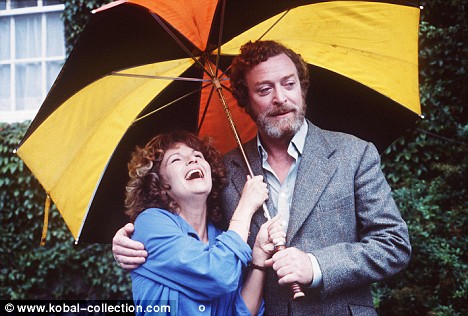
educating rita
Michael Caine and Julie Walters talking about LitRuhChure

I ordinarily don’t wade into fights between genre fans and the folks who stand guarding the ramparts of Real LitRuhChure (as Michael Caine so memorably pronounced it in “Educating Rita”–the star of which, by the way, is Molly Weasley).

For one thing, it’s usually a waste of time–there’s really no way you’re going to convince Lit folks–Lit professors, reviewers at the New York Times Book Review, and other Keepers of the Canon–that they should modify their rules.  You can complain about the over-abundance of dead white dudes, lobby for more people of color, demand more women, but they’re basically just going to ignore you.  So I usually don’t waste my breath, even though it does indeed drive me nuts.

There are folks out there battling away, though.  Jennifer Weiner, especially, is out there Fighting the Good Fight, particularly with regard to having more women be on the NY Times editorial board for the book reviews, and including more books written by women in their reviews.  (They are notoriously lame about inclusion.)  She also grinds my favorite axe, which is regarding “commercial” fiction which, in Christopher Beha’s long and–in my opinion–condescending response to Weiner he equates with “genre”, which is probably correct.

But the reason I’m writing about it today is because Junot Diaz basically exploded a huge segment of Beha’s argument.  Beha, who says that he “write[s] for the Times Book Review a fair amount”, said that the reason the NYT Book Review rarely reviews genre is:

[Genre] fiction, even when very well made, is designed to conform to the expectations of its genre or subgenre, and usually the best that can be said about any given example of it is that it does or does not succeed in conforming to those expectations.

(Which I’m sure comes as a big surprise to folks like William Gibson, Neal Stephenson, Neil Gaiman, and many, many others, along with the shades of A.C. Doyle, H.G. Wells, Jules Verne, Dickens (think “Edwin Drood”), Shakespeare (Think “A Midsummer Night’s Dream”, for Pete’s sake!), and many, many others.  But never mind.)

Diaz disassembled this argument in a single sentence.

But ultimately, I think it’s a matter of privilege. Literary writers can attack new markets without ever losing their cachet as literary writers. I don’t think that tide has raised the boats of genre writers. A literary writer who writes a sci-fi novel will get a fucking Guggenheim. A genre writer who is classically genre, writing a genre book, will not get a fucking Guggenheim.

And let’s face it:  That’s basically it.  Privilege.  Is seems likely that Beha–in the incredibly unlikely event he reads this blog post–would be pissed off by this comparison, but to me this isn’t all that different from the Tea Partiers and their increasingly-desparate attempt to hold on to their generations-long electoral white dude advantage.  They are terrified of the coming onslaught of diversity, and are doing everything they can to avoid it.  They don’t understand it, and it scares them.

Similarly, it seems to me that Our Loyal Guardians of LitRuhChure don’t understand genre, the work of women writers, writers of color, trans writers, and you-name-it.  But there’s so much of it out there now, and the pressure for inclusion in our society is rising so much in recent decades, that it simply can’t be ignored.  So you get fights like the one between Weiner and Beha, and Beha’s pretty lame (and insanely lengthy) response.

I know you don’t like it, LitRuhChure folks, but one can find worthy works in any genre, be it science fiction, mystery, fantasy, romance, and yes even “classic” literature.  So instead of defending your increasingly-absurd positions, how’s about you open up your minds and be inclusive?  And you know what?  It’ll probably increase your readership, too.

Oh Goody, More War!

06 Friday Sep 2013

Posted by dougom in News, Opinion

≈ 4 Comments

Tags

Congress, Obama, Senate, Syria

mccain_town_hall-620x412
John McCain getting ripped a new one by his constituents over Syria
(Photo courtesy of Salon.com)

To whatever extent one can get involved in a debate on Facebook, I was recently involved in one over Syria.  And my interlocutor used this analogy with regard to Syria (the “bullies” analogy, which I personally like in general):

Respond to a thug with a written list of grievances, and all you get is more thuggery; knock him upside the head with a bat, and you’ve got his attention.

The problem with that analogy is this:  If you are standing there watching a thug beat on someone, and you jump in and knock him upside the head with a bat, what’s the most likely outcome?  I think it’s obvious:

The thug will stop beating on his current victim and turn on you instead.  Or maybe the thug’s friends will jump you, having decided you’re a pushy busy-body and a bully your own self, and feel a need to protect their friend.

The analogy here is pretty clear:  Assad is a thug, and he’s beating on his own people.  And if we whap him upside the head, he’s going to either turn on us, or his friends (or the various American-hating terrorists around the world) are going to decide we’re being a bunch of bullies again ourselves and jump us.  And given our behavior in the last, oh, say 60 years, I think they have a strong case, don’t you?

And the case of Syria is even worse, right?  Because this is a case of us arriving at a scene late in the game, and we look down, and we see someone writhing on the ground and the bully standing over them.  A bunch of people in the crowd are yelling, “That bully tear-gassed that poor person!”  Yeah, maybe, but do you wade into the bully based solely on the say-so of a bunch of bystanders?  What do you do?

Let’s go ahead and push this analogy as far as we can:  What’s the “right” thing to do?  Well, it’s obvious:  You see someone getting beat on, you don’t jump in yourself, you call the police.  You ask for help.  In this case, the “police” are the UN weapons inspectors.  Let’s let them examine the victim and say, “Yeah, okay; he was tear-gassed all right.”  Then we get to decide if we play the role of police, or if we ask the world (again) for help, or what we do.  But to just wade in there with our baseball bat, without all the facts, when we weren’t even the ones being beat on, strikes me as reckless and foolish.  And let’s face it, folks:  We’ve done it before, and when has that ever turned out well?

(And before you say, “Kosovo”, let me point out:  The Europeans wanted us to fix the situation in Kosovo; they were too weenyish to do it themselves.  This time, all the folks involved don’t want us to butt in.  What does that tell you?)

More Big Media Company Silliness

01 Sunday Sep 2013

Posted by dougom in News, Opinion

≈ Leave a comment

Tags

Game of Thrones, media, Paramount, piracy, Star Trek Into Darkness, The Oatmeal

chrispinezacharyquinto
Zachary Quinto’s squinty-face is due to him wondering how Paramount can be so durn dumb, I bet (Photo courtesy of the LA Times)

I have written quite a few times, in my own blog and as a regular poster on the (genuinely excellent tech review and commentary) site Gear Diary about the many stupidities of big media companies, and how many of their decisions increase rather than decrease the piracy they claim to fear so desperately.  I’m not going to rehash those arguments–you can google them up easily, and I think The Oatmeal sums them up perfectly in his cartoon about the unbelievable stupidity exhibited by HBO over “Game of Thrones” which, not to put too fine a point on, you quite literally can’t get legally in digital format for nearly a year after the episodes are broadcast unless . . . you subscribe to a cable company, and sign up for HBO, and sign up for HBO plus.  If HBO thinks that increases signup rates and decreases piracy, they’re deluding themselves.

But today’s rant comes to you courtesy of the upcoming DVD release of the new Star Trek movie.  Gigom notes in their excellent overview that the extras that you get for buying the Blu-ray release vary based on what store you buy them in, and also what country you reside in.  So if you want all the extras for that film–and believe me, I know plenty of Trekkies who will–you can either spend over a hundred bucks getting them legally by buying yourself multiple copies . . . or you can pirate.  And given that Trekkies are, as a group, fairly highly technically sophisticated, I’m guessing they’re not going to shell out more than a hundred smackers to line Paramount’s greedy-ass coffers, but rather will buy one copy and pirate the other extras on ThePirateBay.org or some other bittorrent site.  Because to do otherwise would be, frankly, stupid.

Bit media companies seem to operate based on two assumptions:  That their customers are deeply stupid, and that everyone wants to pirate and no one wants to pay.  Both these assumptions are fatally flawed, and the combination of them is what brings us to this pass, where media companies find their profit margins shrinking and respond by engaging in practices that will simultaneously drive up piracy and decrease their income.  Good plan, that, media companies!

You would think, nearly 20 years into the Web era, that big media companies would have learned how to adjust by now.  You would be wrong.

← Older posts
Newer posts →

Subscribe

  • Entries (RSS)
  • Comments (RSS)

Archives

  • July 2024
  • February 2024
  • January 2024
  • August 2023
  • April 2023
  • February 2023
  • January 2023
  • October 2022
  • April 2022
  • February 2022
  • January 2022
  • December 2021
  • November 2021
  • September 2021
  • April 2021
  • January 2021
  • July 2020
  • May 2020
  • April 2020
  • March 2020
  • October 2019
  • November 2018
  • October 2018
  • May 2018
  • April 2017
  • September 2016
  • April 2016
  • March 2016
  • December 2015
  • November 2015
  • July 2015
  • May 2015
  • April 2015
  • March 2015
  • February 2015
  • January 2015
  • December 2014
  • November 2014
  • October 2014
  • September 2014
  • August 2014
  • June 2014
  • May 2014
  • April 2014
  • March 2014
  • February 2014
  • December 2013
  • November 2013
  • October 2013
  • September 2013
  • August 2013
  • July 2013
  • June 2013
  • May 2013
  • June 2008
  • April 2008
  • March 2008
  • February 2008
  • January 2008
  • December 2007
  • November 2007
  • October 2007
  • September 2007
  • August 2007
  • July 2007
  • June 2007

Categories

  • Fiction
  • Grammys
  • Joni Mitchell
  • Music
  • News
  • Opinion
  • personal
  • Uncategorized

Meta

  • Create account
  • Log in

Blog at WordPress.com.

  • Subscribe Subscribed
    • Random Blather
    • Join 85 other subscribers
    • Already have a WordPress.com account? Log in now.
    • Random Blather
    • Subscribe Subscribed
    • Sign up
    • Log in
    • Report this content
    • View site in Reader
    • Manage subscriptions
    • Collapse this bar
 

Loading Comments...