• About
  • Follow
  • Life: An Odd Analogy
  • Making Debates Suck a Wee Bit Less
  • To heck with the good ol’ days
  • Writing

Random Blather

~ Feverish ravings of a middle-aged mind

Random Blather

Author Archives: dougom

Weird Male Things

13 Saturday Jul 2024

Posted by dougom in Uncategorized

≈ Leave a comment

Tags

family, life, men, mental health, toxic masculinity


Why?

During the last year or so of his life, my dad—who was dealing with Stage IV colon cancer—lost his balance in the shower and had a heavy fall. When I heard of this I asked him why he didn’t have grab rails or a shower seat or some such. At 35, I felt incumbent on me as the Eldest Child to try to talk some sense into him. You’re dying of cancer, dad; you’re taking morphine, doing chemotherapy, you’re not the same as you were in the 70s. Be smart.

I was thinking about all this while in the shower the other day. I am now the age my dad was when diagnosed at Stage IV—61. I have had multiple health issues, and have had to run to the hospital a few times for various issues. (One time in an ambulance, which seemed overkill given I had driven myself to the urgent care clinic just fine.) I am definitely not the physical specimen I was at 25. Or even 45. And I had an epiphany as to why my dad refused to get a shower chair:

“Fuck that.”

Yes, just that; “Fuck that” I have plenty of maladies that should require me to be careful. And I am careful: I go to all my doctors’ appointments; I take so many medications my youngest is constantly amazed I can keep mine and hers straight; I avoid red meat, caffeine, processed sugar, and alcohol; I exercise regularly. Even so, there is plenty of reason for me to be cautious, to present a slightly more delicate facade to the world, so why don’t I?

Because fuck that, that’s why.

There are several parts to this, some of which heigh back to toxic masculinity. Some of which are because of the way folks my age were raised—”Go play outside, and don’t come back until dinner!”. Some are to avoid getting ostracized by society (and at work!) as “that old guy”. And some are just plain, in-bred stubbornness that I inherited from my dad; “The two most stubborn men I’ve ever met in my life,” my step-mother insisted. (I like to think of it as being resilient, but your mileage may vary.)

Anyone who has paid attention during the last 20 years knows that toxic masculinity has nearly as many negative impacts on men as it does women. Women are marginalized and suppressed; this is obvious. Men, on the other hand, tend to be repressed, especially emotionally. (There are other reasons for this, such as weaponization of men’s feelings against them, but that’s a tale for another time.) We are taught from a young age to not show pain or emotion, that we’re “wimps” or “pussies” or “faggots” (a huge insult when I was a kid) if we do. Not to share our thoughts. To just do what we’re told or required, and shut the fuck up about it if we don’t like it.

When I say, “taught”, I obviously don’t mean in the traditional sense, where a teacher got up and chalked “Don’t complain!” on a blackboard. No, I’m talking about hundreds of influences from media and the adults around us that added up to it. “Rub some dirt in it”; “don’t be a crybaby”; “no pain no gain”; “walk it off”; and on and on.

The latter, baffled me from the first time I heard it at age 8, when I was hit in the ‘nads with a practice ground ball that hopped up on one of the multitudinous rocks peppering our crappy little league infield. I buckled over in pain. The coach strolled over and said, “Just walk it off.” And even at 8 that made zero sense. “Walk it off?” I thought. “I got hit in the balls, not in the legs! What good is that going to do?” And of course, it didn’t do any. Other than to teach me to “not be a wimp.”


Just walk it off, dude!

This is how toxic masculinity creeps like poison gas into your brain while you’re not watching, taught to you by all the adults around you.

And of course my generation is now famous for playing outside and getting our water from garden hoses. And this isn’t an exaggeration; that’s what we actually did, especially during the summer. “Go outside and play,” was probably one of the most-common parental commands in my day. Right behind, “Stop crying or I’ll give you a reason to cry,” and “Don’t make me pull this car over”, and (one of my dad’s favorites) “I don’t care who started it, I’m stopping it!” (Are you seeing a pattern here?)

I’m not blaming my parents; they were really good parents, they didn’t spank, they weren’t neglectful, they clearly loved us, and they did their level best. Frankly, they were better than most. It was the social construct at the time.

So now my body is falling apart, and when something goes wrong, my instinct is not to ask for help, or complain about it, but to deal with it myself so I don’t “look like a wimp.” Which has caused me to do some fairly insane things such as driving myself to urgent care while literally screaming in pain from kidney stones; taking my youngest to his therapy session even though I could barely get out bed; drive into work when I had the stomach flu; and more. And I’m positive many men of my generation have done similar nutty things. (Heck, my boss the other day was just talking about walking around while in excruciating pain from a nasty foot injury.)

As a result, I finally understand my dad. He was on chemo; he was taking tons of meds; he had Stage IV cancer and was literally staring death in the face; and when it came to making things a little easier on himself in ways that made him look at all weak (and adding in the fact he was born in the middle of the Great Depression), I can easily imagine his mental state:

“Fuck that.”

If you’re wondering why your boyfriend, brother, dad, or whatever other male you know seems to be acting irrationally, just keep it in mind. That’s all I’m saying.

And I still miss him. To this day.

Marching Backwards on July 4th

04 Thursday Jul 2024

Posted by dougom in Uncategorized

≈ 1 Comment

Tags

donald-trump, News, politics, supreme-court, Trump

One of the foundational myths of the United States is that a group of brilliant men gathered together in Independence Hall in Philadelphia and signed a Declaration of their Independence over the absentee landlords and ruling monarchy of George III of England. 

Like many myths, there’s a lot left out of this one. That the signers were all white men; that the nation they were “founding” had been occupied for thousands of years by the First Nations people; that many of these men declaring that “all men are created equal” owned other human beings; and on and on. And that’s all true. But we shouldn’t allow all that to ignore what a profoundly revolutionary act that Declaration was.

Up until then, countries, city-states, empires, and so on were almost exclusively ruled by one supreme monarch. A king, emperor, shōgun, khan, chieftain, potentate, kaiser, Caesar, pharaoh, tsar, or what have you. Almost always male, and usually with what today we would call “unchecked executive power”. The power to control all citizens, the armies, the navies, the land, the income, of whatever they ruled over. Sure, there were ways people could claw back some of that power, but in the main, for thousands of years, we had Kings. (They didn’t call Jesus “President of Presidents”, after all.)

Yes, yes, there were exceptions: The Roman Republic period, the Greek “democracies”, and so on. But they were exceptions. Humanity had Kings. 

To say having the idea to throw that all over and create a democratic republic and run a country “by consent of the governed” was a revolutionary concept is understating it. Yes, I am well aware that the founders drew on many historical precedents. But look at how countries were governed in (say) 1760, and how they’re governed now. Our experiment influenced the world. Heck, why do you think France sent us the Statue of Liberty?

I’m not going to go into all the ways we have failed of our promise over the last ~2.5 centuries, as most of us are all too grimly aware of slavery, segregation, the near-annihilation of the First Nations people, the antisemitism that closed our doors to Jews fleeing genocide in WWII, Japanese internment camps, imperial ambitions in places like The Philippines, and on and on. We are not even remotely close to perfect. But it’s important to remember, especially today, just how genuinely revolutionary our declaration was.

This is especially poignant now, with one of our major political parties clearly determined to turn back the clock on all the good things we’ve accomplished.

Starting in the Reagan era, I became convinced that the Republican Party was dead set on taking us back to the 1950s. When women didn’t work (or rarely), heterosexual marriage was the norm, non-straight people were forcibly closeted, Christian supremacy was unquestioned, Blacks were segregated, and the country had a huge majority of European descent. When straight white cis Christian men held sway.

Starting with the Bush II era, it seemed more like 1919, just before the 19th Amendment was passed, giving women the right to vote. They also weren’t much enamored of the 17th Amendment and direct election of Senators either, though, so maybe 1910 was a better target date.

Unfortunately, by stripping the most important provision of the voting rights act, overturning Roe v. Wade, making corporations equivalent to living human beings and money equal to speech, and almost too many other Supreme Court decisions to mention, it became clear in the last two decades that the GOP really wanted us to go back to the 1850s rather than the 1950s. Before Black people got “uppity”, when rich folks could do pretty much what they wanted, when women were oppressed, beaten, raped, and killed with impunity, and when the government was constrained from helping anyone but a straight white cis Christian man.

Boy, was I wrong.

With their ruling in Trump v. United States (and just take a moment to ponder the title of that ruling; Trump verses the entire United States!), the Supreme Court has embraced what Dick Cheney and his cronies from the Nixon Administration called “the Unitary Executive”, also sometimes known as the “Imperial Presidency”. They have given literally unchecked power to one person. (They would obviously prefer it was on straight white cis Christian man): The President. The President can do anything so long as “in their official capacity as President”. And given they very carefully didn’t say what that covers, they’ve basically turned the President into a monarch. And no, I am not exaggerating.

The Supreme Court, in their right-wing zeal to attain permanent and unlimited power for themselves, have take us back to 1750. I can barely contain my rage.

When I was 12, this country celebrated its Bicentennial; two hundred years of contiguous government. It was something to be proud of, and I was hoping at the time I would make it to the Tricentennial. 

Now, I don’t think the country will make it that far. I hope I’m wrong; I fear I’m not.

The Music of Your Life

11 Sunday Feb 2024

Posted by dougom in Grammys, Joni Mitchell, Music, personal

≈ Leave a comment

Tags

1970s, album-review, Joni Mitchell, Music, writing

Joni Mitchell, looking a bit frail but otherwise amazingly-robust considering her health issues of the past few years (and believe me, I sympathize with health issues) gave a lovely performance at the Grammys recently. And for me her voice is like a tramline to my past, and conjures up all sorts of emotions that watching and hearing her is like stepping into a Doc Brown-modified DeLorean and going back to 1974.

When I think of my past, it’s in eras. I suppose this is true for most people, and in my case even more so because I seemed to physically move someplace new after each on. My early childhood was in New England and on Long Island—I was born there and lived there until I started grammar school. Then at 12, just after I finished grammar school, we moved to the California East Bay, and I was here through middle and high school. I went to college in Santa Cruz and stayed for seven years after that, marking the “young adult” era. After which I got engaged and moved to San Jose for 8 years. And finally Austin Texas, where we lived for my own kids’ school years and their aftermath. These are my eras, and they are about places just as much as times and events.

One thing that I heavily associate with my grammar school years is the music my parents were playing on the stereo while I was growing up. Both of them liked to listen to music all the time, having it on in the background while they worked, or cooked, or cleaned, or we were all just sitting around in the living room. It was almost like my life had a soundtrack. And I was amazed years later to find how deeply into my brain this music had sunk, when I was able to sing along to music that I didn’t even remember hearing. (I don’t remember my parents ever playing Beatles records, but they must have, because I know all the lyrics to all the songs.)

And for me, this was an almost idyllic period. My parents were together, and young. We lived in a place where I had good friends. Like many of my generation, I grew up partly feral, being told to “go out and play” and not returning until dinnertime, even during the school year and especially in the summer. I was good at school and my teachers liked me. I played soccer, and Little League; was on the swim team and joined the Boy Scouts; rampaged around the neighborhood with my friends getting in trouble while trying to not get caught. Aside from the weather (abysmal in the summer) and the constant threat of friends moving away (it was just outside of Washington, DC, and many people in our suburban neighborhood were in the military and likely to get transferred any time), it was pretty wonderful.

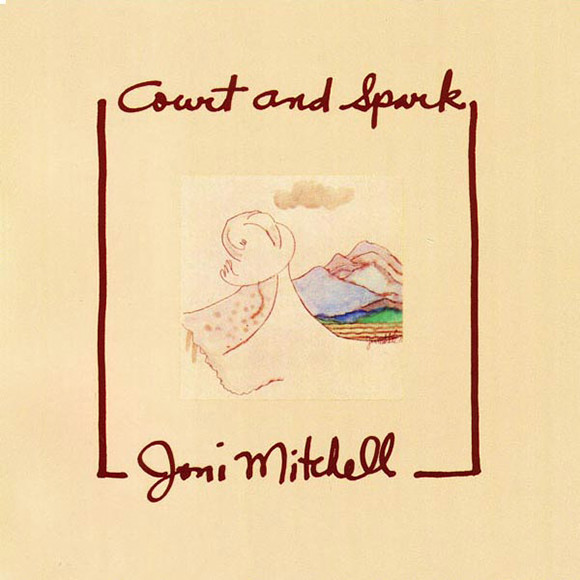
On the radio and in our house there was Simon and Garfunkel, and Paul Simon on his own, and Carly Simon, and the soundtrack for Jesus Christ Superstar, (and comedy albums by Bill Cosby and George Carlin and Lenny Bruce at my friend David’s house), and in 1974 Joni Mitchell’s epic, incredible, Court and Spark.

To this day I can’t listen to Court and Spark and not think of the summer and fall of 1974 in Northern Virginia, where the summer air was so damn thick with humidity it felt as if you had to lean forward and actually push your way through it, and the fall was a riot of falling leaves piling up in people’s yards. I was starting my last year of grammar school, I was surrounded by friends and stuff I really enjoyed doing, I had two parents who clearly loved me, I had a little sister I totally adored and a younger brother who annoyed the living crap out of me to the degree where my dad actually sub-divided our family room so they could separate us. My favorite cousin—then a young, afro-ed, guitar-playing college hippy just turned 20—came down and actually roomed with me (in my tiny room) for part of the summer. It was joyous. Joyous, I tell you!

So when Joni sings—and most of all I queue up Court and Spark—I’m amazed all over again by the power and versatility of her amazing voice, the way it weaves itself in and out of the lyrics. I’m astounded by the power of those lyrics, the way you could picture in your mind the scenes she is describing, the people she’s talking about, and wonder if they map onto your own life. And most of all I’m a little boy again, cooling myself by one our four window air-conditioners (we blew out fuses so often I think my dad bought them in lots of 100) in a tiny suburban brick house in Northern Virginia, trying to con my mom into letting me stay inside a bit long, hearing Joni on the turntable again.


The house in question; my dad planted the pine tree on the right in the front yard

Joni is the creator of some of the music of my life, and it was tremendous seeing her there singing again. What is the music of yours?

Sometimes computer stuff just breaks

15 Monday Jan 2024

Posted by dougom in Uncategorized

≈ 1 Comment

Tags

Android, Apple, computers, technology, Windows


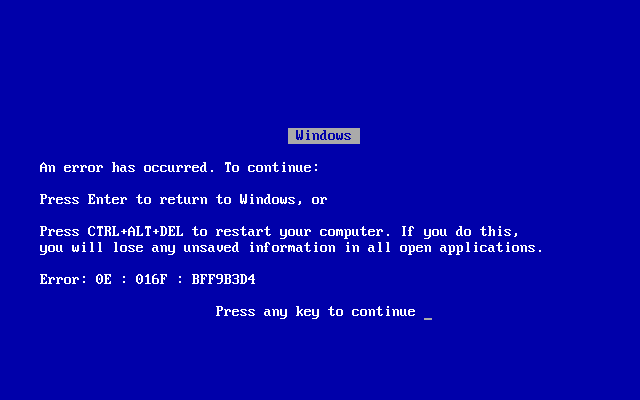
The infamous Windows Blue Screen of Death

My first job out of college in the high tech industry was doing front-line phone support for a startup software company. The software ran on a Windows box, which back in those days were pretty rudimentary. I mean, a 100MB hard drive was considered “lots of space”. It was a long time ago.

I got in big trouble with my boss’ boss, the CEO of the company (and the guy whose arrogance, incidentally, drove the company into the ground rather than sell it to a big Japanese firm and make us all a bunch of money rather than the company folding), after one frustrating phone call with a customer. This was well before phone support people had “scripts”; we had a written list of common problems people faced, and after that we were required to solve their issues as best we could. And I was fresh out of school.

After spending a good half-hour trying to fix this guy’s problem, I finally had him reboot the system and the problem cleared up. When he demanded I tell him what might have gone wrong, I told him that sometimes, hardware just has the equivalent of brain farts, and you have to reboot to clear them. He wasn’t happy with this answer and called the CEO.

Here’s the thing, though: I’ve learned since then that computer software and hardware does sometimes just fail for no discernible reason. Sometimes it has a brain fart, and you have to reboot it.

It’s a fact of life. And why? Because the entire edifice of hardware and software is a precariously-balanced inverted pyramid that is only kept working by the tireless attention of millions of people. Let me explain:


There’s a reason folks didn’t build ’em this way

Down at the bottom, there? The point on which all computer systems rest is a little switch that either turns on or off. I know you’ve almost certainly heard it before, but it’s important to remember: No matter how sophisticated a computer system is, down at the bottom, it’s just a bunch of switches turning on and off. That’s all. When you turn on your tablet and the screen lights up, it’s just tens of millions of switches inside turning on and off telling the electronics what to do. All web sites are, at bottom, controlled by millions of switches flipping on and off. Yes, it sounds insane, but it works.

Back in the day, it was actual physical switches (eg vacuum tubes) that people literally switched on and off by hand in order to “program”. What’s happened over time is that the switches have gotten microscopic, and the systems that turn them on and off more sophisticated. But to repeat myself: The point of that inverted pyramid is just switches going on and off.

The next layer of the pyramid is “machine language”, which is a stream of ones (on) and zeros (off) sent directly to the switches. On top of that is a whole host of languages converting pseudo-english into those ones and zeros. On top of that is a host of languages that talk to those languages. And on top of that are the programs you run every day on your laptop, phone, car, or whatever. We are adding to those pyramid layers all the time, and at this point the pyramid is huge, and world-wide. And still balanced on a point.

Sometimes, a switch fails, or a program has an error and sends the wrong signal to a switch and it gets turned on when it should be off. Or a user (that’s you, kids!) sends a command into this giant edifice that the programmers haven’t anticipated, and it causes an unusual situation. When that happens, one of the blocks of the pyramid gets knocked out, and the thing goes off balance. And when the whole thing is balanced on a point, it can go off balance pretty badly, and your phone or laptop or whatever hangs.

Now, computer scientists have shored this delicate system up by surrounding the pyramid with lots of other pyramids so they can lean on each other and not be quite so precarious. And then pyramids get stacked on top of those pyramids, reinforcing the structure (and incidentally making a bad failure more catastrophic, but never mind that for now). We have devoted countless hours to creating backup systems that back up other backup systems that are behind even more backup systems. We don’t want your devices to fail. Especially if that “device” is, say, an airplane. And this all works pretty well in the main.

But every once in a while something unexpected happens in the system, and your device just hangs, or gives you the famed “blue screen of death”, or “bricks” (ie stops working entirely). The vast majority of these problems can be relieved by rebooting the device, although sometimes even that doesn’t work and you’re hosed.

Today my son brought me his iPhone because it had done hung. The weather in Austin is below freezing, we’re getting a lot of phone alerts, and somehow an alert had popped up on his phone at just the right microsecond—or maybe he happened to be holding down a button when it popped up—so that the message couldn’t be dismissed because the screen also wouldn’t accept input. Further, his phone couldn’t be rebooted in the ordinary way, with the ol’ hold-down-a-volume-button-and-the-power-button trick. So I had to go online and google for whatever backup plan C is to reboot iPhones. And it worked, because we have a bunch of backups now, despite this insane inverted pyramid structure.

(And if I may add another analogy: Computers are a lot like the sailing ships of yore in that they accumulate the data equivalent of barnacles on their hull. And just like a sailing ship had to be careened and scraped on a regular basis, this is why you need to reboot your phone or laptop every once in a while. To get those electronic barnacles off.)

So the bottom line is: Sometimes the system brain farts and needs to be reset. That might have PO’d that long-ago customer, but it’s simply the nature of the beast.

Words Words Words

24 Thursday Aug 2023

Posted by dougom in Uncategorized

≈ 1 Comment

My vocation is to help people understand things. This is different from “explaining things”; when you “explain”, the person to whom you are explaining is passive. Helping people understand things is collaborative; I want to engage with the audience, not just lecture them. I don’t want them to be a passive receiver of verbiage. I want to provide the steps on which they climb to a higher level of comprehension. In my particular case, this is through technical writing, but I do try hard to apply this in all aspects where it’s needed. Explaining things to my autistic child, for example.

So words are my stock in trade. I operate in words in a way similar to how a sculptor might work in marble, or a painter in, well, paint. I craft words into information, and try to make it engaging and helpful. It’s how I earn my daily bread.

As you might expect from someone who has been crafting information in this way for a few decades, I have some strong opinions on words and phrases in regular use. Some delight me; some drive me nuts. And I wanted to share that a bit.

Almost everyone has some word or turn of phrase that drives them nutty. Online in social media lately you can see people mixing up “your” and “you’re” all the time, and you can see it driving lots of other people absolutely nutty. (Hint: I am your friend because you’re a good person. Extrapolate.)

I first got a hint of this in my high school English class, where my favorite teacher Mr. Rodriquez—one of two English teachers who encouraged my writing ability, and to both of whom I owe a huge debt—was driven crazy when a student used the word, “nice”. “‘Nice’ how?!” he would bellow. “In what way is it ‘nice’? What makes it ‘nice’? Then use those words! ‘Nice’ is useless!” I don’t necessarily agree, but it definitely doesn’t speak well of a word when it’s lexicography is:

late 13c., “foolish, ignorant, frivolous, senseless,” from Old French nice (12c.) “careless, clumsy; weak; poor, needy; simple, stupid, silly, foolish,” from Latin nescius “ignorant, unaware,” literally “not-knowing,” from ne- “not” (from PIE root *ne- “not”) + stem of scire “to know” (see science).

OED

Not very “nice” at all, is it? It drove poor Mr. Rod batty when we used it. (So of course some wags did it deliberately. Fortunately, he had a sense of humor.)

For my dad, it was “irregardless”. “It’s not a word!” he would say. “Why not just say ‘regardless’?” And I had to admit I had a point.

These and similar types of lessons encouraged me to not only be careful in which words I chose, but to make sure I didn’t choose one because it sounded “fancier” (“Irregardless!”) in the hopes it made me look clever. Don’t use “jejune” instead of “boring”, for example. Sure, sprinkle those kinds of word in your fiction to give it flavor, but just like you want a little cayenne in your gumbo, too much of that kind of thing makes it unpalatable.

As a bit of a contrast, author Dan Simmons is driven insane by the current use of “decimate” as equivalent to “utterly destroyed”. As Simmons points out, “decimate” comes from the Latin, meaning “to destroy one part in ten” (“deci” is from the Latin for “ten”). I understand his frustration. But despite many writers and grammarians desire to the contrary, English is a living language, words evolve, and sometimes they take on new meanings that don’t necessarily jibe well with their lexicographical origins. Almost everyone uses “decimate” as an equivalent for “utterly destroy” these days; Simmons’ efforts to the contrary, I think that ship has sailed. (Though personally, I use synonyms like “annihilate” or some such.)

What about me? Well, my “word irritation” comes from both a lack of precision in how these words are used, and the fact they in one case, it’s just wrong.

The first bone of contention is the sloppy way so many people use the words “couple” and “few”, often as if they’re synonyms. They’re not! “Couple” means “two”. That’s it; two. No more, no less. And yet some people mean it as if it’s equivalent to “a handful” or “a bunch” or “a few”. It makes me insane. No. It’s two. “A few” is “more than a couple.” Personally, I only use “a few” when it’s between three and ten, but I don’t expect everyone else to adhere to my OCD-enabled needs. (After “a few” comes “a bunch”, followed by “a lot”. But again, that’s me.)

A small digression: I apply similar precision to “probably” and “maybe”. “Maybe” means 50/50; “probably” for me is “a greater than 50% chance”. I know some people use them interchangeably; I don’t.

The other thing that’s been driving me batty on social media lately is when people want to make an exclamation of cuteness. That word, kids, is “Aw.” That’s what you saw when you see a cute cat video, or a baby smiles at you. NOT “awe”, which is “a feeling of reverential respect mixed with fear or wonder.” They’re not the same, and you need to stop using them as if they were!

Words have meanings, kids. And while yes, those meanings do evolve (much though it may frustrate Dan Simmons), if you want to communicate, if you want to help people understand what you’re saying, it’s important to use the right words. So think before you speak.

So tell me: What words or phrases drive you crazy? (And tell me if you want a similar rant on grammar, which I will entitle “Why We Shouldn’t Give a Damn About Split Infinitives, and Other Grammar Rules Doug Ignores”.)

Connections

15 Saturday Apr 2023

Posted by dougom in Uncategorized

≈ 3 Comments

When we are growing up, we just don’t question the individual character traits of our parents. They are who they are, sort of like the sun and the moon. Their actions are all-but-incomprehensible, how they developed into the people you experience a mystery. They just…are.

One of the major changes a person goes through is when they realize their parents are actual people, with thoughts and feelings and histories and motivations. It can be painful, or lead to conflict, especially when our parents are very different from the person we are developing into. We saw this on a societal level during the 1960s, when many of the Boomers revolted against the strictures—social, sexual, behavioral—under which their parents and grandparents had operated for decades. (That the Boomers, in Stephen King’s words, “could have changed the world and instead settled for the Home Shopping Network” is a whole different topic.)

My Dad has been gone for nearly a quarter-century now, taken at age 63 by colon cancer that he, in classic Silent Generation fashion, dismissed the warning signs of. (“If you ever see blood in your urine or stool, Doug, be sure to tell the doctor,” was his conclusion. The entire extended Moran family went for colonoscopies after he died.) And yet his influence over me has remained and, if anything, deepened in the intervening years.

As I have aged towards grandparenthood my own self, I have had a lot of cause to reflect on these influences. And one of the biggest I’ve noticed recently, in the aftermath of being laid off, is how I connect with people.

When I was little, I never considered it at all remarkable that my dad could chat just as easily with janitors, sanitation workers, and gardeners as he could with Admirals, Congressmen, and his engineering colleagues. He was DAD, and he did what he did. It’s only in the last few years I’ve come to realize both how remarkable a skill that was, and how much of it he passed on to me.

Recently, I was laid off from my job. This always comes as a shock when you’re a high performer with heavy expectations for yourself. Though of course at my age in this particular industry—high tech—which is notoriously both sexist and ageist, it wasn’t totally surprising. High tech is going through a lemming-like period right now where everyone is laying people off because…everyone is laying people off. The executives say it’s to cut costs and prepare for a (presumed) upcoming economic downturn. I don’t believe that for a moment. To me it’s clear that companies are doing it because other companies are doing it, with a side hope that this will relieve some of the pressure put on employers to be more reasonable to workers recently. They want their power back.

(I’m sure people like Larry Summers would go to great lengths to convince people I’m wrong. Fortunately, he doesn’t even know I exist, so it’s not a big worry on my part.)

Why am I mentioning this? Because I have been absolutely astounded at how many people have reached out tell me how shocked they are; how they can’t believe my company would lay me off; how it’s a stupid move on the part of my company; asking how they can help. This isn’t just friends; it’s coworkers, former coworkers, and even distant acquaintances. I received the following text from a person I am embarrassed to admit I can’t remember at all:

I’m not putting this in to brag—or not much—but rather to note that, somehow, I seem to make an impact on people, and they remember me. People from jobs I worked at 15 years ago are reaching out. People I’ve never actually physically met. I make connections somehow.

Like my Dad did.

I have only recently realized that my tendency to chat with anyone and everyone, to try to make connections, find shared experiences (“Oh really? I was born in Connecticut!”), ask people about their backgrounds, interests, and thoughts, is something I acquired from my Dad. It’s something I picked up subconsciously. Something that I have never, ever thought about, and that I’m incredibly grateful for.

People are interesting! Almost all people. And it is the incredibly rare person I run into who I haven’t found some kind of connection with. You’re from the Canary Islands? Don’t they speak French there? I’ve been to France and speak really bad French; can we speak French? Oh, you’re Jewish, too? Oh, you like to dance West Coast Swing? You like Lord of the Rings too? How old were you when you first read it? Really? Wow; that’s young! Like my dad, I don’t care if they’re a garbage collector or a CEO; a sewer worker or a high-ranking naval officer; a teacher or a waiter or a phone support person. They all have lives, they all have stories, there’s almost always something in common.

I’d like to say “I make the effort,” but really, it doesn’t feel like an effort. It’s something I’ve done for almost as long as I can remember.

And now that I’m a bit on my heels from being laid off, I’m finding that this gift I received basically by osmosis from my Dad is something that actually gives back. That’s not why I do it; it’s not a transactional kind of thing at all. I do it because I enjoy it. Because it’s part of me. And it’s just incredibly gratifying to find out, so many years on, that people appreciate it.

I have gone through most of my life thinking I basically blend into the background, don’t make a mark on the groups and organizations I’m part of, that I’m essentially the Invisible Man. This was engrained in me in Middle and High School, where it was absolutely true; when I wasn’t being ignored, I was being bullied. That this changed significantly in college, and a very different experience has been true since I started working in high tech, just completely escaped me.

To all you people out there who think well of me, I just want to thank you. Finding out after so long is an incredible blessing.

Work-life Balance

23 Thursday Feb 2023

Posted by dougom in Uncategorized

≈ Leave a comment


Lord give me the serenity…

For a while there were numerous articles on a phenomenon that the press labeled “quiet quitting.” (Why am I convinced that term was generated by management and not workers?) If you read these articles, there really isn’t any “quitting” involved; people are still perfectly willing to do their jobs, no matter how crappy. What they’re not willing to do is extra, unpaid work that is outside of the scope of their job. They’re not willing to do work before clocking in; they’re not willing to take on extra responsibility without being recognized for it (preferably with a promotion); they’re not willing to work extra shifts when they’re ill, and especially not feeling as if they have to be on the hook to find someone to cover their shifts when ill (that’s what you’re getting paid for, managers).

And this is being called “quiet quitting.”

When I started work in earnest after I got my degree in computer science at 22, I had been working in the service industry for 7 years. I had put myself through college with service jobs; kept myself fed and clothed with service jobs; and was acutely aware of just how many employers tried to abuse their power in squeezing more work out of you for free. (In fact, I think everyone should be required to work in—and live off the pay of—hourly service jobs for at least a year before they take on a non-service job. And anyone getting an MBA should have to put in an additional year.)

My first day on the job in high tech, one of my coworkers, as part of his training, told me, “Well, we’re scheduled to work 8 hours/day, but you’ll get lots of overtime.” And I thought, “Yeah, no way.” And then and there I came up with three rules for my work-life balance that I have stayed with to this day:

  1. No overtime
  2. No working lunches
  3. No trade magazines on my free time

(I think the implementation of “brown-bag lunches”, where execs schedule a talk during lunch time and strongly hint you should give up your lunchtime to attend, is yet another example of management trying to squeeze workers. My lunchtime in mine; you want my attention, you go ahead and pay me for it.)


Word, Agent Sully

Now yes, I have occasionally broken those rules in extremis. I’ve attended working lunches, mostly for political reasons (ie to make my team look good in front of an executive). I’ve read some articles in trade magazines, but almost always on company time. And while I have sometimes stayed late or worked weekends because of the press of events, it is extremely rare.

Plenty of people have told me over the last 35+ years that I was limiting myself by being so stringent; that I would get poor performance reviews, wouldn’t get promoted, wouldn’t get bonuses, etc. And that’s turned out to be nonsense; not only have I gotten raises, promotions, bonuses, and accolades, I have regularly been tagged as a top performer. I’m not saying this to brag; I’m pointing out you can have a good work-life balance and do solid work that gets appreciated.

What aggravates me with the current situation is this: Workers finally have some leverage with business, and business is whining that they’re using that power to demand a reasonable work-life balance. And I’m actually thrilled that Millennials and GenZers are fighting back against the soul-sucking demands of pushy, fascistic, out-of-control managers. That the workforce is saying, “Enough!” is nothing but healthy, in my opinion.

I want to make clear that I don’t believe all management are pushy, fascistic, and out-of-control. But far too many, especially in service jobs, absolutely are. (Read any story about Elon Musk for examples.) You have all read the stories about Amazon drivers urinating in bottles, and factory fulfillment people being monitored by the second. Or Walmart workers forced to do work off the clock. Restaurant workers made to feel guilty for not coming in and working while sick. That’s absurd. It shouldn’t be borne. And I’m glad to see fewer and fewer people are accepting it. Because you don’t have to.

So those are my three rules. What are yours? And how have they worked out for you?

Get Busy Living

20 Monday Feb 2023

Posted by dougom in Uncategorized

≈ Leave a comment


The wisdom of Stephen King

I turn 60 this year. And like plenty of folks my age (and most of my friends), my body is doing its best to betray me by falling apart and attempting to cripple me with various maladies.

The first warning of this—well, “decline” is the only word that fits—was when I was 36, the same year my dad died (at only 63, of prostate cancer). I have read that many people of a physical/athletic bent experience an injury sometime in their 30s that marks the changeover from young to “guess I’m starting to get old.” For me, it was when I was skeet-shooting with my Pop (my father-in-law, this is), and I blew out a disk in my neck. The subsequent massive pain was almost unbelievable, and forced me to get the disk removed and two vertebrae clamped in place.

And consigned me to chronic neck pain for the rest of my life. Not to mention robbing me of feeling in two of my left fingers.

When your doctor tells you, “You shouldn’t lift anything heavier than a half-gallon of milk” (thought the doctor in Texas changed this to “a six pack of beer”), it gets your attention. When you ask if you can continue to ski and are told, “Well, sure, if you don’t mind risking permanent paralysis,” it focuses the mind. Yup.

And of course that accelerated in my 40s and 50s, as it tends to do. My neck is curving under the influence of gravity and my injury. I have “essential tremors”. Almost exactly two and a half years ago, I was diagnosed with prostate cancer. A year ago I had bilateral pulmonary embolisms (“blood clots in the lungs” to you, my friend). Late last year, my eye doctor notified me I have cataracts (“But not bad enough for insurance to pay for surgery,” she said helpfully). My knees have been a tragic wreck since a soccer injury at 17. And so it goes.

And you know what? Fuck it. Get busy living, or get busy dying.

It would be spectacularly easy to give in to these various maladies and setbacks and just declare defeat, as my ex seemingly has done after her stroke. But that is just not me. I hurt. I fucking ache all the time, to be perfectly frank. AND I DON’T CARE. Ima live life anyway.

I mean, of course I “care”. I see my doctors; I get scans; I take blood pressure meds, and blood thinning meds, and cholesterol meds, and god knows what else is in my pill organizer. I try to follow my doctors’ advice (which is hard, because sometimes it conflicts). I go in for regular appointments and checkups and get the tests they say I need—at least to the point where insurance and money won’t pay. I’m not stupid.

But Ima live my life, dammit.


Time of your life, eh kid?

I can’t play soccer, or ultimate frisbee, or even swim or play frisbee golf? To heck with it; I’ll learn how to dance! I can’t see my besties regularly because they are scattered all over the durn place? To heck with it; I’ll schedule regular Zoom DnD sessions with them so we can hang like we used to in college!

Yes, I’m pushing 60 (quite hard), and yes my body can’t do what it used to, and yes, I face certain physical limitations.

I’m going to get busy living. What about you?

Age of the Geek

19 Sunday Feb 2023

Posted by dougom in Uncategorized

≈ Leave a comment


Hardison gets it

When I was a kid, I loved a few things that made me a profound outcast:

  • Comic books
  • Science fiction
  • Star Trek
  • Musicals
  • Animation

I cannot overemphasize just how unpopular and/or denigrated nearly all those things were when I was living my best GenX life. Comic books were particularly looked down upon, but there was plenty of opprobrium left over for Star Trek, science fiction, and what these days they call anime and in my experience was limited to Speed Racer, Astro Boy, and the like. (And yes, I had plenty of love for Warner Brothers, Rankin-Bass, Jay Ward, and others too.)

It was tolerated in children, but you were supposed to grow out of it and start reading, I dunno, Dickens and watching Shakespeare. (I like Shakespeare, too; I was a weird kid.) Comic books were very much “trash culture”, not something you read in any kind of serious way. And watching science fiction on TV? C’mon, man.

(How this attitude squared with grown adults painting their faces green or wearing giant cheese wedges on their head to cheer on men giving each other concussions for their entertainment being acceptable I’ve never fully understood, but let’s just move on.)

Through my childhood, teens, and 20s, I mostly nursed these loves quietly and at the constant risk of disdain. If a girlfriend caught me reading a Heinlein juvenile or, God save us, an X-Men comic book, or waiting on line to go see Star Trek: The Motion Picture, oof, it could bring up issues. It wasn’t manly, that’s for sure.

Luckily, I ended up at UC Santa Cruz, a veritable hothouse of weird, and frankly I fit right in. I found friends who were equally weird, who also enjoyed some or all of these things, with whom I could talk, exchange recommendations, play video games (and foosball), and yes, smoke weed and drink. (Although I was never much of a drinker, truth to tell.)

In the 70s and 80s, there was, to put it mildly, a dearth of science fiction films. Yes, Star Wars—more of a space western, or possibly a space fantasy, than actual science fiction—opened the door. But for every Blade Runner, Close Encounters of the Third Kind, or Empire Strikes Back, there were 20 films like Saturn 3 or (God save us) Moonraker. Even a wonderful film like Superman (1978) had plenty of camp, harking back to the that classic, the 1960s “Batman” TV show.


Valerie Perrine asking why she “can’t get it on with the good guys.” Seriously.

Don’t get me wrong; I enjoyed it all and was happy to take what I could get. I could even now happily lecture you on why Saturn 3 isn’t nearly as bad as you think (Harvey Keitel!). I won’t go all the way into the tank and say Superman: The Quest for Peace was a good film, but still; when you’re in a cultural-enjoyment minority, you really do eat what’s set before you.

All this generational nostalgia is a long prelude to the main point, to wit: I am absolutely staggered that all of the stuff that I was looked-down upon for when I was younger is now a major part of the culture.

Until 1982, there were three seasons of Star Trek, a one-season run of a cartoon version, and a single, critically-panned film. (“Star Trek: The motionless picture,” Harlan Ellison famously called it.) Now there are nearly 900 episodes of TV shows spanning 44 television seasons. There are five shows in active development. There have been 13 films. One Captain of the Enterprise has received a knighthood, for cryin’ out loud! The theme song is so iconic it only needs to be used sparingly in the various properties to evoke emotion in the massive fanbase. It’s as pervasive to the culture now as Westerns were (so I’m told) in the 50s and 60s.

And of course while science fiction is still often treated as the bastard stepchild of literature (and goodness, what they do say about sub-genres like Steampunk!), there’s simply no question that big budged science fiction films are treated as Serious Art by actual living, breathing critics. Directors like Denis Villenueve, Christopher Nolan, Doug Liman, and Alex Garland have made entire careers by creating high-quality science fiction films that people treat with reverence. Films like Inception, Arrival, Live Die Repeat, and Ex Machina not only receive praise, they show the deep ideas science fiction can address, and are sometimes credited with changing people’s perceptions of what film can do.


This film was a mind-bender, and catnip to a hardcore SF fan

A similar phenomenon has happened with comic books. Frank Miller and Alan Moore pushed the bounds of what could be done with the form. (And of course they built on the work of the people so famous it would almost insult your intelligence to mention them, but I will so as to not let people think I believe comics weren’t invented until 1980 or something: Jack Kirby, Stan Lee, Will Eisner, Bob Kane, Bill Finger, Steve Ditko, the immortal [and criminally-used] Joe Shuster and Gary Siegel, and many others from the “Golden” and “Silver” ages of comics. Too numerous to list, so I ask forgiveness from fans of, say, Mike Grell, or John Byrne, or whoever.) The outburst of creativity in the 80s was astounding.

Like science fiction, though, this didn’t necessarily lead to a wide acceptance of the medium, but it did help energize creators to take chances on comic book films. Tim Burton’s 1989 Batman, of course, as well as Sam Raimi’s trilogy of Spider-Man films, as well as the (sometimes messy) early X-Men films. And now of course the massive Marvel Comics Universe and the big-budget DC films, employing prestige directors like Christopher Nolan, Kenneth Branagh, and Ang Lee show that Hollywood, at least, is taking the source material seriously enough to bet millions on it.

(I could make a point at how many of these creators are GenXers, but I’ll let you look up their birthdays on your own.)

So I hope you can understand how the current culture looks to me, a person who furtively read his Spider-man and Legion of Super Hero comics furtively in his bedroom, hiding them under the bed. It’s quite a mind-bender. It truly is the Age of the Geek. And horrible capitalist wealth disparities aside, quite frankly I love it.

Rereading Favorites: Sherlock Holmes

18 Saturday Feb 2023

Posted by dougom in Uncategorized

≈ Leave a comment


Let’s face it: The most handsome iteration

I started reading before I started school, and have been an avid reader ever since. I very much enjoy rereading my favorites both from childhood (eg Louisa May Alcott or Johanna Spry) and my teen and young adult years (an inordinate amount of science fiction and some fantasy). I suppose I’m not much different from a lot of habitual readers in that; it’s not unlike rewatching favorite films or TV shows. It’s just something readers do.

It is a trope that people—men in particular—get more “conservative” as they age. (The scare quotes are because the terms “conservative” and “liberal” have been so abused in the last 30-40 years, and especially the last 20, as to have lost all meaning.) I don’t think that’s the case in general, which I addressed in another post, and it is absolutely not the case with me. I have only become more and more radicalized as I’ve aged, and as a proud Banana Slug and graduate of UC Santa Cruz, I started out pretty well out on the left to begin with.

I mention this because it figures into my reactions and perceptions as I reread fiction that I loved as a kid and young adult. Like everything else in the world, fiction seems to obey Sturgeon’s Law, and 95% of it is crap, and time is the filter that helps us determine what is crap, and what is Good Stuff™. And yet even some of the Good Stuff ™is, with the passage of time, changes to the world and society, and improved knowledge of history, at best problematic, and at worst…well, pretty bad. I want to take a few posts and examine some of my favorite reads in this light. Today, it’s Sherlock Holmes.

I’ll be blunt: I love Sherlock Holmes stories. I love the pastiches, the homages, the dramatizations. Despite his height, I thought Robert Downey, Jr’s portrayal was quite faithful to the spirit of Holmes. I was a huge early supporter of Benedict Cumberbatch’s modern take in the TV show “Sherlock”. I watched quite a few episodes of the show “Elementary”, although its police procedural nature eventually got tiresome to me. I was a massive fan of Tony Shalhoub’s “Monk”. And…well, you get the picture. I love Holmes in almost all of his forms.


I love Tony Shalhoub

Recently I went back and started rereading (and listening to Stephen Fry’s excellent audiobook version) the original stories again. Aside from the four “novels”—A Study in Scarlet, The Sign of Four, The Hound of the Baskervilles, The Valley of Fear (which are all pretty short by modern novel standards)—they’re short enough to read in one quick gulp. You get through them quite rapidly, if you have a mind.

And what I’ve found is it was sometimes quite hard to reread the stories with a modern, “3rd decade of the 21st Century” eye.

The racism woven throughout the stories is, of course, appalling. Interestingly to an American reader, hardly any of this is focused on people of African descent. I don’t know enough of British Victorian history to say whether this is because there simply weren’t a lot of Black Britons in those days, or that Doyle simply didn’t see Blacks as any different, or what. Indeed, Doyle has a story that is still surprisingly racially enlightened for its day, and was probably shocking in its time: “The Yellow Face.” If you haven’t read it, I don’t want to spoil it, but it is both delightful in it’s ending, and in how Doyle pokes racists right in the eye.

What I do know about Victorian attitudes is, if you weren’t European, you were inferior.

Indians, unsurprisingly, take the worst hit. They are ungrateful for Britain bringing them “civilization” (ignoring that India has been civilized an awfully long time before Europeans came marching in); they are back-stabbers; they are superstitious; and on and on. None of this is stated baldly—according to what I’ve read, Doyle was quite broad-minded…for his era. And therein lies the rub.


Koh-I-noor diamond, ripped off from India and inserted in the literal British crown

Related is the inherent imperialism that is clear throughout (and which Downey impishly referred to in his first Holmes film; “What a busy little Empire!”). Britons were of course unapologetically imperialist during the Victorian era, and Victorian England became one of the largest empires in the history of the world by the end of Victoria’s reign. And to a modern reader, knowing what we do about colonization, slavery, cultural repression, religious persecution, and on and on, eliding all the Imperial references in the Holmes stories can be…a bit difficult.

In my view the best example of this is the Andaman Island native Tonga in Sign of the Four. The nature of the language characters use to describe Tonga makes it quite clear he’s viewed as somewhere between a wild animal and a pet. He was “venomous as a young snake”; “he was devoted to me and would do anything to serve me”; “we earned a living at this time by my exhibiting poorTonga at fairs and other such places as the Black cannibal”; etc. It’s clear Mr. Small cares for Tonga; it’s equally clear he doesn’t consider him quite human.

And of course the sexism is pretty bad. Yes, Doyle created one of the great female characters of fiction in Irene Adler, who I adore. And yet even Irene makes her way through the world by…well, to put it bluntly, marrying up. One could reasonably argue that there simply weren’t that many options for advancement during the Victorian era—”You will inherit your fortune; we cannot even earn ours,” notes Elinor Dashwood in Sense & Sensibility, only a few decades prior to the Victorians—and I would not dispute it. I will simply point out the number of women who are said to be suffering from “brain fever” and other female-specific “maladies” is enough that practically make it an epidemic.

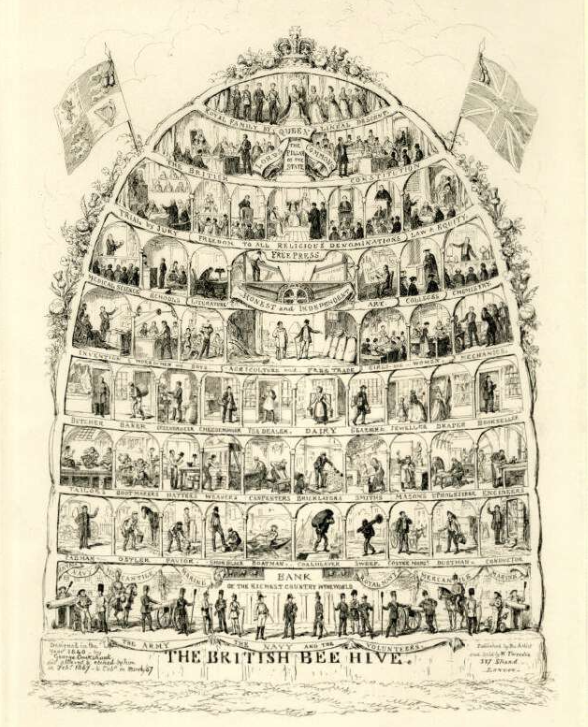
Then there’s the classism. Even today, the classism in the UK can be problematic; in the Victorian era, it was probably at its height, and most entrenched. All of the upper class are assumed to be “gentlemen”, while all the lower class are, almost by definition, suspect and sketchy. And before someone complains yes, I am well aware that Doyle sometimes turns this presumption on its head. This doesn’t change the baseline assumption that, if you are a member of the upper class, you are trustworthy unless proven otherwise, and if you are a member of the lower, suspicion falls on you immediately. This attitude tends to drag on me after too many pages.


They had classism diagrams, FFS

It should be said that Doyle does regularly subvert this trope by having Holmes work closely with “the lower classes”; boatmen, factory workers, boxers, and most famously the street urchins “the Baker Street Irregulars”. This is definitely to Doyle’s credit. And it still doesn’t change the entrenched classism displayed in the stories.

Very much related is the absolutely appalling state of working class. There’s no minimum wage, of course; no weekends off; very little job mobility. Servants can be dismissed by the nobility immediately and on a whim, regardless of years (or even decades and, in Hound of the Baskervilles, a full century!) of loyal service. This is bad enough, but in many cases this not only deprives the servants of their livelihood, but also their home, as many live with “the master”. And several times the nobleman threatens to give them bad references, dooming them to joblessness and homelessness for heaven’s knows how long. This is…well, it’s disgusting.

(And yup, I’m well aware we have similar problems today. At least we have weekends, overtime pay, healthcare, 40 hour work weeks, no child labor…I could go on, but you get the point.)

Finally, there is a terrible tendency for Holmes and Watson (and other “experts” with whom Holmes consults) to rely on what we know today to be pseudo-science. Phrenology—ie the idea that the shape of a person’s skull, face, the bumps on their head, etc.—is in my view the worst, but there are quite a few other examples. Assuming someone is a criminal just because they have a particular shape to their face is a terrible form of prejudice. This is especially ironic given Holmes is one of the very first “scientific detectives”.

Many would argue that we have to take into account the era in which Doyle wrote. Yes, we do; but the whole point of this post is that I’m reading it in my era, and we currently don’t believe a few bumps on the skull indicate criminal intent. Indeed, this kind of toxic thinking is part of the reason policing is still so informed by prejudice.

In conclusion I want to say that yes, I still love the Holmes stories, I always will, and I will no doubt reread them in the future. Which absolutely does not preclude me from noticing their many built-in prejudices.

Next: Mote in God’s Eye.

← Older posts

Subscribe

  • Entries (RSS)
  • Comments (RSS)

Archives

  • July 2024
  • February 2024
  • January 2024
  • August 2023
  • April 2023
  • February 2023
  • January 2023
  • October 2022
  • April 2022
  • February 2022
  • January 2022
  • December 2021
  • November 2021
  • September 2021
  • April 2021
  • January 2021
  • July 2020
  • May 2020
  • April 2020
  • March 2020
  • October 2019
  • November 2018
  • October 2018
  • May 2018
  • April 2017
  • September 2016
  • April 2016
  • March 2016
  • December 2015
  • November 2015
  • July 2015
  • May 2015
  • April 2015
  • March 2015
  • February 2015
  • January 2015
  • December 2014
  • November 2014
  • October 2014
  • September 2014
  • August 2014
  • June 2014
  • May 2014
  • April 2014
  • March 2014
  • February 2014
  • December 2013
  • November 2013
  • October 2013
  • September 2013
  • August 2013
  • July 2013
  • June 2013
  • May 2013
  • June 2008
  • April 2008
  • March 2008
  • February 2008
  • January 2008
  • December 2007
  • November 2007
  • October 2007
  • September 2007
  • August 2007
  • July 2007
  • June 2007

Categories

  • Fiction
  • Grammys
  • Joni Mitchell
  • Music
  • News
  • Opinion
  • personal
  • Uncategorized

Meta

  • Create account
  • Log in

Blog at WordPress.com.

  • Subscribe Subscribed
    • Random Blather
    • Join 85 other subscribers
    • Already have a WordPress.com account? Log in now.
    • Random Blather
    • Subscribe Subscribed
    • Sign up
    • Log in
    • Report this content
    • View site in Reader
    • Manage subscriptions
    • Collapse this bar
 

Loading Comments...